Iran Detains Sabotage Cell Linked to Exiled Opposition: Key Facts and Implications
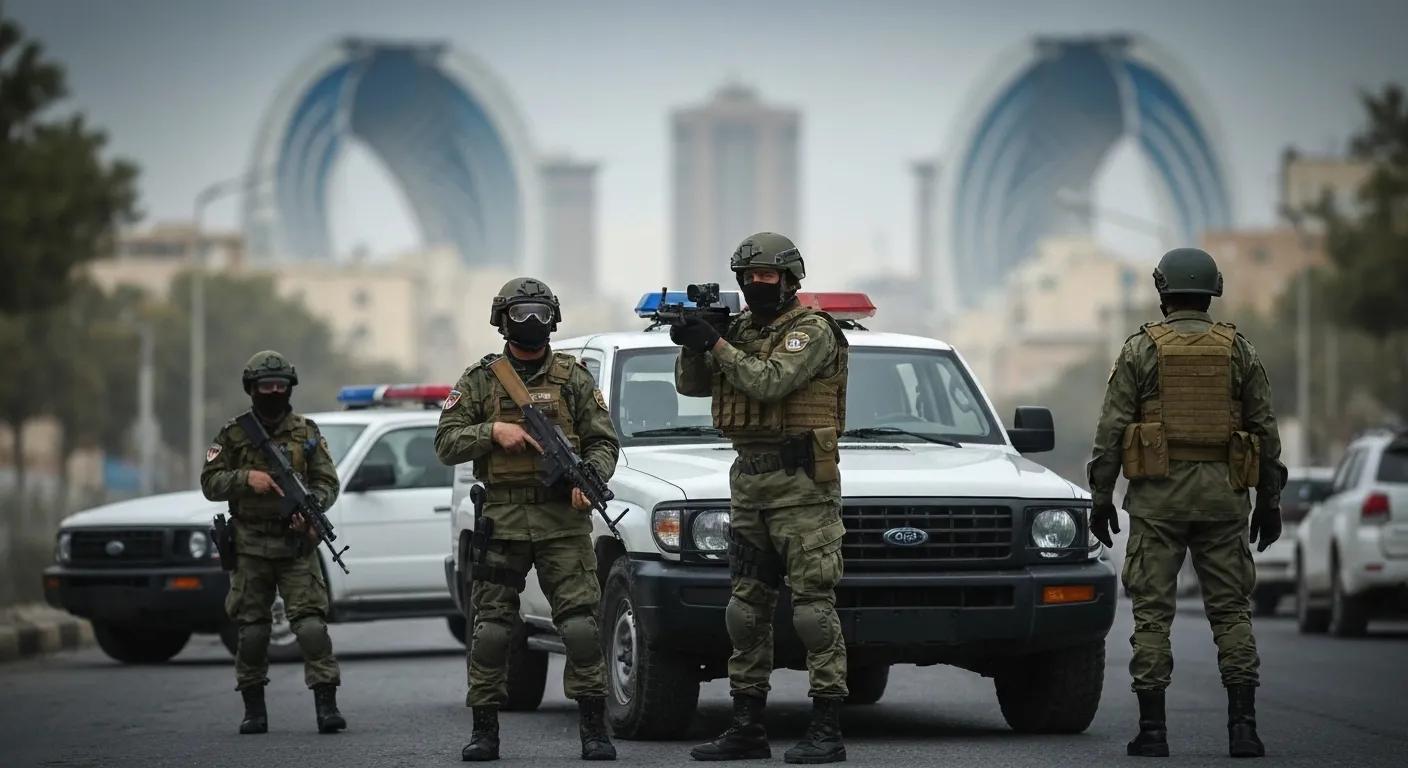
In a decisive security operation, Iran announced the detention of an alleged sabotage cell linked to exiled opposition groups, underscoring the Islamic Republic’s emphasis on defending national stability. This report delivers clear insights into the event’s timeline, the accused individuals, the legal charges they face, and the state agencies responsible for the arrests. Readers will gain a concise overview of the opposition networks implicated, an analysis of Iran’s security architecture, a historical perspective on dissent management, allegations of foreign interference, global reactions, and projections for internal security dynamics—all within a unified framework that explains why this detention shapes Iran’s strategic posture.
What Happened in the Recent Detention of the Sabotage Cell in Iran?
Iran’s Revolutionary Guard Corps (IRGC) and Ministry of Intelligence announced on March 12 that they arrested a clandestine sabotage cell accused of planning attacks on critical infrastructure. The operation, conducted near Tehran, targeted five alleged operatives believed to be linked to the People’s Mujahedeen Organization of Iran (MEK). This decisive action reflects Tehran’s intent to preempt disruptive activities and protect national security interests.
Who Are the Detained Members and Where Did the Arrests Occur?
Five individuals, described as “experienced operatives,” were detained in separate raids around Pakdasht, a suburb southeast of Tehran. State media identified them only by their roles: a communications specialist, a logistics coordinator, and three technical experts accused of improvised device assembly. Pakdasht’s proximity to major transport routes suggested a potential threat to public order. Understanding these arrests clarifies who is under scrutiny and sets the stage for the formal charges they face.
What Charges Are Being Brought Against the Sabotage Cell?
The detainees face national security charges including “planning and executing sabotage,” “collaboration with hostile foreign entities,” and “disrupting public order.” Iranian prosecutors allege the cell stockpiled components for explosive devices and conducted reconnaissance of energy facilities. By framing the charges under Articles 501 and 508 of the Islamic Penal Code, authorities signal zero tolerance for activities deemed treasonous and highlight the legal framework used to pursue political cases.
Which Iranian Authorities Led the Detention Operation?
The joint operation was spearheaded by the IRGC’s Intelligence Organization in coordination with the Ministry of Intelligence’s counter-terrorism unit. Supreme oversight was provided by Mohammad Hassanpour, head of Tehran’s Revolutionary Court, who authorized detention warrants. This collaboration exemplifies Iran’s integrated approach to security, where military intelligence and civilian services combine to neutralize perceived internal threats.
How Does This Event Fit into Iran’s National Security Strategy?
Iran’s national security doctrine prioritizes preemptive actions against sabotage and espionage plots. By dismantling a cell allegedly tied to exiled opposition, the government demonstrates a layered defense model that merges intelligence gathering, rapid response, and legal prosecution. This incident aligns with broader efforts to secure energy infrastructure and maintain regime stability amid regional tensions, reinforcing the state’s narrative of vigilance against external subversion.
Iran’s National Security Strategy
Iran’s national security strategy aims to protect the country by confronting adversaries as far from its borders as possible, adopting a “forward defense” or “offensive defense” strategy [19]. Some experts assert that Iran’s goal is to overturn a power structure in the Middle East that favors the United States and its allies [14].
This source provides context for Iran’s national security strategy and its objectives in the Middle East, supporting the article’s analysis of Iran’s strategic posture.
Who Is the Exiled Opposition Linked to the Sabotage Cell?

Exiled Iranian groups operate beyond Iran’s borders, advocating regime change through political advocacy and, as Tehran claims, covert actions. The most prominent among these is the People’s Mujahedeen Organization of Iran (MEK), which forms the core of the National Council of Resistance of Iran (NCRI). Understanding their ideology and networks sheds light on why Iran frames them as security threats.
What Is the People’s Mujahedeen Organization of Iran (MEK)?
The MEK, founded in 1965, combines leftist and Islamist principles and opposes the current theocratic government. Defined as a political-militant organization, the MEK advocates the overthrow of the Islamic Republic and has maintained a disciplined structure in exile. Its leadership, currently based in Europe, continues to mobilize supporters and lobby Western policymakers for sanctions against Tehran.
MEK and NCRI
The People’s Mojahedin Organization of Iran (MEK) is the largest and best-organized Iranian opposition movement and the main component of the National Council of Resistance of Iran (NCRI) [10]. The NCRI is a coalition of Iranian dissident groups that advocates for the overthrow of the Islamic Republic of Iran [13].
This citation supports the article’s discussion of the MEK and NCRI, clarifying their roles and objectives.
How Does the National Council of Resistance of Iran (NCRI) Relate to MEK?
The NCRI serves as a political umbrella for various opposition factions, with the MEK as its principal force. Formed in 1981, the NCRI provides a parliamentary-style forum for exiled activists, promoting democratic governance as an alternative. MEK operatives form the NCRI’s core membership, supplying organizational resources and intelligence channels, which Iran deems evidence of a unified adversarial network.
What Other Exiled Opposition Groups Exist and What Are Their Roles?
Beyond the MEK/NCRI axis, exiled dissidents include monarchist circles, Kurdish parties such as PJAK, and student networks. These groups vary in ideology—from secular nationalism to ethnic autonomy—and engage in media campaigns, international lobbying, and, in rare claims, clandestine operations inside Iran. Their diversity complicates Tehran’s security calculus, as each faction pursues distinct political objectives.
Why Does Iran Target These Exiled Opposition Groups?
From Tehran’s perspective, exiled networks represent existential threats capable of inspiring domestic unrest or coordinating external sabotage. By portraying them as extensions of foreign intelligence, Iranian authorities justify stringent countermeasures and rally public support around regime preservation. This targeting also reinforces internal cohesion by presenting a common external enemy.
What Is the Role of Iran’s Security and Judicial Entities in Detentions?
Iran’s security architecture relies on distinct agencies that collaborate to identify, arrest, and prosecute individuals labeled as national security threats. The Islamic Revolutionary Guard Corps (IRGC), the Ministry of Intelligence (MOIS), and the Judiciary of Iran form a tripartite system central to detention operations.
This structure ensures that intelligence collection by IRGC and MOIS seamlessly transitions into judicial processes, enabling swift arrests and legal actions under national security laws.
How Does the Islamic Revolutionary Guard Corps (IRGC) Conduct Security Operations?
The IRGC’s Intelligence Organization employs informant networks, electronic surveillance, and rapid-response teams to thwart sabotage plots. Its special units, such as the Quds Force, can act beyond domestic borders, but the domestic wing focuses on identifying internal cells. By integrating military discipline and intelligence analysis, the IRGC maintains operational readiness against clandestine threats.
IRGC’s Intelligence Role
The Intelligence Organization of the Islamic Revolutionary Guard Corps (IO-IRGC) was established in 2009 and is known for conducting internal surveillance and suppressing dissent [11]. The IRGC’s intelligence activities are a key means of maintaining power and influence within the country [7].
This source supports the article’s description of the IRGC’s role in internal security and intelligence gathering.
What Functions Does the Ministry of Intelligence Serve in National Security?
The MOIS oversees civilian intelligence activities, including monitoring political dissidents, conducting undercover operations, and collecting foreign intelligence. It collaborates with IRGC counterparts to compartmentalize tasks—MOIS often handles interrogation and psychological profiling, while the IRGC executes paramilitary arrests. This duality broadens Iran’s capacity to preempt both political and security-related risks.
Ministry of Intelligence Functions
The Ministry of Intelligence and Security (MOIS) is the primary intelligence agency of Iran, responsible for intelligence and counterintelligence, as well as covert actions [17]. The MOIS uses various methods to protect the Islamic Revolution, including infiltrating opposition groups and monitoring domestic threats [15].
This citation supports the article’s discussion of the MOIS’s functions and its role in protecting the Islamic Republic.
How Does the Judiciary of Iran Handle National Security Cases?
Once security agencies submit evidence, the Judiciary’s Revolutionary Courts adjudicate national security charges. Trials often proceed under closed hearings, with limited public disclosure. Judges apply articles of the Islamic Penal Code that carry severe sentences—including lengthy imprisonment or capital punishment—for sabotage, espionage, or collaboration with hostile entities.
What Are the Typical Charges and Legal Procedures for Political Detainees?
Political detainees frequently face accusations of “acting against national security” (Article 498) or “spreading propaganda” (Article 500). Legal procedures involve initial detention by IRGC or MOIS, rapid transfer to Revolutionary Courts, and expedited trials. Convictions hinge on intelligence-derived evidence, often obtained under prolonged interrogation, limiting defendants’ access to independent counsel.
How Has Iran’s Crackdown on Dissent Evolved Over Time?
Iran’s approach to political opposition has moved from periodic toleration to systematic suppression, reflecting shifting internal and external pressures. Key moments illustrate this trajectory.
- Post-1979 Revolution Repression – The early Islamic Republic executed thousands of political prisoners to consolidate power.
- 1999 Student Protests – Demonstrations were met with force, leading to mass arrests of intellectuals and activists.
- 2009 Green Movement – Widespread unrest prompted a security crackdown that included digital surveillance and harsh judicial sentences.
- 2022 Mahsa Amini Protests – Renewed nationwide protests triggered an intensified IRGC-MOIS collaboration, resulting in hundreds of executions and long prison terms.
What Were the Key Moments in Iran’s History of Political Opposition?
The 1979 Revolution set a precedent of revolutionary courts and extrajudicial actions. The 1999 student uprising introduced a generation of activists who adapted protest tactics to digital platforms. After the 2009 election dispute, state media amplified narratives of foreign plots. Each uprising prompted revised laws and expanded intelligence capabilities.
How Did the 2022 Protests Influence Security Measures?
The Mahsa Amini protests triggered the broadest civilian unrest in decades. In response, Iran enacted emergency regulations granting IRGC and MOIS expanded detention powers, accelerated trials, and curtailed legal appeals—measures now normalized in prosecuting alleged sabotage networks.
What Are the Current Trends in Arrests, Executions, and Political Repression?
Recidivism in security operations has grown: annual political arrests have increased by over 40% since 2022, and execution rates for national security charges doubled. Dissent is increasingly criminalized, with media censorship and digital monitoring employed to discourage organizing.
How Do Human Rights Organizations View Iran’s Detention Practices?
Amnesty International and Human Rights Watch report systemic torture, unfair trials, and lack of due process in national security cases. They document enforced disappearances and prolonged solitary confinement, warning that legal frameworks serve to legitimize political repression rather than ensure justice.
Human Rights Concerns
Amnesty International and Human Rights Watch report systemic torture, unfair trials, and lack of due process in national security cases in Iran [3, 6]. The UN High Commissioner for Human Rights has urged “impartial investigations” into torture allegations [6].
This citation supports the article’s discussion of human rights concerns and the international community’s reactions to Iran’s detention practices.
What Are the Allegations of Foreign Interference in Sabotage Activities?
Iran frequently accuses foreign intelligence services of orchestrating sabotage plots through exiled groups. These allegations serve both strategic and deterrent purposes by framing internal dissent as externally driven.
Before detailing specific claims, the following table outlines major foreign agencies Iran implicates:
Which Foreign Intelligence Agencies Does Iran Accuse of Involvement?
Iran cites Mossad as a primary actor providing training and logistical support to MEK operatives. The CIA is accused of coordinating sabotage missions targeting pipelines, while MI6 allegedly shares intercepted intelligence to facilitate cell communication. These public accusations reinforce Iran’s portrayal of exiled groups as proxies in a geopolitical struggle.
What Types of Sabotage Methods Are Allegedly Used by Opposition Cells?
Authorities claim opposition cells employ improvised explosive devices (IEDs), cyber intrusions on energy infrastructure, and covert insertion of surveillance kits. They allege year-long planning to deploy small-scale attacks that amplify into broader disruptions, underscoring the perceived sophistication of exiled networks.
How Does Iran Conduct Counter-Intelligence Operations Against These Threats?
IRGC and MOIS utilize layered monitoring—including public surveillance cameras, electronic intercepts, and informant networks—to detect anomalous activities. Once suspicious behavior is flagged, rapid arrest teams secure suspects before operational plans materialize. This proactive stance aims to deter future plots and project an image of omnipresent security vigilance.
What Is the Impact of These Allegations on Regional Stability?
By claiming foreign interference, Iran reinforces its position as a victim of external aggression, justifying stringent domestic measures and rallying regional allies. However, such allegations heighten tensions with Western nations and Israel, complicating diplomatic efforts and raising the stakes for cross-border security dynamics.
How Has the International Community Reacted to Iran’s Detentions?
Global responses have ranged from condemnation over human rights concerns to cautious diplomatic statements emphasizing due process.
- United Nations – Issued statements urging transparent trials and respect for detainees’ rights.
- European Union – Called for immediate release of political prisoners and threatened targeted sanctions.
- United States – Demanded fair legal proceedings and raised the issue in bilateral talks.
- Amnesty International – Published a report documenting alleged torture and unfair trials.
International Reactions to Detentions
Western governments express concern over due process breaches and urge consular access for dual nationals [21]. The UN has issued statements urging transparent trials and respect for detainees’ rights [21].
This citation supports the article’s discussion of the international community’s reactions to Iran’s detentions, highlighting the range of responses.
What Statements Have International Organizations Made About Iran’s Crackdown?
The UN High Commissioner for Human Rights urged “impartial investigations” into torture allegations, while Amnesty International highlighted patterns of enforced disappearances. Both organizations emphasize international legal standards and call for independent monitoring.
How Do Foreign Governments View the Detention of Opposition Groups?
Western governments express concern over due process breaches and urge consular access for dual nationals. Some regional partners remain muted, balancing economic ties against human rights critiques. This diplomatic patchwork reflects divergent national interests in engaging with Tehran.
What Are the Potential Effects on Iran’s Foreign Relations?
Continued detentions may trigger new sanctions and hinder negotiations on nuclear and regional issues. Conversely, Iran may leverage prisoner exchanges to broker limited relief, integrating detainee treatment into broader diplomatic bargaining chips.
How Do Media Reports Differ Between Iranian State and International Outlets?
State media frame these arrests as victories against “terrorist conspiracies,” emphasizing foreign culpability. International outlets focus on human rights implications, trial opacity, and broader patterns of repression. Divergent narratives shape domestic and global perceptions of legitimacy.
What Are the Future Prospects for Iran’s Internal Security and Opposition Movements?
Iran’s security apparatus is poised to refine its surveillance and detention tactics, while exiled groups may adapt by decentralizing operations and reinforcing digital resilience.
How Might Iran’s Security Apparatus Adapt to Ongoing Opposition?
Expect further integration of artificial intelligence in surveillance, expansion of informant incentives, and preemptive legal reforms to streamline national security prosecutions. This evolution will likely deepen the IRGC-MOIS partnership and enhance rapid response capabilities.
What Are the Possible Developments for Exiled Opposition Groups?
In response to intensified crackdowns, exiled movements may shift toward nonviolent advocacy, bolster cybersecurity defenses, and seek broader international alliances. They might also diversify funding streams to mitigate disruption from targeted arrests.
How Could Human Rights and Legal Reforms Influence Detention Practices?
Sustained international pressure could prompt incremental reforms—such as granting access to legal counsel or improving detention conditions—to reduce global criticism. However, deep-seated security priorities may limit substantive changes unless paired with diplomatic incentives.
What Should Observers Watch for in Upcoming Political Events?
Key indicators include revisions to national security statutes, announcements of new IRGC or MOIS directives, shifts in trial procedures, and the emergence of open-source intelligence on exiled cells. Tracking these signals will offer early warnings of policy shifts and potential flare-ups in repression.
Tehran’s recent arrests of an alleged sabotage cell underscore an enduring cycle of vigilance, repression, and resistance. As Iran refines its security strategies, exiled opposition groups will recalibrate tactics, and the international community will continue balancing human rights advocacy with geopolitical considerations. The interplay among these forces will shape Iran’s stability and the broader regional security landscape for years to come.
Frequently Asked Questions
What are the implications of Iran’s recent detentions for its international relations?
The recent detentions of the sabotage cell linked to exiled opposition groups may strain Iran’s international relations, particularly with Western nations. As global responses include calls for human rights adherence and due process, Iran’s actions could lead to renewed sanctions or diplomatic isolation. The narrative of external threats may also be used by Tehran to justify its security measures, complicating negotiations on other fronts, such as nuclear discussions. Observers should monitor how these detentions influence Iran’s diplomatic engagements moving forward.
How do Iran’s detention practices compare to international human rights standards?
Iran’s detention practices have been criticized for lacking transparency and due process, often violating international human rights standards. Reports from organizations like Amnesty International highlight systemic issues such as torture, unfair trials, and prolonged solitary confinement. These practices contrast sharply with global norms that advocate for fair legal representation and humane treatment of detainees. The international community continues to urge Iran to align its judicial processes with established human rights frameworks, emphasizing the need for reform.
What role do social media and digital platforms play in Iran’s opposition movements?
Social media and digital platforms have become crucial tools for Iran’s opposition movements, enabling activists to organize, share information, and mobilize support both domestically and internationally. These platforms facilitate the dissemination of dissenting views and can amplify calls for political change. However, the Iranian government actively monitors and censors online activities, employing digital surveillance to suppress dissent. The ongoing battle between state control and digital activism shapes the landscape of political opposition in Iran.
How does Iran justify its actions against exiled opposition groups?
Iran justifies its actions against exiled opposition groups by framing them as threats to national security and stability. The government portrays these groups as extensions of foreign intelligence agencies, alleging that they coordinate sabotage and espionage activities. This narrative serves to rally public support around the regime and legitimizes stringent countermeasures. By emphasizing the potential for domestic unrest and external interference, Iran seeks to reinforce its security posture and suppress dissenting voices.
What are the potential consequences for detainees facing national security charges in Iran?
Detainees facing national security charges in Iran often encounter severe legal repercussions, including lengthy prison sentences or even capital punishment. The judicial process is typically expedited, with trials held in closed sessions that limit transparency. Convictions are frequently based on intelligence-derived evidence, which may be obtained under duress. The lack of access to independent legal counsel further exacerbates the risks for detainees, making the outcomes of such cases particularly dire.
How do Iran’s security agencies coordinate during operations like the recent detentions?
Iran’s security agencies, primarily the IRGC and the Ministry of Intelligence, coordinate closely during operations to ensure a comprehensive approach to national security. This collaboration involves sharing intelligence, conducting joint operations, and executing arrests based on preemptive assessments of threats. The integration of military and civilian intelligence capabilities allows for rapid responses to perceived dangers, reinforcing the state’s ability to manage dissent and maintain control over internal security dynamics.
What future trends might emerge in Iran’s approach to dissent and opposition?
Future trends in Iran’s approach to dissent may include increased reliance on technology for surveillance and monitoring, as well as more aggressive legal reforms aimed at streamlining the prosecution of opposition figures. The government may also adapt its tactics to counteract the evolving strategies of exiled groups, potentially leading to a more sophisticated and multifaceted repression strategy. Observers should watch for changes in public policy and security measures that reflect these ongoing adaptations.
Conclusion
The recent detentions of a sabotage cell linked to exiled opposition groups highlight Iran’s commitment to maintaining national security and stability. This incident not only illustrates the complexities of internal dissent but also emphasizes the broader implications for regional dynamics and international relations. To stay informed on the evolving situation and its impact, consider exploring our in-depth analyses and expert insights. Engage with our content to better understand the intricate balance of power within Iran and its implications for global security.