John Deere Autonomous Farming: Launching Fully Autonomous, AI-Powered Tractors to Revolutionize Agriculture
Autonomous tractors powered by artificial intelligence are reshaping modern agriculture, promising to boost yields while tackling labor shortages and resource waste. In this article, you’ll discover how John Deere’s fully autonomous, AI-driven tractors integrate GPS, computer vision and robotics to transform tillage, planting and harvesting. We’ll explore core technology, machine-learning enhancements, productivity gains, environmental benefits, tillage innovations with TruSet, economic returns, deployment challenges and the roadmap to full farm autonomy by 2030.
Autonomous Farming Solutions Transform Agriculture Industry
What Are John Deere’s Fully Autonomous, AI-Powered Tractors?
John Deere’s fully autonomous, AI-powered tractors are self-driving farming machines that combine deep learning, GPS guidance and robotic implement control to perform fieldwork without an onboard operator. By fusing stereo-camera perception with neural-network decision-making, these tractors maintain sub-inch accuracy in navigation and adjust implement settings in real time, delivering consistent soil preparation and planting performance. This fusion of AI, robotics and precision positioning improves operational efficiency and frees farmers to focus on higher-value tasks.
How Does John Deere’s Autonomous Tractor Technology Work?
John Deere’s system routes GPS coordinates and camera feeds into a high-speed processor running convolutional neural networks. Stereo cameras capture a 360° view, classifying terrain features and detecting obstacles in milliseconds. Simultaneously, GPS and inertial sensors ensure centimeter-level path accuracy. A robotic control module then commands steering, throttle and implement hydraulics to execute maneuvers. This seamless integration of perception, planning and actuation supports uninterrupted, unattended field operation.
John Deere Autonomous Tractor Benefits from Deep Learning and Computer Vision
What Are the Key Features of the 8R and 9R Autonomous Tractor Series?
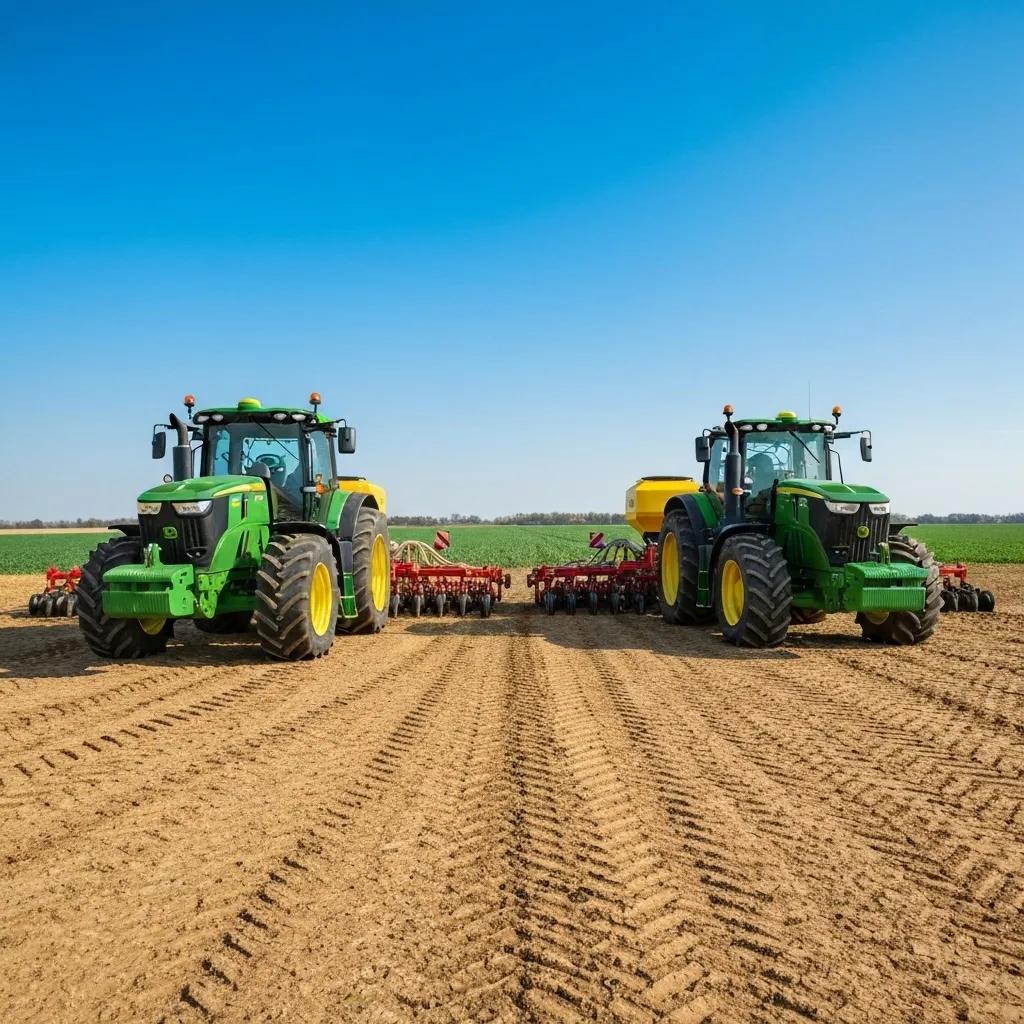
Below is a comparison of the 8R and 9R autonomous tractors, highlighting power, perception and precision attributes.
Both series leverage deep-learning algorithms to classify pixels and manage steering hydraulics, ensuring uniform tillage depth and reduced operator oversight, setting the stage for AI-driven crop management.
How Does the John Deere Operations Center Support Autonomous Farming?
The John Deere Operations Center is a digital hub that aggregates tractor telematics, implement data and field maps into a unified dashboard. Through remote monitoring, farmers can view live video from onboard cameras, adjust work plans, receive alerts on fault codes and synchronize variable-rate application prescriptions. This data-driven platform enhances autonomy by enabling real-time oversight and historical analysis of performance metrics, ensuring that autonomous tractors adhere to optimized work strategies.
John Deere Operations Center
How Does AI and Machine Learning Enhance John Deere’s Autonomous Tractors?
AI and machine learning empower John Deere’s autonomous tractors to perceive, learn and adapt in dynamic field conditions. By training neural networks on extensive crop and soil datasets, these machines evolve from predefined routines to context-aware decision agents, improving obstacle avoidance and implement control. The result is tractors that not only follow GPS paths but also self-optimize for terrain variations and emerging field challenges, elevating smart farming to a new level.
What Role Does Computer Vision Play in Obstacle Detection and Navigation?
Computer vision uses camera arrays to identify rocks, stumps, furrows and livestock in a tractor’s path. Machine-vision algorithms classify each pixel into categories—soil, crop residue or obstruction—enabling the tractor to steer around hazards without manual intervention. This real-time obstacle detection safeguards both equipment and field integrity while maintaining productivity windows even under low-light or dusty conditions.
How Do Neural Networks Enable Real-Time Decision Making on the Farm?
Deep neural networks process multispectral camera inputs and sensor readings through layered architectures that mimic human perception. During operation, the network infers terrain type, slope and implement load to determine optimal speed and depth settings. By continuously ingesting field feedback, the model adapts to changing soil moisture or residue conditions, making real-time adjustments that reduce pass-to-pass variability and improve crop emergence.
How Is Machine Learning Used to Improve Autonomous Tractor Performance?
Machine learning refines autonomy through iterative training and pattern recognition. After each field pass, performance data—such as fuel consumption, tillage depth variance and deviation from planned boundaries—is fed back into the learning system. Over time, the tractor predicts the best implement settings for similar field segments, reducing fuel usage by up to 10 percent and limiting soil disturbance, while paving the way for predictive maintenance scheduling.
What Are the Benefits of John Deere’s Autonomous Farming Solutions?
Autonomous farming solutions deliver three overarching advantages: they address labor scarcity, boost operational throughput and promote environmental sustainability. By running equipment around the clock with pinpoint GPS guidance and AI-driven control, farms can complete critical tasks within optimal windows, reduce input waste and lower overall production costs. These gains reinforce food security by increasing yields on existing acreage.
Autonomous Farming: Revolutionizing Agriculture with Transformative Tech
How Do Autonomous Tractors Address Agricultural Labor Shortages?
Autonomous tractors take on repetitive tasks such as tillage, spraying and planting without requiring a skilled operator in the cab. They eliminate downtime related to operator fatigue and scheduling conflicts, ensuring that fieldwork continues regardless of labor availability. This automation reduces dependency on seasonal crews and allows farm managers to reallocate personnel to monitoring and strategic planning roles.
Advantages of Autonomous Tractors in Precision Agriculture
In What Ways Do Autonomous Tractors Boost Farm Productivity and Efficiency?
Autonomous tractors operate 24/7 within prescribed GPS boundaries, maximizing work windows during favorable soil conditions. They seamlessly switch between implements on automated headland routines, minimizing turnaround delays. Advanced scheduling algorithms sequence tasks—tillage, planting, fertilization—in the most efficient order, reducing overlap and idle time, which collectively improves throughput by up to 20 percent.
Benefits of Autonomous Tractors
How Does Autonomous Farming Promote Environmental Sustainability?
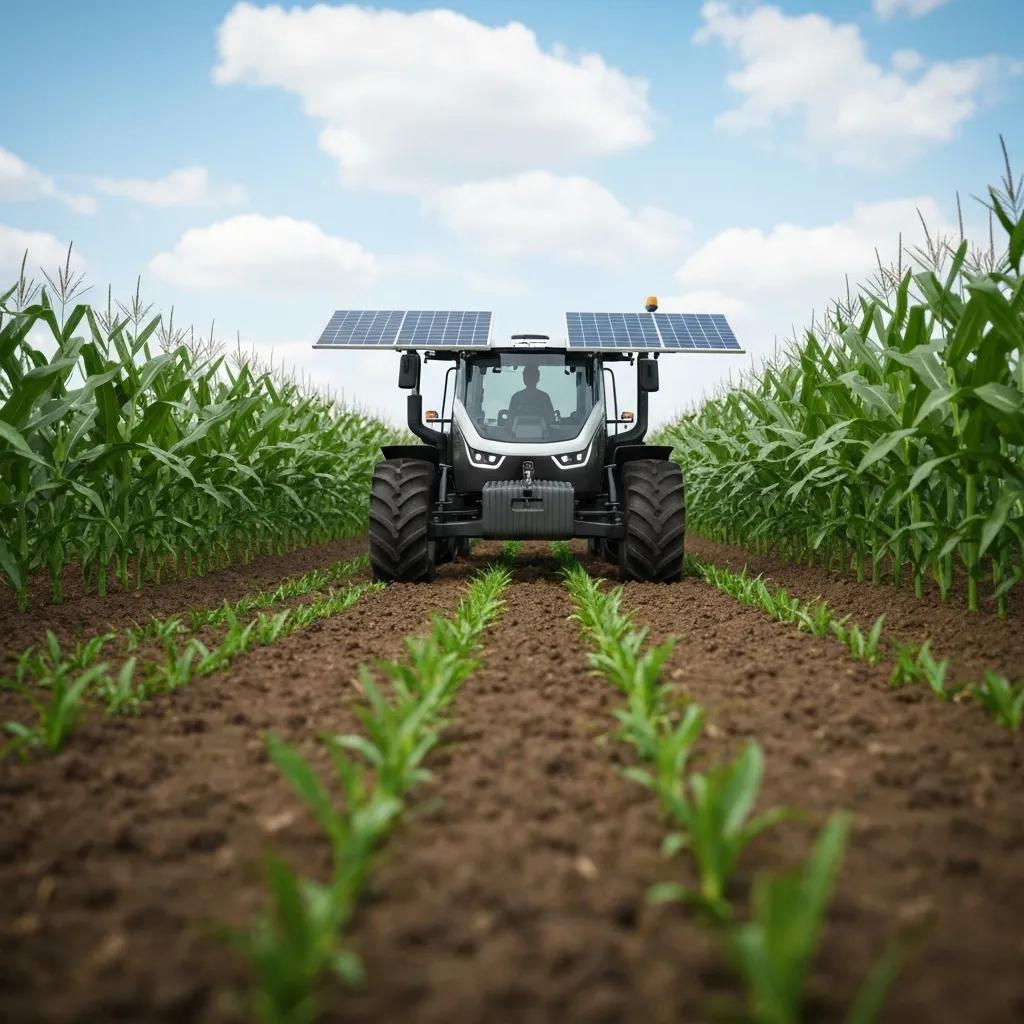
Autonomous tractors apply inputs with surgical precision, matching seed and fertilizer rates to soil variability while maintaining tight implement depths. This targeted approach reduces chemical runoff and fuel consumption. In addition, uniform tillage mitigates compaction, supporting healthier soil structure and water infiltration. Over thousands of acres, these efficiencies translate into measurable reductions in carbon emissions and improved long-term soil resilience.
How Does John Deere’s Autonomous Tillage Technology Improve Farming Practices?
Autonomous tillage combines robotic control and TruSet advanced implement management to optimize soil preparation. By sensing load and ground feedback, the system maintains consistent tillage depth and angle, preserving residue cover and reducing over-working. This precision soil management underpins healthier root environments and more efficient seed placement, directly influencing stand uniformity and yield potential.
What Is TruSet Technology and How Does It Integrate with Autonomous Tractors?
TruSet is an implement-mounted control system that measures soil load, ground speed and implement angle in real time. It communicates directly with the tractor’s autonomy controller, adjusting hitch height and shank depth to maintain a user-defined setpoint. This automated feedback loop ensures uniform tilth across variable terrain, eliminating manual depth checks and enabling consistent seedbed quality from headland to headland.
TruSet™ Tillage Technology
How Does Autonomous Tillage Support Soil Health and Precision Agriculture?
Automated tillage preserves organic residue by avoiding excessive passes and preventing depth fluctuations that compact subsoil layers. Precise shank placement reduces fuel demand and minimizes pulverization of soil aggregates. Together, these factors sustain microbial activity, improve moisture retention and create a structured seedbed, aligning with precision agriculture goals of resource optimization and long-term land stewardship.
What Are the Operational Advantages of Autonomous Tillage Solutions?
Autonomous tillage offers predictable implement control, remote operation and reduced operator fatigue. Farm managers can schedule overnight tillage runs, tapping underutilized time frames. Automated headland turns and lift/lower sequences eliminate margin errors, ensuring full field coverage. This consistency translates into fewer pass-throughs, lower fuel and maintenance costs, and smoother transitions to planting operations.
What Is the Economic Impact and ROI of John Deere Autonomous Tractors?
Investing in autonomous tractors yields cost savings in labor, fuel and inputs that often offset purchase or upgrade expenses within two to five years. By quantifying run-time gains and input reductions through the Operations Center, farmers can calculate payback periods and project long-term returns. These economic efficiencies strengthen bottom lines and support reinvestment in advanced agritech capabilities.
Economic Potential of Autonomous Tractor Technology in Australian Cotton Production Systems
How Do Autonomous Tractors Reduce Operational Costs for Farmers?
Autonomous tractors lower labor expenses by eliminating the need for full-time operators in the cab, cutting wage and benefits outlays. Precise engine management and GPS-guided pass alignment reduce fuel consumption by up to 15 percent. Additionally, optimized implement control limits over-application of fertilizers and chemicals, trimming input bills by 10–20 percent.
What Is the Expected Return on Investment for Autonomous Farming Equipment?
The typical ROI for autonomous tractors ranges from 2 to 4 years, depending on farm size and cropping systems.
How Do John Deere’s Upgrade Kits Enable Existing Tractors to Become Autonomous?
John Deere offers Autonomy Precision Upgrade Kits for compatible 8R/8RX and 9R/9RX models, integrating an autonomous perception system, GPS receivers and a control computer. Farmers install stereo-camera pods, harnesses and hand-held remotes to convert legacy machines into self-driving units. This cost-effective pathway accelerates adoption without replacing entire fleets.
John Deere Precision Upgrade Kits
What Challenges Does John Deere Face in Deploying Autonomous Farming Tractors?
Deploying autonomous tractors involves high upfront R&D costs, regulatory approvals and reliable connectivity across remote fields. Ensuring safety, securing spectrum for wireless control and educating end users on system operation require significant investment. John Deere addresses these barriers through strategic financing options, safety partnerships and collaboration with network providers to deliver robust solutions.
How Does John Deere Address High Initial Costs and Adoption Barriers?
To ease capital constraints, John Deere offers flexible financing and lease-to-own programs that align payments with cash flow. A phased rollout encourages early adopters to pilot smaller fields before scaling. Comprehensive training and value-communication initiatives demonstrate productivity and sustainability benefits, accelerating confidence and uptake among risk-averse growers.
What Safety and Regulatory Measures Ensure Autonomous Tractor Compliance?
Safety protocols include geofencing technology that restricts tractor movement to defined boundaries, redundant obstacle detection systems, emergency stop functions and operator-initiated remote override. John Deere works with agricultural and transportation regulators to certify vehicles under applicable unmanned vehicle guidelines, ensuring compliance with local and federal standards.
How Are Connectivity and Infrastructure Requirements Managed for Autonomous Operations?
John Deere leverages multi-carrier cellular networks, satellite fallback systems and on-farm Wi-Fi hotspots to maintain continuous data exchange between tractors and the Operations Center. Edge computing within the tractor processes critical decisions on-site, reducing dependence on real-time connectivity. These measures ensure autonomy persists even when network coverage fluctuates.
What Is the Future of John Deere’s Autonomous Farming and Agricultural Robotics?
John Deere envisions a fully autonomous farm ecosystem by 2030, where driverless tractors, robotic planters, sensor-equipped sprayers and automated harvesters collaborate under a unified AI framework. Emerging technologies such as sensor fusion, edge-AI processors and advanced actuator systems will expand autonomy beyond conventional fieldwork, enabling precision interventions at the plant-level.
John Deere Introducing Next Generation Autonomy
What Are John Deere’s Goals for Full Farm Autonomy by 2030?
- Fully autonomous tillage, planting, spraying and harvesting of row crops
- Interoperable robotic platforms for specialty crops and orchards
- Closed-loop data analytics that optimize input prescriptions in real time
- Scalable autonomy solutions adaptable to farms of all sizes
These milestones will integrate every farm task under a cohesive smart-farming architecture.
How Will Emerging Technologies Shape the Future of Autonomous Tractors?
Next-generation sensor fusion will combine LiDAR, radar and multispectral imaging to enhance perception under challenging conditions. Advances in edge-AI chips will accelerate on-board inference, reducing reliance on cloud connectivity. Additionally, soft-robotics grippers and adaptive haptic feedback systems promise gentler handling of delicate crops, extending autonomy into harvesting.
How Is John Deere Expanding Autonomy Beyond Tillage to Other Farming Operations?
Building on autonomous tractors, John Deere is developing robotic sprayers that target weeds at the plant level, precision planters that adjust seeding depth per seed, and harvesters that autonomously separate grain from residue. By extending machine-vision and ML algorithms to diverse implements, the company will transform labor-intensive tasks into fully automated workflows.
Autonomous, AI-powered tractors mark a pivotal shift in agricultural robotics, combining precision, productivity and sustainability at scale. John Deere’s integration of computer vision, machine learning and GPS guidance delivers field performance that addresses labor challenges, reduces input waste and lays the foundation for a fully autonomous farm ecosystem. As technology advances toward the 2030 vision, these tractors will serve as cornerstones in the drive to meet global food demands with fewer resources.