Waymo Cat Death: Neighbors Mourn KitKat, the Bodega Cat Killed by Self-Driving Car in San Francisco
KitKat, a fixture at Randa’s Market in San Francisco, was reportedly struck and killed by a Waymo autonomous vehicle, prompting grief from neighbors and renewed questions about self-driving car safety. This article explains what happened at the scene, who KitKat was to the neighborhood, how residents are responding, and the technical, ethical, and regulatory implications that followed. To provide timely and comprehensive news and current affairs coverage, keeping the audience informed and engaged with diverse content. Readers will find a concise timeline of the incident, eyewitness accounts, a profile of KitKat and their owner, the community’s memorials and protests, comparative incident analysis, and practical notes about regulation and advocacy. The piece integrates local voices with analysis on perception systems and policy, aiming to clarify why this event has resonated beyond a single bodega and what it may mean for autonomous vehicle deployment in urban areas.
What Happened in the Waymo Cat Incident at Randa’s Market?
The Waymo incident at Randa’s Market centers on a reported collision in which a neighborhood bodega cat named KitKat was killed after an encounter with a Waymo vehicle near the store. Immediate descriptions describe a small animal struck near the market entrance and neighbors who witnessed the aftermath, creating local alarm and calls for clarity on vehicle behavior. The account raises questions about how vehicle perception stacks treat small animals and how on-the-ground responses by safety operators or remote monitors unfolded, which remain under investigation. The following bulleted list summarizes verified, attributable facts and reported details to clarify the chronology and core issues.
- KitKat was a resident cat associated with Randa’s Market and was found dead near the store following an interaction with a Waymo vehicle.
- Neighbors and store employees reported the event to local channels and expressed grief and concern about autonomous vehicle behavior.
- The incident has prompted community memorials and public debate about how self-driving car perception systems detect and react to small animals.
These key facts frame later technical and policy discussion, and they lead directly into how the vehicle’s sensors and software might have misclassified or missed the animal.
How Did the Self-Driving Car Cause KitKat’s Death?
Observers describe the car’s movement in proximity to the store and note that small animals can present detection challenges to autonomous perception stacks, which rely on LIDAR, cameras, and radar to classify objects. Sensor systems use point-cloud data, image models, and prediction modules to label entities and decide braking or avoidance maneuvers; small, low-profile animals sometimes appear below classification thresholds or are misidentified in cluttered urban scenes. Technical uncertainty remains about whether the vehicle attempted avoidance, whether a remote operator had time to intervene, or whether environmental factors—lighting, occlusion, or rapid animal movement—contributed. Understanding these technical limits clarifies why residents question whether current AV perception training sufficiently includes animals.
Research into animal detection systems for autonomous vehicles highlights the challenges in perceiving and reacting to animals, especially in complex environments.
Animal Detection Systems for Autonomous Vehicles
The system aims to detect animals from vehicles, which increase the distance from which they may be perceived by animals. This paper presents important research works on large animal detection in Section II, and presenting the animal detection.
Animal-vehicle collision mitigation system for automated vehicles, A Mammeri, 2016
Witness descriptions of the vehicle’s behavior provide ground-level context that complements technical analysis, and those accounts lead into a closer look at what neighbors reported at the scene.
What Eyewitness Accounts Describe the Incident?

Store employees and neighbors offered differing but overlapping accounts of the moment they discovered KitKat and the vehicle’s presence, describing shock, attempts to help, and immediate grief at the scene. Some accounts emphasize that KitKat regularly roamed near the market entrance, making the location familiar to both people and the cat, while others highlight brief sensor or visibility issues at the time. No single eyewitness account has fully settled the technical sequence, and reports vary about whether the vehicle stopped or whether staff alerted the ride operator promptly. Eyewitness testimony therefore underscores the need for official data release and corroborating footage to establish an authoritative sequence of events.
These on-the-ground perspectives set expectations for what investigators and companies should clarify, which in turn informs how Waymo responded publicly.
How Did Waymo Respond to the Cat Accident?
Public responses attributed to Waymo in local reporting stress that the company investigates incidents involving its vehicles, though the specifics of this episode’s statement are limited in available accounts. Where companies have responded in prior cases, they often cite internal review processes, sensor logs, and cooperation with local authorities while sometimes offering condolences to affected communities. In this situation, residents report awaiting fuller transparency about data, whether Waymo’s internal sensors recorded the event, and if any remedial steps will be taken. Those outstanding questions have prompted calls for clearer, timely disclosures from AV operators to rebuild trust after harm to community animals or people.
ARY News is following this story closely and will report verified updates as they become available, reiterating the outlet’s role in keeping readers informed on developing local and technical aspects of the case.
Who Was KitKat: The Beloved Bodega Cat of Randa’s Market?
KitKat served as a recognizable presence at Randa’s Market, functioning as an informal greeter and companion to customers and neighbors who frequented the store. As a community mascot, KitKat’s routines—sunning near the doorway, interacting with shoppers, and lounging on crates—made the cat part of daily life and local identity. This human-interest profile matters because it explains why the incident produced emotional responses that go beyond a single loss; KitKat symbolized neighborhood continuity and small-scale social ties. The next subsection explores the anecdotes and visible behaviors that made KitKat a neighborhood fixture and then turns to the owner’s reflections on the cat’s role.
What Made KitKat a Community Mascot in San Francisco?
Neighbors describe KitKat as a small, approachable presence who greeted regulars and appeared in social-media posts and local photographs, helping the cat achieve a semi-famous status in the immediate block. Regular sightings by customers, employees, and passersby built recognition, and KitKat’s predictable habits—patrolling the storefront, affiliating with staff—made the cat a comforting, communal figure. The accumulation of small interactions gave KitKat symbolic value as part of the market’s identity, a role that intensified public grief after the death. Understanding KitKat’s local significance helps explain why residents staged visible memorials and public statements.
These community memories naturally lead to the owner’s perspective, which grounds the emotional stakes in a personal account.
Who Was KitKat’s Owner and What Did They Say?
According to neighborhood reports, store staff and individuals associated with Randa’s Market spoke about KitKat with affection and sorrow, characterizing the cat as a longtime companion to customers and workers. One local representative of the store noted emotional distress and requested investigation into the circumstances surrounding the death, framing the loss as personal as well as communal. The owner and employees emphasize the need for accountability and clearer information from the company operating the autonomous vehicle, seeking both answers and assurance that similar harms will be prevented in future. These personal reflections propelled the community’s next steps of memorial and protest.
The owner’s response connects directly to how residents have memorialized KitKat and voiced concern publicly.
How Is the San Francisco Community Mourning KitKat?
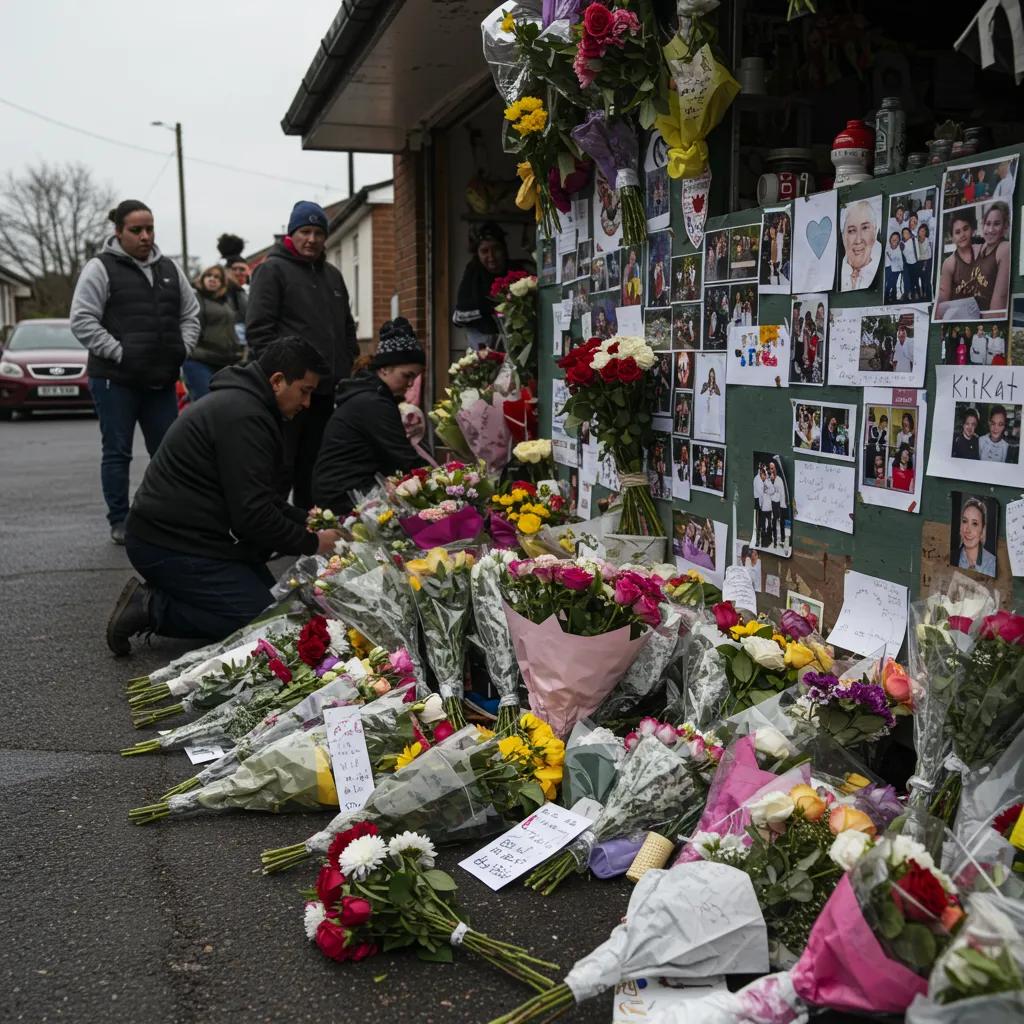
San Francisco neighbors have created visible memorials and used social media to amplify grief, combining remembrance with demands for accountability around autonomous vehicle operations. Public expressions include flowers, signs, photos, and impromptu gatherings at Randa’s Market that both honor KitKat and register protest. The communal response blends mourning rituals with civic activism, illustrating how local loss can catalyze broader debates about technology and urban safety. The subsections below catalog memorial items and describe organized public actions and protest language that have emerged.
What Memorials and Tributes Have Neighbors Created?
Residents have left items at the market site—bouquets, handwritten notes, photographs, and small tokens—that mark KitKat’s presence and invite passersby to acknowledge the loss publicly. These physical tributes function as local altars where neighbors gather, share remembrances, and document the cat’s role in the neighborhood through images and short messages. Online posts aggregate photos and short memorial captions that keep the memory circulating beyond the immediate block, sustaining attention and pressure for an official response. The memorials combine private loss with public symbolism, transitioning naturally into how those sentiments turned into organized actions.
Memorial activities have evolved into more formal expressions of grievance and calls for policy responses.
How Are Local Residents Expressing Grief and Protest?
Beyond physical tributes, residents have organized petitions, draft letters for local officials, and public statements to raise awareness about animal safety and AV accountability, illustrating a blend of grief and civic activism. Protest language varies from calls for improved AV oversight to pleas for better detection systems that consider animals and nonstandard urban actors. Some neighbors emphasize nonviolent community pressure—vigil attendance and organized petitions—while others urge regulators to demand clearer incident reporting. These actions underscore the community’s desire for both recognition of the loss and substantive policy changes to prevent similar tragedies.
The forms of local advocacy naturally segue into broader implications for autonomous vehicle safety and public trust.
What Are the Broader Implications of the Waymo Cat Death for Autonomous Vehicle Safety?
The incident raises larger questions about how autonomous vehicles are trained to perceive and prioritize non-human actors, how public trust shifts in response to visible failures, and what ethical responsibilities companies bear for unintended harms. At the technical level, the case spotlights limitations in detection datasets and classification thresholds that may not fully represent small urban animals. Ethically, it forces reassessment of duty of care toward animals and transparency obligations when vehicles harm living beings. Below are core implications summarized and then expanded through targeted analyses and a comparative incidents table.
- Public Trust Erosion: Visible failures undermine confidence in AV safety and slow deployment acceptance.
- Technical Gaps: Animal detection datasets and sensor fusion strategies may require targeted improvement.
- Ethical Accountability: Companies face pressure to explain prioritization logic and remedial actions.
How Does This Incident Affect Public Trust in Self-Driving Cars?
Yes—the incident can reduce public trust in self-driving cars because tangible harm to a beloved community animal creates emotional, salient evidence of system limits. Empirical surveys historically show that high-profile failures shift public sentiment more than aggregated safety statistics, and localized incidents involving well-known community figures amplify that effect. The Waymo incident thus risks broader skepticism, especially in neighborhoods where residents witness AVs routinely and where human-animal interactions are common. Restoring trust will require transparent data releases, demonstrable technical fixes, and community engagement.
What Ethical Questions Does the Incident Raise About AI in Vehicles?
The death prompts ethical inquiry into whether AV decision-making frameworks sufficiently account for animal life and whether companies should adopt explicit rules prioritizing avoidance of non-human victims. Moral programming choices—including how to weigh collisions involving animals versus property or humans—reflect values that must be articulated publicly. Additionally, transparency and accountability are ethical imperatives: communities demand clear access to incident data and remediation plans. These ethical considerations press AV firms to disclose training datasets, classification priorities, and governance policies.
Ethical Implications of AI in Autonomous Vehicles: Safety, Privacy, and Social Impact
This paper will analyze the difficulties associated with safety, privacy, and social effects, concerning the complex ethical issues that arise when artificial intelligence is used in autonomous vehicles.
A Cyclic Framework for Ethical Implications of Artificial Intelligence in Autonomous Vehicles., S Saleh, 2024
How Does the Waymo Incident Compare to Other Autonomous Vehicle Accidents?
To clarify patterns and regulatory impact, this table compares recent incidents involving autonomous vehicle operators and the public responses they generated. The comparison highlights similarities in public concern and the divergent regulatory actions that followed.
What Is the Current Regulatory Landscape for Autonomous Vehicles After the Waymo Incident?
Regulation of autonomous vehicles involves multiple layers: municipal oversight, state-level agencies like the California DMV, and international frameworks that vary in rigor and focus. The Waymo incident has generated local calls for clarity about reporting standards and oversight responsibilities, particularly concerning collision logs and transparency. Officials and advocacy groups often ask regulators to require standardized incident reporting, audits of perception performance, and clearer liability rules. The following bulleted list outlines key regulatory elements often central to oversight debates and a comparative table presents jurisdictional distinctions.
- Local permitting and city-level ordinances can limit where AVs operate and under what conditions.
- State-level oversight, exemplified by California DMV requirements, sets reporting obligations and testing frameworks.
- International jurisdictions offer varied approaches, with some emphasizing stricter auditor oversight and liability rules.
These elements orient the comparative jurisdictional discussion that follows and suggest potential paths for reform.
What Are San Francisco and California’s AV Safety Regulations?
At the state level, California oversight generally requires registration, testing permits, and incident reporting to designated agencies, with the California DMV historically collecting collision and disengagement data from AV operators. San Francisco, as a municipal jurisdiction, may exercise additional local scrutiny or operational limitations that reflect city priorities and resident concerns. The existing frameworks emphasize data collection and periodic review, but critics argue that reporting can lack timeliness or sufficient granularity to address incidents involving animals or small objects. Strengthening reporting specificity and access could help communities understand and evaluate AV performance.
Are There Calls for Stricter Oversight Following the Cat Death?
Yes—residents and local advocates are urging officials to increase scrutiny, demand clearer incident disclosures, and consider temporary operational restrictions in sensitive zones. Petitions and public comment calls often suggest that regulators require rapid release of sensor logs, independent audits, and stricter local permitting where small-animal interactions are common. Policymakers may debate measures ranging from enhanced reporting requirements to tighter operational speed limits or conditional bans in heavily pedestrianized neighborhoods. The momentum for oversight changes hinges on tangible policy proposals and regulators’ willingness to act.
How Do International Regulations Address AV Safety and Animal Protection?
International approaches vary: some jurisdictions emphasize comprehensive safety certification and liability frameworks, while others focus on experimental sandboxes with strict operational limits and public accountability measures. In certain regions, regulators mandate rigorous testing data and third-party audits, and in others, evolving standards prioritize rapid innovation with lighter immediate constraints. Few frameworks explicitly codify protections for animals, which leaves a policy gap that incidents like the Waymo case now bring into sharper relief.
Ethical Issues in Autonomous Vehicle AI Guidelines
This paper analyzes the ethical issues compiled from 22 major guidelines of AI ethics (Hagendorff, Citation2020). We use this list of AI ethical issues to guide us in identifying the ethics of AI ethics guidelines.
Ethical issues in focus by the autonomous vehicles industry, A Martinho, 2021
How Is the Community Advocating for Pet Safety and Ethical AV Development?
Community advocacy combines memorialization with concrete proposals aimed at reducing the risk AVs pose to pets and small urban animals, while also pushing for higher ethical standards in autonomous systems. Local initiatives include awareness campaigns, petitions for improved reporting and dialogues with city officials, and animal rights organizations have issued statements calling for investigations and policy reforms. Technical proposals focus on improved sensor datasets and model training that incorporate animal detection scenarios. The table below lists active types of initiatives and the groups involved, showing the diversity of responses.
What Local Initiatives Promote Pet Protection in Urban Areas?
Local groups propose measures such as public-awareness campaigns about pet safety near streets, designated pet-safe zones, and partnerships between businesses and animal welfare charities to reduce roaming risks. Educational outreach helps residents understand how to minimize dangerous interactions with vehicles, and cooperative measures—like signage near busy curb cuts—can create safer microenvironments. These targeted initiatives complement regulatory pressure and technical fixes by reducing the likelihood of animal-vehicle encounters through behavioral and environmental design changes.
How Are Animal Rights Groups Responding to the Waymo Incident?
Animal welfare organizations have voiced concern, calling for thorough investigations and demanding that AV operators disclose relevant data and implement animal-aware detection training. Their responses emphasize both compassion for the lost pet and practical policy steps: incident transparency, inclusion of animals in test datasets, and formal oversight to ensure companies address non-human safety. These groups often pursue policy advocacy, public education, and direct engagement with municipal officials, seeking to transform grief into tangible policy improvements.
What Role Can Ethical AI Programming Play in Preventing Future Accidents?
Ethical AI programming can require that AV systems include animal classes in detection datasets, adopt conservative behaviors in environments with high animal activity, and provide transparent logging that allows independent review after incidents. Technical methods—such as augmenting training sets with animal examples, refining sensor fusion thresholds, and building explicit decision trees for low-mass entities—reduce misclassification risk. Ethically, firms can commit to disclosure practices and participatory governance with affected communities. Implementing these changes would create layered protections that combine better sensing, conservative behavior, and public accountability to minimize future harm.
ARY News will continue to monitor developments, report verified updates on community actions, company responses, and regulatory steps, and invite readers to follow ongoing coverage and public discussion as these debates evolve.
Conclusion
The tragic incident involving KitKat highlights the urgent need for improved safety measures in autonomous vehicle technology, particularly regarding the detection of small animals. This event has galvanized community action, emphasizing the importance of transparency and accountability from AV operators. By advocating for better regulations and ethical programming, we can work towards preventing similar tragedies in the future. Stay informed and engaged with our ongoing coverage as we explore the implications of this incident and the community’s response.