Lab-Grown Palm Oil Aims to Halt Deforestation

Lab-Grown Palm Oil Benefits: How Cultivated Palm Oil Aims to Halt Deforestation and Promote Sustainability
Traditional palm oil production drives massive rainforest clearance, contributing to biodiversity loss, greenhouse gas emissions and community displacement, while lab-grown palm oil emerges as a deforestation-free ingredient produced by precision fermentation. This article explains what cultivated palm oil is, how it works and why it offers an urgent solution to rainforest destruction. You will discover its production mechanisms, compare environmental impacts, explore leading innovators, examine scalability challenges, survey practical applications, and glimpse the future of sustainable fats. By understanding these themes, readers can appreciate how lab-grown palm oil transforms the vegetable-oil industry and supports global sustainability goals.
Lab-Grown Palm Oil: Not a solution, (2023-11-29)
What Is Lab-Grown Palm Oil and How Does It Work?
Lab-grown palm oil is a microbial fat created through cellular agriculture and precision fermentation, yielding the same triglyceride profile as conventional palm oil without clearing forests. This approach leverages engineered microorganisms to convert sugars into lipids in bioreactors, delivering a consistent, land-efficient fat that mitigates deforestation. The synergy between synthetic biology and contained fermentation enables scalable production of sustainable oil under controlled conditions.
Before diving into technical details, consider these core components of cultivated palm oil production:
- Synthetic Biology modifies microbial DNA to overproduce palm-like lipids.
- Feedstock Fermentation uses sugar streams (e.g., glucose, molasses) as substrate.
- Bioreactor Cultivation maintains optimal pH, temperature and oxygen for lipid accumulation.
- Extraction and Refinement isolates and purifies oil for food, cosmetics or biofuel use.
These steps establish a closed-loop system that eliminates plantation expansion and begins addressing the urgent need to protect intact rainforests.
What Is Synthetic Palm Oil and Cellular Agriculture?
Synthetic palm oil refers to oil molecules produced by microbial cell cultures rather than oil palm trees. Cellular agriculture is the field that cultivates animal and plant products—such as fats, proteins or skins—in vitro using cell biology and fermentation technologies. Together, they form a disruptive platform that reimagines agriculture by shifting production from fields to bioreactors, enabling year-round output without ecological clearance.
How Does Precision Fermentation Produce Lab-Grown Palm Oil?
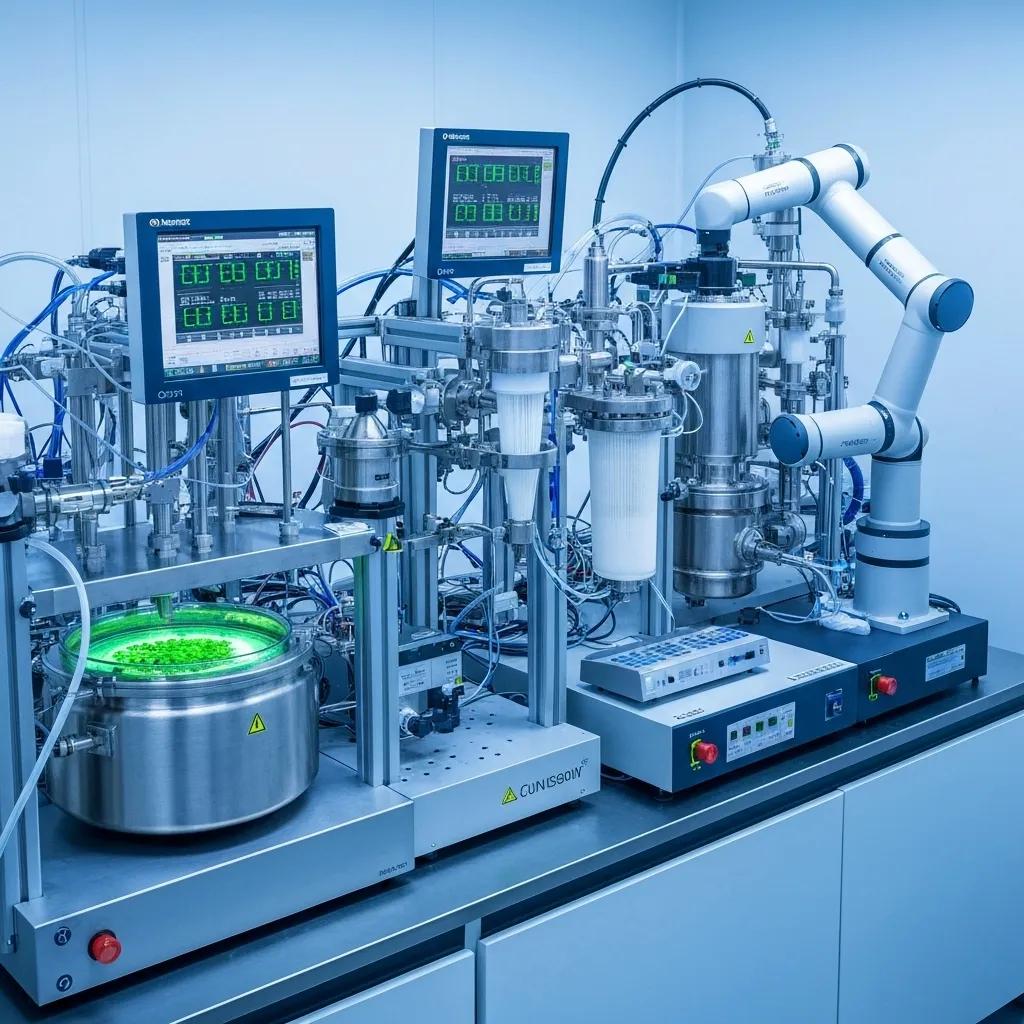
Precision fermentation produces lab-grown palm oil by feeding engineered microorganisms with sugar and nutrients in a controlled vessel.
- Inoculation – A genetically optimized yeast strain is introduced into sterile fermenters.
- Growth Phase – Yeast multiplies using carbohydrate feedstock under regulated pH and oxygen levels.
- Lipid Accumulation – Nutrient shifts trigger cells to accumulate oil droplets intracellularly.
- Harvest and Extraction – Biomass is separated and lipids are extracted via centrifugation and solvent-free refinement.
Precision Fermentation vs Cell Cultivated: Latest Updates – a NewProtein Special Focus, (2023-07-27)
What Are the Key Characteristics of Lab-Grown Palm Oil?
Lab-grown palm oil exhibits unique attributes that align with sustainability and food-tech innovation:
- Deforestation-Free – No land clearing, preserving intact ecosystems.
- Chemically Identical – Matches fatty acid composition of conventional palm oil.
- Land Efficient – Requires minimal footprint compared to plantation acreage.
- Quality Controlled – Batch-to-batch consistency with low contaminants.
- Customizable Profile – Tailored lipid fractions for specific functional applications.
Why Does Traditional Palm Oil Drive Deforestation and Climate Change?
Conventional palm oil cultivation clears millions of hectares of tropical rainforest, reducing habitat for endangered species, releasing vast amounts of carbon and disrupting indigenous livelihoods. As forest is replaced by monoculture plantations, biodiversity collapses and peatlands are drained, emitting greenhouse gases at alarming rates.
Below is a side-by-side overview of how plantation-based palm oil contrasts with lab-grown palm oil across key metrics.
Lab-grown palm oil delivers dramatically lower land footprint and emissions, steering vegetable-oil supply away from ecologically destructive practices.
How Does Palm Oil Cultivation Impact Rainforests and Biodiversity?
Palm oil plantations replace complex forest ecosystems with monocultures, fragmenting habitat and driving wildlife decline. Clearing tropical trees severs food webs, threatens endemic species such as orangutans and tigers, and reduces carbon sequestration capacity, intensifying climate change. Transitioning to fermentation-based oil production removes these drivers of ecological collapse.
What Are the Greenhouse Gas Emissions Linked to Palm Oil Deforestation?
Deforestation for palm oil releases stored carbon from trees and peatlands, accounting for about 3 percent of global greenhouse gas emissions. Peatland drainage emits an estimated 438 million tonnes of CO₂ annually. By avoiding land conversion and peat disturbance, lab-grown oil production sharply reduces the sector’s climate footprint.
How Are Indigenous Communities Affected by Palm Oil Plantations?
Traditional plantations often encroach on ancestral territories, displacing indigenous groups, eroding cultural heritage and undermining subsistence agriculture. Land conflicts and degraded soils compromise local food security. Cultivated palm oil production eliminates plantation expansion, preserving community lands and livelihoods.
How Does Lab-Grown Palm Oil Mitigate These Environmental and Social Issues?
By decoupling oil production from land expansion and shifting to closed-system bioreactors, lab-grown palm oil prevents forest clearance, reduces social conflict over land rights and supports equitable resource use. This sustainable model aligns with zero-deforestation initiatives and respects indigenous territories.
What Are the Environmental Benefits of Lab-Grown Palm Oil?
Lab-grown palm oil cuts land demand by over 99 percent, lowers carbon intensity, safeguards biodiversity and contributes to resilient food systems—all without sacrificing performance in food, cosmetics or biofuels. These environmental gains position cultivated oils as a new standard for sustainable ingredients.
How Does Lab-Grown Palm Oil Reduce Land Use Compared to Traditional Palm Oil?
Microbial oil yields exceed 50 grams per liter of culture, equating to thousands of liters per square meter of bioreactor, whereas tree-based plantations require hectares to match the same output. This dramatic land-use efficiency frees former plantation land for rewilding or food cropping.
In What Ways Does Lab-Grown Palm Oil Lower Greenhouse Gas Emissions?
Contained fermentation processes operate under optimized conditions that capture process CO₂, use renewable energy and eliminate peatland drainage. As a result, cultivated oil production can reduce cradle-to-gate emissions by up to 75 percent compared to the traditional counterpart.
How Does Lab-Grown Palm Oil Protect Biodiversity and Rainforest Ecosystems?
By removing the need to expand plantations, lab-grown palm oil preserves critical forest corridors and habitats. This approach maintains ecosystem services, supports wildlife corridors and enhances carbon storage, advancing conservation objectives.
Can Lab-Grown Palm Oil Support Global Food Security?
Cultivated palm oil offers a stable, climate-resilient supply of vegetable fat that is decoupled from weather-dependent yields and land pressures. Scaling fermentation facilities near demand centers reduces transport emissions and ensures consistent access to this key food ingredient.
Which Companies Are Leading the Development of Lab-Grown Palm Oil?

Innovators such as C16 Biosciences, Xylome and Kiverdi are pioneering precision-fermented oils by combining synthetic biology with bioprocess engineering. Their breakthroughs in yeast strain design, feedstock optimization and large-scale fermentation are accelerating market readiness.
What Role Does C16 Biosciences Play in Lab-Grown Palm Oil Innovation?
C16 Biosciences develops the Palmless® oil platform by engineering yeast to accumulate palm-like lipids. Their technology focuses on scalable bioreactor design and tailored lipid profiles, with support from climate-tech investors to bring deforestation-free oil to market.
C16 Biosciences Launches Palmless™ Bio-Manufactured Alternative to Palm Oil, Reveals Beauty as First-To-Market Product In Early 2023, C16 Biosciences, (2022-11-03)
A clean alternative to one of the world’s most common ingredients, MIT News, (2023-06-22)
Who Are Other Key Innovators Like Xylome and Kiverdi?
Xylome harnesses oleaginous yeasts to convert agricultural byproducts into triacylglycerols, while Kiverdi employs carbon-utilizing microbes to produce specialty oils. Both companies are expanding fermentation capacity and forging partnerships with ingredient brands.
Could Lab-Grown Oils Supplant Palm Oil and Protect Rainforests?, Mother Jones, (2022-01-09)
Kiverdi, Bio-based Industries Consortium (BIC), (n.d.)
How Are These Companies Funded and Supported?
Bill Gates Just Invested in Lab-Grown Palm Oil to Save the Rainforest, livekindly, (2025)
Robust investment and cross-sector collaboration drive continued innovation and scale-up of deforestation-free oil.
What Challenges Does Lab-Grown Palm Oil Face in Scalability and Market Adoption?
Although cultivated oils promise vast environmental gains, hurdles remain in production economics, regulatory pathways, consumer acceptance and supply-chain integration. Addressing these barriers is essential for mainstream adoption.
What Are the Economic and Production Cost Barriers?
High costs of feedstock sugars and bioreactor capital expenditures initially make lab-grown oil more expensive than commodity palm oil. Improving microbial yield, process intensification and feedstock diversification are key to driving down production costs toward price parity.
How Do Regulatory Approvals Affect Lab-Grown Palm Oil Availability?
Lab-grown palm oil must navigate novel-food regulations such as FDA’s GRAS evaluation in the U.S. and the EU’s Novel Foods authorization. Clear safety dossiers, standardized production protocols and alignment with food-safety agencies accelerate market entry.
What Are Consumer Perceptions and GMO Concerns?
Public understanding of fermentation-derived ingredients and genetically modified organisms can influence buying decisions. Transparent communication on safety, sustainability benefits and non-GMO strain options builds trust and fosters acceptance.
How Are Companies Addressing These Challenges?
Producers invest in stakeholder education campaigns, publish third-party life-cycle assessments, pursue non-GMO strain development and forge supply-chain partnerships to demonstrate transparency, reduce costs and expedite regulatory clearances.
Where Is Lab-Grown Palm Oil Used and What Are Its Market Applications?
Cultivated palm oil meets functional demands across food, cosmetics and industrial sectors, replicating melting, texture and oxidative stability properties of conventional oil without ecological compromise.
How Is Lab-Grown Palm Oil Integrated into Food Products?
In bakery, dairy alternatives and snack formulations, lab-grown oil substitutes conventional palm oil to create stable textures, extend shelf life and deliver equivalent mouthfeel—all with verified sustainability credentials.
What Are Its Uses in Cosmetics and Personal Care?
Deforestation-free oil provides emollient, emulsification and skin-conditioning functions in creams, lotions and soap bars. Brands leverage its traceable origin to bolster eco-friendly positioning and ethical sourcing claims.
Palmless™ Torula Oil, Crude by C16 Biosciences – Personal Care & Cosmetics, AZoCleantech, (2020-12-16)
Are There Industrial or Biofuel Applications for Lab-Grown Palm Oil?
Beyond consumer goods, precision-fermented oil can serve as feedstock for biodiesel, biolubricants and specialty surfactants, replacing fossil-based and plantation-derived lipids in broader industrial markets.
What Is the Future Outlook for Lab-Grown Palm Oil and Sustainable Fat Alternatives?
As cellular agriculture matures, lab-grown palm oil will integrate with other bio-based fats, genetic-engineering advances and digital bioprocess control to form a diversified portfolio of sustainable oils that meet global demand without deforestation.
How Will Cellular Agriculture Shape Sustainable Fat Production?
Cellular agriculture platforms will expand into coconut, soybean and cocoa fats, applying modular fermentation units, AI-driven strain optimization and continuous bioprocessing to scale eco-innovative oils rapidly.
What Emerging Technologies Complement Lab-Grown Palm Oil?
Gene-editing tools, biodegradable bioreactors and blockchain-enabled supply-chain traceability systems enhance fermentation efficiency, reduce costs and ensure transparent sourcing, reinforcing consumer confidence.
How Can Lab-Grown Palm Oil Contribute to Zero Deforestation Initiatives?
By supplying certified deforestation-free fats, cultivated palm oil aligns with emerging regulatory frameworks and corporate zero-deforestation commitments, enabling major consumer-goods companies to meet sustainability targets and protect remaining forests.
Roundtable on Sustainable Palm Oil (RSPO): A global partnership to make palm oil sustainable, Roundtable on Sustainable Palm Oil (RSPO), (n.d.)
Lab-grown palm oil represents a landmark shift toward climate-smart agriculture by replacing deforestation-driven commodities with precision-fermented fats. As production scales and costs decline, this innovation will enhance food security, protect critical ecosystems and reshape the global oils market. Continued collaboration among biotech pioneers, regulatory bodies and brand partners will unlock the full potential of cultivated oils for a sustainable future.