Mission Accomplished: China’s Tianzhou-9 Cargo Spacecraft Completes Flawless Mission in Space Logistics
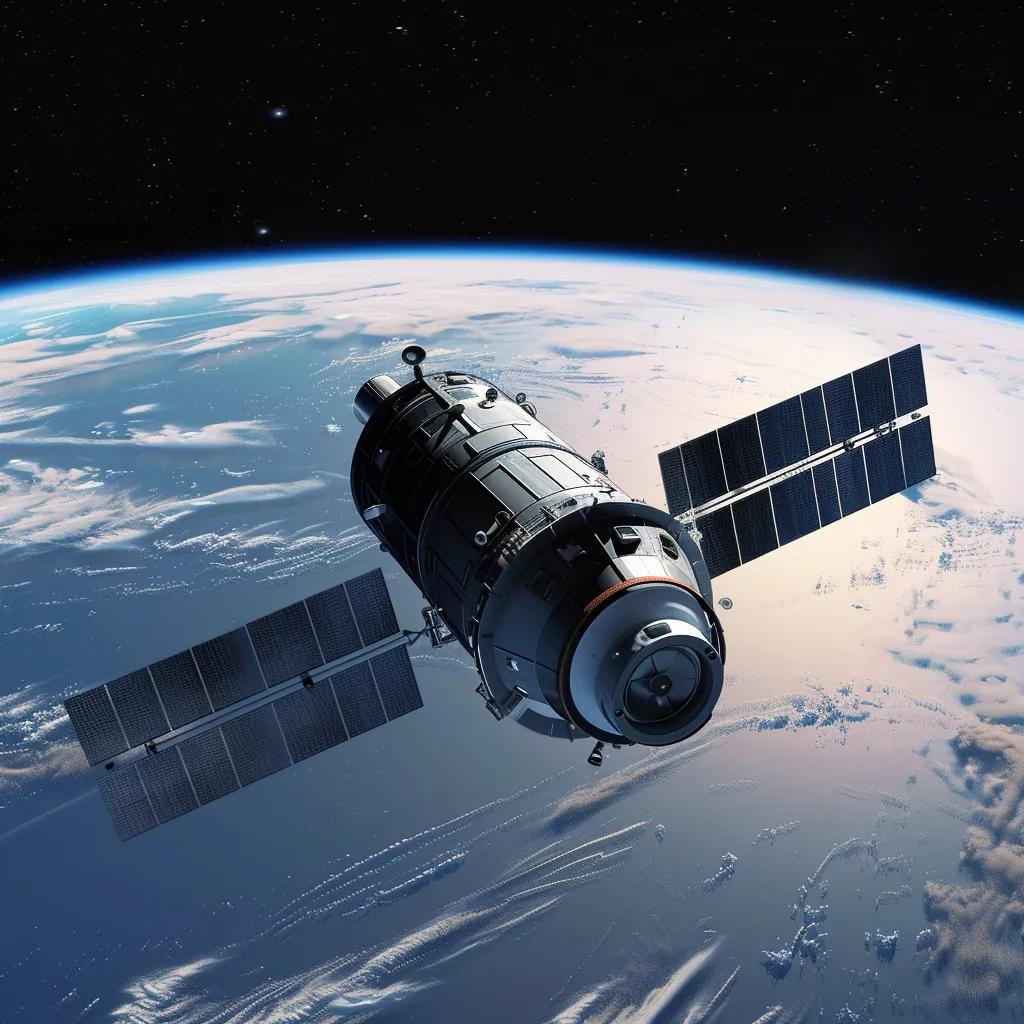
China’s Tianzhou-9 cargo spacecraft achieved a milestone by delivering critical supplies and advanced research equipment to the Tiangong Space Station with pinpoint precision.
In accomplishing this flawless mission, Tianzhou-9 reinforces China’s independent orbital logistics capabilities and sets the stage for extended human presence in low-Earth orbit.
This article explores seven core themes:
- Design and capabilities of Tianzhou-9
- Launch sequence and docking procedures
- Detailed payload manifest
- Impact on Tiangong operations and research
- Comparison with international cargo vehicles
- China’s future space ambitions
- Strategic role of the Wenchang launch site
What Are the Design and Capabilities of the Tianzhou-9 Cargo Spacecraft?
Tianzhou-9 is a purpose-built resupply vehicle designed to transport up to 7 tonnes of cargo, propellant and experiments to an orbital outpost. By combining a robust pressurized module with an autonomous propulsion and docking system, the spacecraft ensures reliable delivery of life-support supplies and scientific payloads. This integration of high capacity and precision docking underpins China’s strategic space logistics network and paves the way for routine station resupply.
Tianzhou-9 Design and Capabilities
The Tianzhou-9 spacecraft is designed to transport substantial cargo, propellant, and experiments to the Tiangong Space Station. Its pressurized module, autonomous propulsion, and docking system ensure reliable delivery of essential supplies and scientific payloads, supporting long-duration crewed missions.
This source provides a general overview of the Tianzhou-9 mission, which supports the article’s description of the spacecraft’s design and capabilities.
What Are the Key Specifications and Payload Capacity of Tianzhou-9?
Tianzhou-9 features a cylindrical pressurized module, detachable propulsion unit and docking interface. Its large volume and mass capability maximize resupply efficiency for long-duration crewed missions.
These specifications support substantial cargo loads and extended orbital operations, enabling sustained missions aboard Tiangong Space Station. Understanding the docking mechanism illuminates how these capabilities translate into flawless orbital rendezvous.
How Does Tianzhou-9’s Autonomous Rendezvous and Docking System Work?
Tianzhou-9 uses radar, lidar and optical sensors to track the Tiangong target. A phased approach ensures safe approach and capture:
- Phasing Orbit Entry – Tianzhou-9 adjusts orbit to 2 km below the station.
- Relative Navigation – Lidar and optical cameras guide distance closing to 500 m.
- Approach Corridor – Automated thrusters maintain a 0.5° attitude alignment.
- Soft Capture – A specialized probe-and-cone interface engages the station’s docking port.
- Hard Docking Sealing – Latches secure the interface and complete pressurization checks.
Each step reduces risk of collision while optimizing fuel consumption. This precise rendezvous framework supports routine cargo runs and informs innovations in future autonomous missions.
What Innovations Make Tianzhou-9 a Pillar of China’s Space Logistics?
Tianzhou-9 integrates several cutting-edge technologies that elevate China’s orbital supply chain:
- Reusable Propulsion Module: Thruster clusters are designed for multiple reuse, reducing launch costs.
- Modular Pressurized Section: A standardized container enables rapid integration of new scientific payloads.
- High-Throughput Data Link: Ka-band communication offers 150 Mbps downlink for real-time telemetry.
- Enhanced Thermal Control: Heat pipes and phase-change materials maintain stable internal temperatures.
- Precision Docking Software: AI-driven algorithms optimize approach vectors in varying lighting conditions.
These innovations collectively boost mission reliability and cost-effectiveness, laying the groundwork for an expanded space logistics architecture. The flawless launch that followed these design advances further cements Tianzhou-9’s operational success.
How Did the Tianzhou-9 Launch and Dock with the Tiangong Space Station?
When and Where Was Tianzhou-9 Launched?
The mission began at 7:10 a.m. Beijing Time on July 15, 2025 from Wenchang’s coastal complex. The tropical latitude provides extra payload boost from Earth’s rotation and direct ocean recovery corridors for rocket stages. This advantageous geography underpins the high success rates of China’s space logistics missions and sets the stage for robust launch operations.
What Role Did the Long March 7 Rocket Play in the Launch?
Long March 7 serves as the primary medium-lift launch vehicle for resupply missions. Its liquid oxygen-kerosene engines deliver 590 tonnes of thrust and feature:
- High-pressure gas generator cycle for efficiency
- Modular core stage for rapid turnarounds
- Solid rocket boosters providing extra lift capacity
By reliably inserting Tianzhou-9 into a 390 km circular orbit, Long March 7 underwrites the flawless mission profile and future cadence of station resupply flights.
How Was the Precision Docking with Tiangong Achieved?
The docking sequence combined automated control with redundant safety checks:
This rigorous procedure enabled docking at 8:52 a.m. Beijing Time on July 17, verifying Tianzhou-9’s readiness to deliver its vital cargo and marking a flawless mission conclusion.
What Cargo Did Tianzhou-9 Deliver to Sustain the Tiangong Space Station?
What Essential Supplies Were Included for the Shenzhou-20/21 Crew?
The fundamental cargo manifest sustained daily operations aboard Tiangong:
- Food and Drink – 900 kg of heat-stabilized meals and hydration systems.
- Water Replenishment – 500 kg recycled water and storage bladders.
- Propellant – 2,000 kg of orbital maneuvering fuel for station reboosts.
- Life-Support Spares – Air filters, carbon dioxide scrubber cartridges and oxygen canisters.
- Exercise Equipment – Compact treadmill harness and resistance bands to mitigate muscle atrophy.
What Scientific Payloads Were Carried, Including Spacesuits and Brain Organoid Chip?
Beyond essentials, Tianzhou-9 delivered breakthrough equipment:
How Do Upgraded Feitian Spacesuits Enhance Astronaut Safety and Mobility?
The new Feitian extravehicular suits integrate:
- Dual-layer pressure garments for puncture resistance
- Articulated bearing joints that increase freedom of movement by 20%
- Advanced life-support backpack with 8-hour EVA capacity
What Is the Purpose of the Brain Organoid Chip in Space Medicine Research?
The brain organoid chip simulates human neural tissue growth under microgravity, enabling:
- Analysis of neuronal differentiation pathways
- Assessment of synaptic plasticity in low-shear environments
- Potential treatments for neurodegenerative conditions on Earth
How Does Tianzhou-9’s Mission Impact China’s Space Station Operations and Research?
What Is the Role of the Tiangong Space Station in China’s Space Program?
Tiangong serves as China’s modular orbital laboratory, featuring three core modules—Tianhe, Wentian and Mengtian—that support:
- Long-term crew habitation
- Multidisciplinary microgravity research
- International cooperative experiments
How Does Tianzhou-9 Support Long-Term Human Presence in Orbit?
By resupplying life-support consumables, spare parts and propellant, Tianzhou-9 ensures:
- Continuous habitation without return-to-Earth breaks
- Regular station altitude maintenance to counter drag
- Rapid integration of new research payloads
What Scientific Experiments Are Enabled by Tianzhou-9’s Payload?
The delivered payload suite empowers a range of investigations:
- Microbial Adaptation Studies – Characterizing bacterial gene expression in space
- Materials Science Tests – Curing advanced composites under zero-G
- Biomedical Assays – Evaluating heart cell organoids on the brain chip
How Does Tianzhou-9 Compare to International Cargo Spacecraft?
What Are the Differences Between Tianzhou-9 and SpaceX Dragon or Russia’s Progress?
How Does China’s Autonomous Docking Technology Stand Out Globally?
China’s AI-enhanced rendezvous software optimizes approach vectors in dynamic lighting and debris conditions, delivering:
- Reduced reaction time for collision avoidance
- Higher docking success rates in varying orbital debris environments
- Scalable algorithms for future deep-space autonomous missions
What Are China’s Future Ambitions Following the Tianzhou-9 Mission?
How Does Tianzhou-9 Fit into China’s Lunar and Deep Space Exploration Plans?
Tianzhou-series vehicles provide a testbed for:
- Autonomous cargo runs to lunar Gateway platforms
- In-orbit refueling depots for crewed lunar modules
- Deep-space navigation algorithms that inform Mars probe logistics
What Advances Are Expected in China’s Space Logistics and Cargo Spacecraft?
Future developments include:
- Fully reusable cargo stages with propulsive landings
- 10-tonne class modules for rapid station expansion
- Green propellant technologies to reduce environmental impact
How Will International Cooperation Evolve with China’s Space Station Operations?
China is opening Tiangong to global partners through:
- Collaborative research calls for life-science experiments
- Cross-training programs for international astronauts
- Data-sharing agreements in space weather and Earth observation
What Is the Significance of the Wenchang Space Launch Site in China’s Space Program?
Why Is Wenchang the Preferred Launch Site for Tianzhou Missions?
Wenchang offers:
- High latitude advantage for increased payload to low-Earth orbit
- Direct sea-range trajectories for stage recovery
- Tropical weather patterns that reduce icing and fuel boil-off
Wenchang Launch Site Significance
The Wenchang Space Launch Site’s coastal location and infrastructure are crucial for China’s heavy-lift launch capabilities. The high-latitude advantage, direct sea-range trajectories, and tropical weather patterns contribute to consistent launch windows and mission reliability.
This source provides information on the Wenchang Space Launch Site, which supports the article’s discussion of the site’s significance in China’s space program.
How Does Launch Site Operations Ensure Mission Success?
Wenchang’s ground support integrates:
- Automated fueling systems that cut launch prep time by 30%
- Real-time weather monitoring to optimize launch windows
- Dedicated range safety for secure rocket stage drop zones
Tianzhou-9’s exemplary design, precise launch, successful docking and robust cargo delivery demonstrate China’s mastery of space logistics. By sustaining Tiangong operations and fueling cutting-edge research, this mission cements China’s status as a leading spacefaring nation. As reusable technologies and international collaborations expand, Tianzhou-9’s legacy will shape deep-space exploration and global orbital partnerships for years to come.
Frequently Asked Questions
What are the main challenges faced during the Tianzhou-9 mission?
The Tianzhou-9 mission encountered several challenges typical of space logistics operations. These included ensuring precise orbital insertion, managing the complexities of autonomous docking, and maintaining communication with ground control during critical phases. Additionally, the mission had to account for potential space debris and varying environmental conditions in low-Earth orbit. Each of these factors required meticulous planning and real-time adjustments to ensure the spacecraft’s successful delivery of cargo to the Tiangong Space Station.
How does Tianzhou-9 contribute to international space collaboration?
Tianzhou-9 plays a significant role in fostering international collaboration in space exploration. By opening the Tiangong Space Station to global partners, China aims to engage in joint research initiatives and share data on scientific experiments. This collaborative approach not only enhances the scientific output of missions but also promotes goodwill and knowledge exchange among nations, paving the way for future cooperative projects in space exploration and technology development.
What safety measures are in place for Tianzhou-9’s operations?
Safety measures for Tianzhou-9’s operations include a comprehensive suite of redundant systems designed to mitigate risks during launch, docking, and cargo delivery. The spacecraft employs advanced sensor technology for navigation and collision avoidance, ensuring safe approach and docking with the Tiangong Space Station. Additionally, real-time monitoring systems are in place to track the spacecraft’s health and performance, allowing for immediate responses to any anomalies that may arise during the mission.
What advancements in technology were tested during the Tianzhou-9 mission?
The Tianzhou-9 mission tested several technological advancements, including its autonomous rendezvous and docking system, which utilizes AI-driven algorithms for optimal approach vectors. The mission also showcased the reusable propulsion module, which is designed to lower costs and increase efficiency for future launches. Furthermore, the high-throughput data link enabled real-time telemetry, enhancing communication capabilities during the mission and setting a precedent for future space logistics operations.
How does Tianzhou-9 impact future space missions?
Tianzhou-9 significantly impacts future space missions by establishing a reliable framework for cargo resupply and logistics in low-Earth orbit. Its successful operations provide valuable data and insights that will inform the design and execution of subsequent missions, including those targeting lunar and deep-space exploration. The mission’s innovations in autonomous systems and reusable technologies are expected to enhance the efficiency and safety of future space endeavors, paving the way for sustained human presence beyond Earth.
What role does the Wenchang launch site play in future missions?
The Wenchang launch site is crucial for future missions due to its strategic geographical advantages, including high latitude for increased payload capacity and direct ocean recovery corridors. This site is designed to support heavy-lift launches and is equipped with advanced ground support systems that streamline operations. As China expands its space ambitions, Wenchang will continue to be a key asset in facilitating reliable and efficient launches for various missions, including those involving the Tiangong Space Station and beyond.
Conclusion
Tianzhou-9’s successful mission highlights China’s advancements in space logistics, showcasing its ability to deliver essential supplies and innovative research equipment to the Tiangong Space Station. This achievement not only reinforces the nation’s independent orbital capabilities but also sets a precedent for future deep-space exploration and international collaboration. To stay informed about the latest developments in space technology and research, consider exploring our comprehensive resources. Join us in following the exciting journey of China’s space program as it continues to push the boundaries of exploration.