MIT Spin-off Commonwealth Fusion Systems Achieves Net Energy Gain in Compact Fusion Reactor
The demonstration of net energy gain in a compact fusion reactor by an MIT spin-off marks a turning point in clean energy innovation, promising a future of carbon-free power and sustainable electricity. This breakthrough addresses the long-standing challenge of producing more fusion energy than the device consumes, unlocking the potential for limitless, safe power. In this article, we will explore:
- The fundamentals of nuclear fusion and its significance for clean energy
- The collaborative journey of Commonwealth Fusion Systems and MIT toward this milestone
- SPARC’s design innovations that enabled net energy gain
- The path to commercial fusion power with the ARC plant
- The technical marvel of high-temperature superconducting magnets
- Economic and environmental implications of fusion success
- Remaining challenges and the roadmap toward grid-scale fusion
By weaving together the physics, technological advances, and strategic partnerships behind this achievement, we lay a foundation for understanding how compact fusion reactors will shape the future of electricity.
What Is Nuclear Fusion and Why Is It Important for Clean Energy?
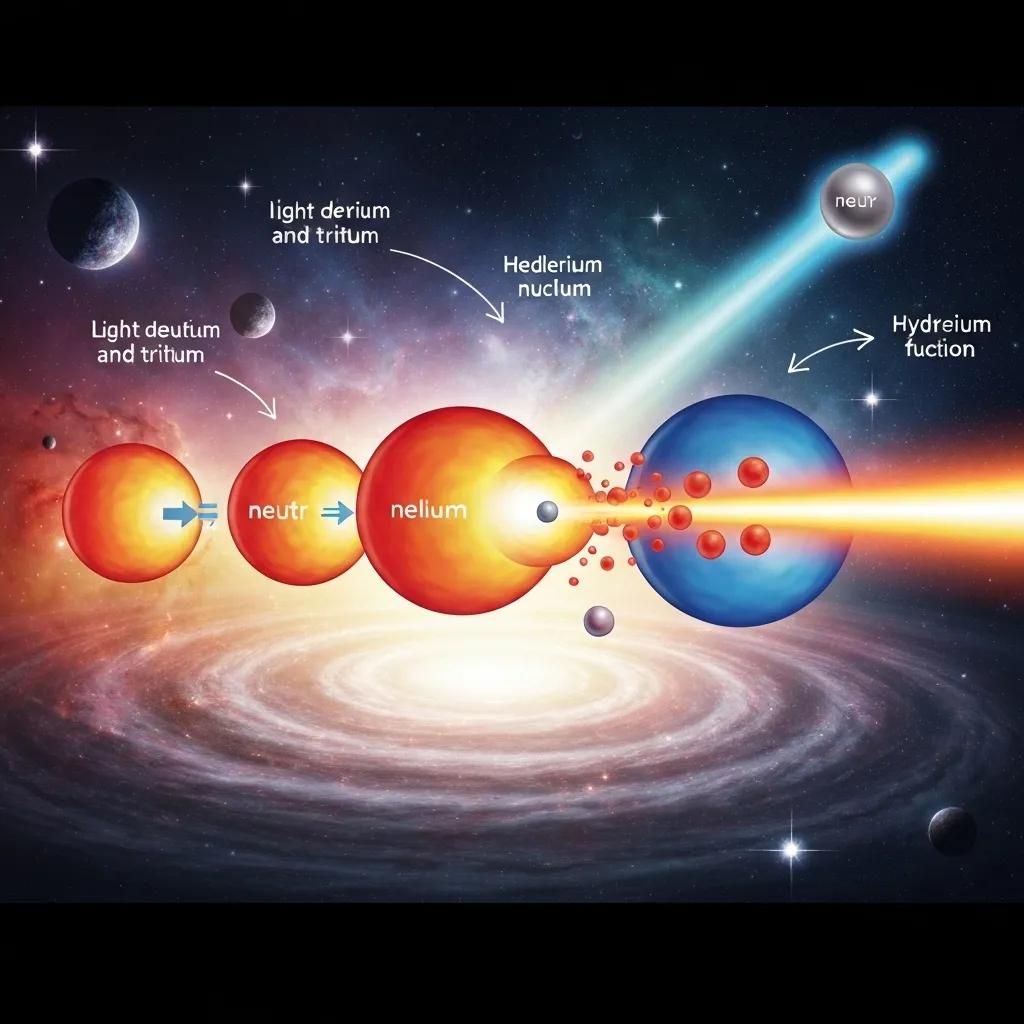
Nuclear fusion is the process of combining light atomic nuclei—primarily isotopes of hydrogen—into heavier nuclei, releasing vast amounts of energy through mass-to-energy conversion. This reaction powers the sun and promises a clean energy solution on Earth by producing no carbon emissions and minimal long-lived radioactive waste. For instance, fusing deuterium and tritium yields high-energy neutrons and helium, illustrating fusion’s potential to generate safe, baseload power without greenhouse gases or meltdown risks.
A compact fusion reactor harnesses plasma physics to replicate these stellar processes on a manageable scale, offering a sustainable alternative to fossil fuels and fission reactors with greatly reduced environmental impact and inherent safety.
How Does Nuclear Fusion Work in a Tokamak Reactor?
In a tokamak reactor, superheated plasma is confined within a toroidal chamber by powerful magnetic fields, forcing charged particles into tight orbits until fusion conditions—temperatures exceeding 100 million °C—are reached.
- Magnetic Confinement: Toroidal and poloidal fields created by superconducting coils guide plasma.
- Plasma Heating: Neutral beam injection and radiofrequency waves raise particle energies.
- Fusion Reactions: High-energy collisions between deuterium and tritium produce helium and neutrons.
Operation of a tokamak blends electromagnetism and plasma physics to sustain conditions where fusion reactions outpace energy losses, paving the way to energy gain.
What Are the Environmental Benefits of Fusion Energy?
Before listing benefits, consider how fusion’s core mechanism avoids CO₂ and long-lived waste.
Environmental Benefits of Nuclear Fusion
The following table outlines key environmental advantages:
Fusion’s Environmental Impact
Fusion’s environmental profile positions it as a leading solution for sustainable energy, directly supporting global decarbonization targets and energy security.
Advantages of Fusion Power
What Is Net Energy Gain and Why Does It Matter?
Net energy gain, quantified by the fusion energy gain factor Q (output/input), measures a reactor’s viability.
A Q > 1 indicates that the fusion power produced exceeds the power required to sustain the reaction. Achieving net gain is essential because it demonstrates that fusion can be a practical energy source rather than an experimental novelty. Demonstration of Q > 1 in a compact device validates the underlying physics and paves the way toward commercial power plants capable of continuous electricity generation.
How Did Commonwealth Fusion Systems and MIT Collaborate to Achieve This Breakthrough?
Commonwealth Fusion Systems (CFS) spun out from MIT’s Plasma Science and Fusion Center in 2018 to accelerate fusion toward commercialization. By translating MIT’s decades-long research into industrial-scale development, CFS bridged the gap between laboratory physics and deployable power plants.
What Is the History and Mission of Commonwealth Fusion Systems?
Commonwealth Fusion Systems emerged as a venture to commercialize high-field tokamak technology developed at MIT. Its mission is to deliver the first net-energy-gain fusion device (SPARC) and follow with a grid-connected fusion power plant (ARC) by the early 2030s. By harnessing breakthroughs in superconducting magnet materials, CFS aims to produce compact, cost-effective fusion systems that outperform traditional large-scale projects in speed and budget.
Who Are the Key People Behind the Fusion Breakthrough?
Dennis Whyte, Director of MIT’s Plasma Science and Fusion Center and co-founder of CFS, provides strategic leadership in plasma physics research. Bob Mumgaard, CFS CEO, brings engineering and commercialization expertise. Their team includes specialists in superconducting materials, plasma confinement, and systems integration, working collaboratively to transform academic insights into functioning reactors.
How Has Private Investment Accelerated Fusion Development?
Private investment exceeding $3 billion in CFS and over $8 billion across the fusion sector has propelled rapid innovation. Venture capital firms and corporate partners recognize fusion’s strategic value for clean energy. Accelerated funding cycles have shortened development timelines, enabling companies like CFS to progress from concept to net gain demonstration within five years, a pace unmatched by traditional government-led projects.
What Makes the SPARC Tokamak the First to Demonstrate Net Energy Gain?
SPARC is a compact, high-field tokamak designed to achieve Q > 1 by utilizing advanced superconducting magnets to generate unprecedented magnetic field strength in a smaller device footprint.
SPARC’s Mission
Key SPARC Features and Goals
- Target Q factor: > 2
- Fusion power output: 50–100 MW
- Device major radius: 1.85 m
- Peak magnetic field: 12–20 T
By reaching breakeven and beyond in a compact tokamak, SPARC validates a scalable model for future commercial fusion power.
How Do High-Temperature Superconducting (HTS) Magnets Enable SPARC’s Compact Design?

High-Temperature Superconducting Magnets
- Sustain magnetic fields up to 20 Tesla
- Reduce coil size and reactor footprint
- Lower cryogenic cooling requirements
By enabling tighter plasma confinement in a smaller vessel, HTS magnets allow SPARC to reach fusion conditions with reduced scale and cost.
What Are the Key Specifications and Goals of the SPARC Reactor?
Before detailing specifications, consider SPARC’s ultimate goal: net energy gain in a scientifically and commercially relevant device.
The following list summarizes SPARC’s critical attributes:
- Major radius of 1.85 m to maintain compact volume
- Plasma current of 8 MA for sufficient confinement
- Magnetic field of 12–20 T achieved with REBCO magnets
- Fusion power production of 50–100 MW for demonstration of Q > 1
These parameters converge to establish SPARC as the first demonstration of net fusion power in a private fusion device, laying the groundwork for ARC.
How Does SPARC Compare to Traditional Fusion Reactors Like ITER?
Comparison of SPARC to a large-scale reactor like ITER highlights the advantages of compactness and cost-effectiveness:
How Will the ARC Fusion Power Plant Commercialize Fusion Energy?
ARC Fusion Power Plant
What Are ARC’s Electricity Generation Goals and Timeline?
ARC aims to produce hundreds of megawatts of fusion power, feeding electricity directly into the grid by the early 2030s. Its goals include:
- Demonstrating continuous fusion operation for months
- Achieving net electrical output after accounting for all plant energy usage
- Maintaining high operational availability comparable to conventional power plants
Where Is the ARC Fusion Power Plant Being Built?
The ARC facility is planned for Chesterfield County, Virginia, leveraging proximity to existing grid infrastructure and partnerships with Dominion Energy. This site selection facilitates rapid grid integration and supports regional clean energy goals.
How Does ARC Build on SPARC’s Demonstration Success?
ARC scales SPARC’s proven technologies—HTS magnet systems, plasma control, and blanket designs—into a power plant architecture. Technology transfer from SPARC ensures that ARC benefits from validated high-field coil manufacturing, plasma confinement strategies, and heat-extraction systems, reducing technical risk and accelerating deployment.
What Are the Technical Innovations Behind High-Temperature Superconducting Fusion Magnets?
High-temperature superconducting magnets form the backbone of compact fusion design by generating strong magnetic fields in a smaller footprint, improving reactor efficiency and reducing cost.
What Is REBCO and Why Is It Critical for Fusion Magnets?
REBCO (rare-earth barium copper oxide) is a ceramic superconductor that maintains zero-resistance current flow at temperatures around 20–30 K. Its key advantages include:
- High critical current density under strong magnetic fields
- Enhanced mechanical strength for coil winding
- Operation at elevated cryogenic temperatures, simplifying cooling systems
REBCO Magnets
REBCO’s material properties enable coils that deliver magnetic fields above 20 Tesla, essential for compact tokamak designs.
How Do HTS Magnets Achieve Magnetic Fields Up to 20 Tesla?
HTS magnets combine REBCO tapes wound into layered coils with robust structural support and cryogenic cooling. Their construction involves:
- Layered winding of REBCO tapes for high current capacity
- Reinforced casings to withstand Lorentz forces at extreme fields
- Cryostats maintaining ~20 K temperatures with closed-cycle refrigerators
These engineering solutions deliver unprecedented field strength critical for plasma confinement in SPARC and ARC.
How Do HTS Magnets Improve Fusion Reactor Efficiency and Size?
By producing stronger magnetic fields, HTS magnets:
- Enable smaller plasma volumes to achieve fusion conditions
- Reduce reactor footprint and material costs
- Lower operational expenditure through higher thermal margins
Compact reactors require fewer resources for construction and maintenance, improving the economic viability of fusion power plants.
What Are the Economic and Environmental Impacts of This Fusion Breakthrough?
Demonstrating net fusion energy gain ushers in an era of sustainable power generation with far-reaching economic and environmental benefits.
How Does Fusion Energy Compare Economically to Fossil Fuels and Fission?
Fusion’s long-term cost structure benefits from abundant fuel and minimal waste handling. Compared to fossil fuels and fission:
- Capital expenditure per megawatt declines as reactor designs scale
- Fuel costs are negligible relative to operational expenses
- No carbon pricing or emission controls increase fusion’s competitiveness
Private estimates project fusion electricity costs falling below that of new nuclear and on-peak natural gas plants by the 2040s.
What Are the Climate and Energy Security Benefits of Fusion Power?
Fusion power delivers zero-carbon electricity without reliance on variable resources, enhancing grid stability and energy independence. Its inherent safety and minimal waste footprint align with global climate targets and reduce geopolitical energy risks by eliminating fuel import dependence.
What Strategic Partnerships Support Fusion Commercialization?
Key alliances accelerate fusion deployment:
- Google Power Purchase Agreement for 200 MW of future ARC output
- Dominion Energy Collaboration for site development in Virginia
- Government Research Grants supporting LMNT materials lab at MIT
What Challenges Remain and How Are They Being Addressed?
Although net energy gain is proven, fusion must overcome engineering and scientific hurdles before widespread commercialization.
What Materials Science Challenges Must Fusion Reactors Overcome?
Fusion reactors face extreme neutron flux and heat loads that degrade structural materials. Labs like MIT’s Laboratory for Materials in Extreme Nuclear Environments (LMNT) are developing heat-resistant alloys, tungsten composites, and self-healing coatings to extend component lifetimes and ensure reactor integrity under continuous operation.
How Is AI Accelerating Fusion Research and Development?
Artificial intelligence enables rapid optimization of reactor designs by simulating plasma behavior, predicting material performance, and controlling real-time plasma instabilities. Machine learning models reduce experimental cycles by identifying ideal coil configurations and operational parameters, accelerating progress toward commercial fusion plants.
What Is the Roadmap for Achieving Commercial Fusion Power?
- SPARC demonstration of net energy gain in the mid-2020s
- ARC construction and grid connection in the early 2030s
- Incremental scale-up of commercial fusion fleets by mid-2030s
By adhering to these milestones, fusion energy can transition from proof-of-concept to a cornerstone of the global clean energy portfolio.
Fusion’s realization of net energy gain heralds a new epoch in sustainable power, combining cutting-edge physics, advanced materials, and strategic partnerships to meet humanity’s growing energy needs without compromising the planet.