Nvidia CEO Warns China is Set to Win AI Race Amid US Chip Export Restrictions
Nvidia CEO Warns: China Poised to Win AI Race Amid US Chip Restrictions – Unpacking the US-China AI Chip Rivalry
Nvidia CEO Jensen Huang’s recent warning that China is on track to dominate the AI race has sharply refocused attention on how export controls, domestic policies, and scaling compute capacity are shaping global technology leadership. This comprehensive article delves into Huang’s concerns, the mechanics of US chip export restrictions, China’s strategic countermeasures, and the projected 2025 market landscape for AI accelerators and memory technologies. Readers will gain insights into which technologies are targeted by sanctions, how Chinese firms are rapidly closing capability gaps, the critical role of High-Bandwidth Memory (HBM) in large-model training, and the broader implications of these shifts for Pakistan and the wider region. Geo News (Jang Media Group) delivers this timely, accurate analysis to inform and engage our audience, fostering transparency and accountability in reporting on geopolitically sensitive tech policy. The piece meticulously maps policy, industry, and regional implications across six dedicated sections, providing comparative tables, concise lists for quick reference, and scenario-based outlooks to support policymakers, industry leaders, and the general public.
Why is Nvidia CEO Jensen Huang Sounding the Alarm on China’s AI Lead?
Jensen Huang contends that China possesses a structural advantage, stemming from its compute scale, energy economics, and concentrated talent, which could translate into sustained AI leadership. He frames this issue not merely as a matter of hardware suppliers but as a result of national strategies that consolidate procurement, leverage inexpensive power, and facilitate large-scale data-center deployments into a formidable collective advantage. Huang’s warning serves as both a shrewd market analysis and a direct appeal to policymakers and industry stakeholders to critically assess how export controls and product strategies are influencing the long-term competitive balance. This framing sets the stage for a concise summary of the core reasons he cites and their interplay in reshaping the dynamics of the AI race.
Huang’s stark warning can be summarized effectively: China’s immense scale and robust policy support are enabling faster, more cost-efficient AI training, potentially accelerating model development and deployment relative to other global players. Key drivers highlighted by Huang include readily available energy that significantly reduces training costs, national procurement initiatives that aggregate demand, and a concentrated pool of research talent bolstered by institutional incentives. These combined factors are boosting China’s effective compute per researcher, fundamentally altering where frontier AI models are developed and refined. Understanding these critical drivers helps illuminate why Nvidia is publicly cautioning about a shifting competitive baseline.
The fundamental reasons underpinning Huang’s warning include the following structural dynamics:
- **Energy and Cost Advantage:** China’s policy environment facilitates lower-cost power for intensive, compute-heavy AI training operations.
- **Scale of Compute and Procurement:** Centralized procurement and rapid data-center expansion are generating substantial aggregate compute capacity.
- **Talent and Research Concentration:** A dense ecosystem of AI researchers and industrial laboratories is accelerating innovation and deployment cycles.
These three interconnected elements create a powerful reinforcing cycle: more affordable compute attracts increased training, which in turn yields more sophisticated models, justifying further investment and procurement—a cycle that the subsequent section explores in relation to Nvidia’s own commercial strategy.
What are Jensen Huang’s Foremost Concerns Regarding China’s AI Progress?
Huang’s primary concerns underscore systemic advantages rather than a singular technological gap, pointing to aggregated compute power, subsidized operational costs, and policy-driven procurement that collectively tip the economic scales of AI training towards large-scale, concentrated deployments. He emphasizes that when energy and deployment scale effectively reduce per-training-run costs, organizations gain the ability to iterate model architectures and hyperparameters far more aggressively, leading to accelerated progress. This apprehension is rooted in the dynamic where readily available compute and low operational costs significantly speed up empirical model improvements. By noting the intricate interaction between public policy and private investment, Huang suggests that technological leadership can become self-reinforcing once a critical scale is achieved.
These concerns also extend to the depth of the ecosystem: encompassing access to advanced memory technologies, sophisticated packaging, and optimized software stacks that maximize throughput. Huang’s perspective implies that the AI race isn’t won by a single vendor but by environments that foster continuous, low-cost experimentation and deployment. Recognizing this helps contextualize why export restrictions targeting specific hardware classes may slow, but not entirely halt, capability growth if alternative pathways and policy levers remain actively in play. This crucial recognition then informs how Nvidia’s commercial decisions reflect both regulatory compliance and strategic market positioning.
How Does Nvidia’s Business Strategy Intersect with the US-China AI Competition?
Nvidia meticulously balances access to the lucrative Chinese market with stringent adherence to export controls, while simultaneously adapting its product roadmaps to diverse regulatory regimes; this delicate balance profoundly shapes its public statements and product segmentation. In practice, Nvidia manages region-specific SKUs, navigates complex licensing processes, and implements robust compliance frameworks to sustain revenue streams while strictly observing national security regulations. This inherent commercial tension explains why company leadership might publicly highlight geopolitical risks: strategic messaging aligns investor, partner, and policy expectations while clearly signaling constraints on long-term market access. Nvidia’s imperative to safeguard its intellectual property and market share significantly influences how it addresses competition and plans for contingencies.
Concurrently, Nvidia’s undisputed product leadership—anchored by its cutting-edge GPU accelerators and expansive software ecosystems—renders it highly sensitive to any disruption in supply chains for HBM, advanced packaging, or foundry access, as these critical components underpin its performance advantage. Nvidia’s strategy, therefore, seamlessly integrates technological innovation with careful regulatory navigation, and its public warnings reflect both a genuine security concern and a calculated business assessment regarding future addressable markets. Understanding this intricate interplay clarifies why Huang’s statements carry both profound technical and significant commercial weight.
Understanding US Chip Export Restrictions and Their Impact on Nvidia and the Semiconductor Industry
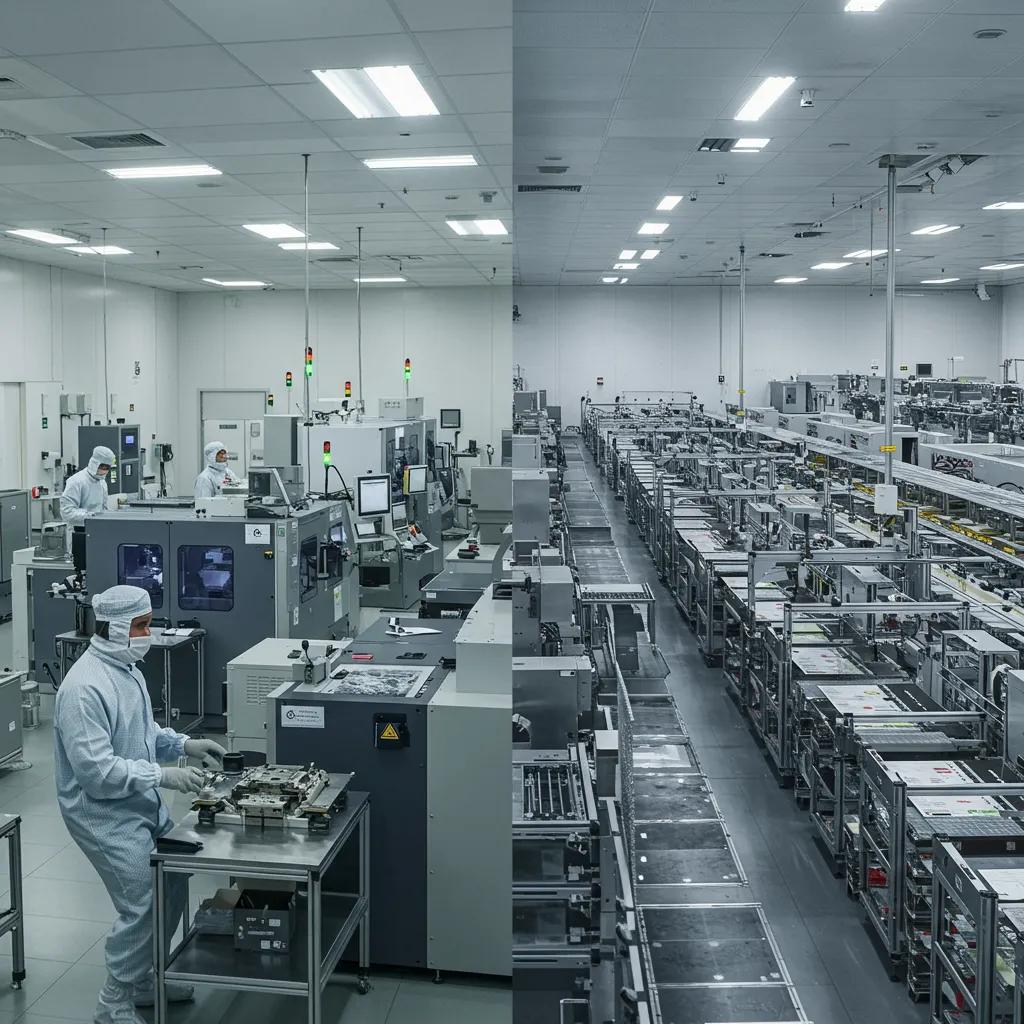
US chip export restrictions are designed to curtail the transfer of advanced semiconductors, along with their associated packaging and enabling technologies, which could significantly accelerate foreign actors’ AI capabilities. The legal frameworks encompass entity listings, stringent licensing requirements, and product-specific performance thresholds that dictate whether exports necessitate explicit governmental approval. These controls are primarily implemented to safeguard national security and preserve allied technology leadership, specifically targeting high-compute GPUs, certain specialized accelerators, HBM-enabled modules, and advanced packaging solutions. The immediate industry consequence is forced product segmentation, escalating compliance costs, and the development of China-specific variants or specialized licensing pathways that fundamentally alter market dynamics.
Below is a concise table summarizing the main restricted categories and their market effects for quick comprehension.
Which AI Chips and Semiconductor Technologies Are Under US Export Controls?
The export controls specifically target devices and subsystems that substantially boost AI training throughput: this includes top-tier AI GPUs, accelerators featuring integrated HBM, and advanced packaging solutions that facilitate high-bandwidth multi-die systems. In practical terms, the thresholds often relate to compute throughput, memory capacity, and interconnect bandwidth; exceeding these specified cutoffs triggers mandatory licensing requirements. Given that HBM stacks and multi-chip modules significantly amplify effective memory bandwidth per accelerator, they are frequently implicated in these controls. Consequently, firms are responding by designing regionally compliant variants with deliberately reduced performance characteristics or by pursuing licensed routes for specialized customers.
This targeted approach aims to decelerate the deployment of frontier training clusters rather than outright blocking all semiconductor trade. However, the outcome is a bifurcated market where access to peak performance becomes tightly controlled. This bifurcation compels ecosystem actors to adapt through supply-chain redesign, strategic third-party sourcing, and software optimizations that can partially offset hardware limitations. Understanding these precise technology thresholds clarifies why memory and packaging are as strategically vital as raw compute cores.
How Do US Sanctions Influence Nvidia’s Market Share and Global Semiconductor Supply?
Sanctions and export controls significantly heighten compliance complexity and can contract Nvidia’s near-term addressable market in restricted jurisdictions, necessitating adjustments in product mix and revenue projections. Market-share impacts hinge on how rapidly competitors or domestic substitutes can achieve comparable performance while remaining outside restricted supply chains. In the immediate future, Nvidia may well sustain its market share across many global markets, but restricted access to a major market like China can diminish total revenue potential and incentivize dual-track product strategies. Suppliers further down the chain—including HBM manufacturers, packaging houses, and foundries—face demand reallocation that can lead to regional shortages and price volatility.
Companies are responding by diversifying their customer base, strategically outsourcing components, and developing lower-tier SKUs to maintain legal market access while safeguarding export-compliant revenue. This adaptive behavior is fundamentally reshaping inter-firm relationships across the entire semiconductor industry and influencing where future manufacturing and R&D investments will be directed, with cascading effects for allied chip ecosystems and cloud providers globally.
How is China Advancing Its AI Chip Development Despite US Restrictions?
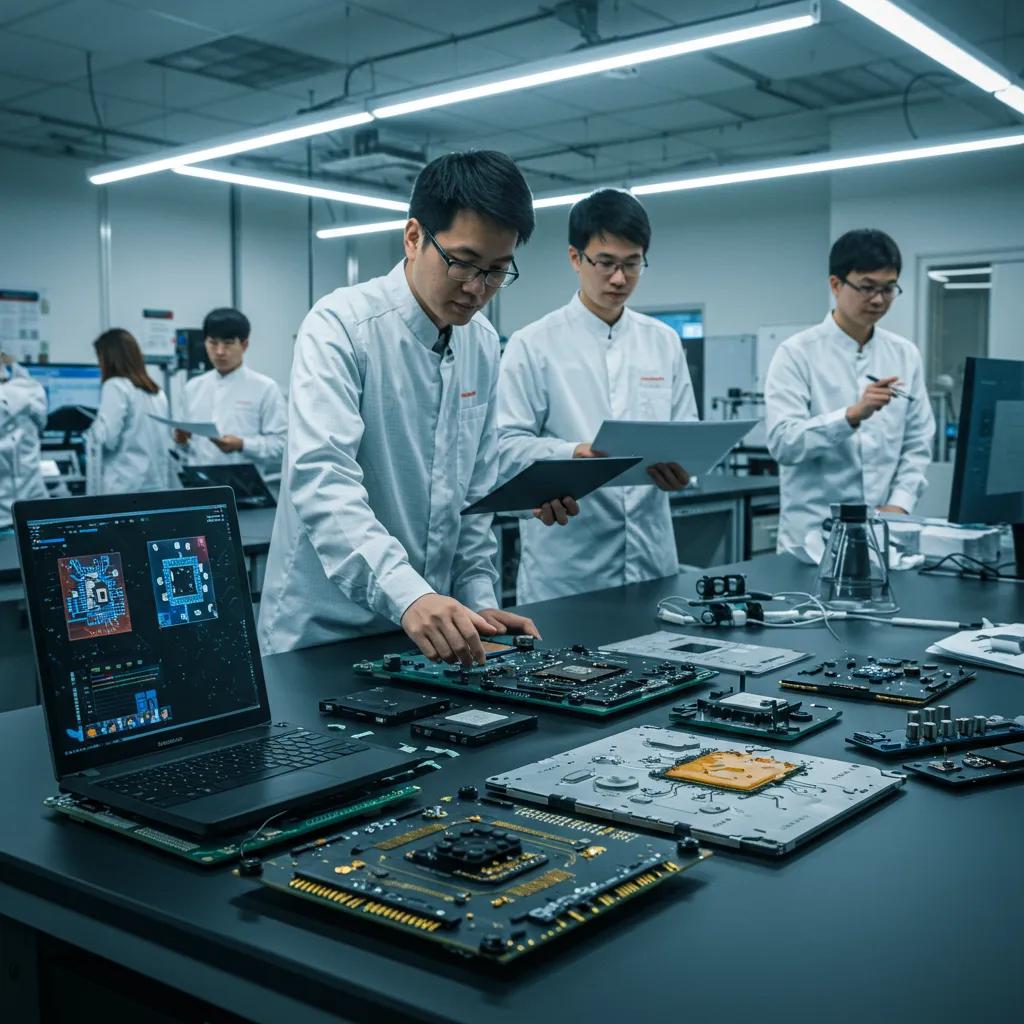
China is strategically advancing its AI chip capabilities through a concerted combination of targeted industrial policy, substantial state-backed subsidies, and rapid commercialization by domestic firms that meticulously optimize hardware-software stacks for local requirements. This comprehensive strategy emphasizes parallel investment across chip design, advanced packaging, robust power infrastructure, and extensive cloud deployment to cultivate an integrated ecosystem that effectively compensates for restricted access to certain foreign components. Such an ecosystem-centric approach significantly reduces dependency on any single foreign supplier and actively promotes end-to-end solutions that seamlessly integrate domestically produced accelerators with native cloud platforms and highly optimized software stacks. This coordinated national push explains the observed progress despite restrictions, as multiple strategic levers work in concert to close existing capability gaps.
To facilitate an easy comparison of the landscape, the following table highlights key domestic players, their primary chip models or areas of focus, and notable capabilities revealed through recent product roadmaps and official policy statements.
What Pivotal Role Do Chinese Companies Like Huawei and Cambricon Play in AI Chip Innovation?
Huawei and Cambricon are spearheading distinct vectors of Chinese AI chip innovation: Huawei focuses on deep integration with cloud infrastructure and expansive product roadmaps for data-center deployment, while Cambricon excels in tight hardware-software co-design for highly efficient training and inference. These prominent firms are heavily investing in sophisticated compiler toolchains, specialized accelerators, and strategic cooperative arrangements with local cloud providers to guarantee that AI models operate effectively on domestic silicon. Their strategies prioritize pragmatic performance-per-dollar and superior energy efficiency, factors often decisive for large-scale AI training operations. By meticulously tailoring chips to local software ecosystems, these companies are accelerating the adoption and iterative refinement of models optimized for regional data and services.
This robust company-level innovation is further bolstered by strategic partnerships with domestic foundries and packaging houses that prioritize rapid prototyping and deployment, thereby enabling faster time-to-production for new accelerator designs. The combined effect is the emergence of a resilient domestic supply chain capable of scaling performance while effectively mitigating the impacts of foreign export controls.
How Do China’s Energy Subsidies and Government Policies Bolster AI Growth?
China strategically employs various policy levers—including direct subsidies, preferential power pricing for industrial clusters, and government procurement preferences—to significantly reduce the operational costs associated with large-scale AI training and inference operations. Discounted industrial electricity in designated zones dramatically lowers the cost-per-FLOP for energy-intensive training, enabling more iterations per dollar and rendering large models economically viable. Government-backed procurement actively funnels demand towards domestic suppliers, providing predictable revenue streams that support aggressive R&D and substantial capital investment. These comprehensive measures collectively compress the economic barriers to operating hyperscale training clusters.
The net effect of these powerful policy tools is to decisively tilt commercial incentives towards the rapid scaling of compute infrastructure and localized AI model development, which in turn reinforces the talent concentration and procurement advantages previously discussed. For external observers, recognizing how energy and procurement policy interact clarifies why sheer hardware restrictions may not suffice to halt capability growth when robust domestic levers are actively in play.
Global Semiconductor Market Trends and AI Chip Demand in 2025: An Outlook
By 2025, the semiconductor market is projected to experience accelerated demand for AI-specific accelerators and memory subsystems, primarily driven by the proliferation of generative AI workloads, the expansion of edge inference capabilities, and continued data-center buildout. Industry estimates consistently point towards a high-growth environment for AI hardware, where High-Bandwidth Memory (HBM) and other high-bandwidth solutions are expected to capture a disproportionate share of revenue due to their critical role in enabling larger models and faster training. This trend signifies a notable shift from general-purpose GPUs towards a diversified landscape of specialized accelerators, memory-centric designs, and sophisticated software optimizations that collectively define the performance ceilings for next-generation AI models. These dynamic market forces are actively reshaping supplier priorities and investment strategies across the globe.
The table below offers a concise forecast snapshot—presented as industry-estimate ranges—to convey relative scale and market-share direction without overstating precision.
How is the AI Chip Market Expected to Expand, and What is Nvidia’s Projected Share?
Analysts in 2025 describe the AI chip market as undergoing rapid expansion, fueled by the escalating demands of large-model training, extensive cloud provider deployments, and widespread enterprise AI adoption; this growth is particularly pronounced in server-class accelerators and their supporting memory technologies. Nvidia continues to be widely recognized as a leading supplier in the AI GPU segment, owing to its unparalleled combined hardware performance and mature software stack, although its total addressable revenue is influenced by export restrictions in specific markets. The synergy of product leadership and ecosystem lock-in helps sustain Nvidia’s dominant share, even as domestic alternatives in other markets strive to bridge the gap through policy-supported scaling initiatives.
A clear understanding of these market positions empowers stakeholders to anticipate potential supply risks, pricing pressures, and areas where investment in alternative architectures might offer viable trade-offs between cost, performance, and policy compliance.
Why is High-Bandwidth Memory (HBM) Indispensable for AI Chip Performance?
High-Bandwidth Memory (HBM) provides the substantial, sustained memory bandwidth essential for efficiently training and serving large neural networks, effectively mitigating memory bottlenecks that often limit throughput on modern accelerators. HBM stacks offer wider parallel access to data, enabling accelerators to keep their compute units fully utilized during large-batch training, which directly shortens the time required to train expansive models. Because HBM manufacturing is highly concentrated and its integration into multi-die modules demands advanced packaging, HBM availability critically constrains where and how quickly frontier training operations can scale. Consequently, securing HBM supply becomes a paramount strategic priority for any entity aspiring to lead in large-model development.
This fundamental functional role of HBM explains the disproportionate market attention it commands: bandwidth, rather than merely raw compute power, ultimately determines real-world training performance and thus profoundly shapes both vendor and policy strategies.
Geopolitical Implications of the US-China AI Chip Rivalry for Pakistan and the Region
The US-China AI chip rivalry is set to significantly shape Pakistan’s technology sector through its impact on supply-chain exposure, access to critical cloud services, investment flows, and diplomatic alignments that will influence procurement decisions. Pakistan could face scenarios where restricted access to certain high-end accelerators drives up costs for data centers and slows advanced AI research, unless proactive steps are taken for alternative sourcing and capacity building. Simultaneously, this rivalry also presents opportunities: policymakers can strategically incentivize local capacity development, actively seek diversified supplier relationships, and negotiate technology partnerships that align with national development goals. Geo News provides localized analysis to inform stakeholders while fostering transparency and accountability in its coverage of these complex implications.
Pakistan’s strategic response options fall into distinct categories: securing diversified procurement channels, investing in localized compute infrastructure or partnerships, and strengthening research ecosystems to adapt models and software for less resource-intensive infrastructures. These multifaceted approaches can effectively reduce dependence on a single supply axis and build resilience, while simultaneously empowering domestic startups and universities to pursue AI innovation within realistic cost structures. A clear-eyed strategy must carefully balance immediate operational needs with mid-term capacity building to safeguard competitiveness.
The likely regional impacts can be distilled into targeted recommendations for policymakers and industry actors:
- **Supply-chain Diversification:** Proactively source hardware from multiple vendors and explore regional cloud partnerships to mitigate single-vendor risk.
- **Capacity Building:** Invest strategically in local research, comprehensive training programs, and incentive structures to cultivate in-country talent and infrastructure.
- **Strategic Non-Alignment:** Explore procurement and licensing options that preserve operational independence while actively engaging with international partners.
How Could US-China Tech Tensions Impact Pakistan’s Technology Sector and Economy?
Escalating tech tensions could lead to increased import costs for advanced hardware, delay crucial cloud deployments, and constrain the timelines for cutting-edge AI projects, particularly those demanding server-class accelerators and HBM-enabled systems. For startups and research institutions, higher hardware prices and limited availability might steer development towards smaller-scale models or accessible cloud services. At the macro level, shifts in foreign direct investment flows—whether an increase from one partner or a reduction from another—will directly affect job creation, R&{D collaboration, and Pakistan’s attractiveness as a regional technology hub. These potential disruptions can be effectively mitigated through proactive policy formulation and robust public-private partnerships.
By prioritizing software optimization, advanced model-efficiency techniques, and strategic regional partnerships, Pakistan can sustain its AI research and commercial activity even when access to peak hardware is constrained. Practical policy measures include incentives for local data-center development, grants for model-efficiency research, and programs to assist industry in transitioning to diversified cloud and hardware options. Such measures create a vital buffer against supply shocks and align local capacity with realistic resource availability.
What Are Expert Perspectives on Pakistan’s Role Amidst the Global AI Race?
Pakistani experts frequently articulate a nuanced perspective, blending caution with opportunity: caution regarding near-term supply constraints and price impacts, and opportunity in leveraging human capital and niche specialization to actively participate in the global AI value chain. Many advocate for prioritizing education, targeted infrastructure investment, and strategic partnerships that facilitate knowledge transfer while preserving strategic autonomy. Universities and think tanks are well-positioned to play a coordinating role by advising on procurement standards, model-efficiency initiatives, and regulatory frameworks that judiciously balance innovation with risk management. Experts also consistently emphasize the paramount importance of transparent reporting and informed public debate to guide critical policy choices.
Collectively, expert advice points towards a pragmatic and resilient path: invest in human capital and software development, diversify hardware sources, and cultivate regional partnerships that broaden strategic options rather than locking into a single geopolitical trajectory. These recommendations align perfectly with the imperative for accountable, transparent policymaking as the global AI landscape continues to evolve.
Future Outlook for AI Leadership Amidst Ongoing US-China Tech Competition
Long-term AI leadership will ultimately be determined by the co-evolution of compute access, talent pipelines, policy levers, and ecosystem integration; technology alone will not dictate the victor. One plausible scenario envisions a continued US-led edge within allied supply chains and open research, bolstered by collaborative standards and sustained investment in R&D. An alternative scenario imagines China achieving parity or even superiority through its immense scale, coordinated procurement, and domestic ecosystem maturation that progressively reduces reliance on restricted imports. A third, hybrid outcome could result in regionalized leadership, where multiple blocs excel in different dimensions—be it hardware, models, or applications—reflecting divergent national strengths. These distinct scenarios frame the critical choices confronting policymakers and firms today.
Policy shifts and innovation will interact dynamically: a loosening of export controls could reintegrate markets and accelerate competition, while tighter controls might spur intensified self-sufficiency efforts and accelerated domestic innovation in restricted jurisdictions. Concurrently, breakthroughs in software—such as enhanced model efficiency, distributed training techniques, or novel architectures—could diminish the premium placed on absolute hardware performance and fundamentally reshape the determinants of leadership. Vigilantly monitoring these variables is essential for accurately forecasting competitive trajectories and establishing strategic priorities.
The following list outlines the primary variables that will shape long-term outcomes and provides actionable levers for stakeholders:
- **Access to advanced chips and memory technologies,** which establishes the foundational performance possibilities.
- **Talent pipelines and robust research ecosystems,** which are crucial for converting hardware into innovative applications.
- **Policy levers and strategic procurement strategies,** which effectively shape incentives and scale.
- **Software and algorithmic breakthroughs,** which possess the potential to shift advantage away from raw hardware capabilities.
What Scenarios Could Determine the Long-Term Victor of the AI Race?
Several plausible scenarios could ultimately determine long-term AI leadership, each driven by distinct decisive variables such as compute availability, talent concentration, and policy coherence. Scenario A envisions strong allied coordination preserving a US-led technological edge through aligned supply chains and sustained R&D funding. Scenario B foresees China leveraging its scale and state support to achieve parity or even leadership in specific AI applications. Scenario C depicts fragmentation into regional leaders, where capability distribution reflects diverse policy choices and industrial strengths. Each scenario carries different timelines and policy triggers, necessitating that stakeholders meticulously prepare contingency plans emphasizing adaptability and resilience.
Key tipping points include breakthroughs that significantly reduce AI training costs, major shifts in global talent mobility, or decisive multinational agreements on standards and trade that fundamentally reconfigure incentives. Anticipating and strategically influencing these tipping points demands coordinated public-private engagement and targeted investment in areas that enhance strategic autonomy.
How Might Evolving US Policies and Chinese Innovations Reshape Global AI Dominance?
Evolving US export policies and ongoing Chinese innovations will jointly reshape the global geography of AI capability by altering access to critical hardware and by incentivizing substantial investment in domestic substitutes. If US policy tightens further, it could indeed slow certain cross-border technology transfers but simultaneously accelerate domestic and allied capacity building, potentially leading to the emergence of parallel ecosystems. Conversely, if policies relax, market integration could significantly accelerate innovation cycles through enhanced cross-border collaboration. Chinese innovations—particularly those that boost energy efficiency, advance software-hardware co-design, or improve packaging technologies—can effectively blunt the impact of hardware controls by enhancing local performance-per-dollar. The delicate balance of these policy and innovation trajectories will ultimately determine whether AI dominance consolidates or fragments globally.
Stakeholders should therefore strategically hedge by investing in model-efficiency research, robust workforce development, and diversified supply chains, while actively participating in international dialogues that seek common standards and effective risk-mitigation approaches. These practical steps will significantly increase strategic options regardless of which macro scenario ultimately unfolds.
Frequently Asked Questions
What are the potential ramifications of the US-China AI chip rivalry for global technology markets?
The US-China AI chip rivalry could usher in profound shifts across global technology markets, potentially leading to increased fragmentation and the emergence of distinct regional supply chains. As nations respond to export restrictions and escalating geopolitical tensions, firms may increasingly opt to localize production and diversify their supply sources. This could result in elevated costs for advanced technologies and potentially slower innovation cycles, as companies navigate complex compliance requirements and market access challenges. Furthermore, the rivalry is likely to spur significant investments in domestic capabilities, fundamentally reshaping competitive dynamics within the semiconductor industry.
How are Chinese companies strategically adapting to US export restrictions in AI chip development?
Chinese companies are strategically adapting to US export restrictions by prioritizing self-sufficiency and fostering innovation within their domestic markets. They are committing substantial investments to research and development, meticulously optimizing their hardware-software ecosystems, and forging robust partnerships with local suppliers to diminish reliance on foreign technology. This comprehensive approach includes developing alternative chip designs and significantly enhancing manufacturing capabilities to meet burgeoning local demand. By leveraging strong state support and targeted subsidies, these firms aim to bridge the technology gap and sustain competitive advantages despite external pressures.
What pivotal role does energy policy play in China’s AI chip development strategy?
Energy policy constitutes a critical pillar of China’s AI chip development strategy, as it directly influences the operational costs for data centers and intensive AI training. The Chinese government provides strategic subsidies and preferential pricing for electricity in key industrial zones, empowering companies to conduct large-scale training operations at significantly reduced costs. This energy advantage facilitates more iterations and accelerates model development, thereby reinforcing China’s competitive standing in the global AI landscape. By ensuring affordable and reliable energy access, China can sustain its rapid expansion in AI capabilities and infrastructure.
How might US chip export restrictions influence innovation in AI technologies?
US chip export restrictions could potentially impede innovation in AI technologies by limiting access to advanced hardware and critical components for both domestic and international firms. Companies may encounter increased costs and extended development timelines as they adapt to compliance requirements and seek alternative suppliers. This could decelerate the pace of technological advancements and potentially diminish the competitive edge of US firms in the global market. However, it might also stimulate innovation in alternative solutions and encourage greater investment in domestic R&D to mitigate reliance on restricted technologies.
What proactive strategies can countries like Pakistan adopt to navigate the US-China tech rivalry?
Countries like Pakistan can adopt several proactive strategies to navigate the US-China tech rivalry, including diversifying their supply chains and vigorously fostering local innovation. By investing strategically in domestic research and development, enhancing educational programs, and forming strategic partnerships with multiple technology providers, Pakistan can effectively reduce its dependency on any single source. Additionally, policymakers can create compelling incentives for local startups and tech firms to develop solutions precisely tailored to regional needs, thereby ensuring resilience against external pressures and cultivating a sustainable technology ecosystem.
What are the implications of current AI chip market trends for future investments?
The prevailing trends in the AI chip market clearly indicate a surging demand for specialized accelerators and advanced memory technologies, which will profoundly shape future investment strategies. Investors should strategically focus on companies that are exceptionally well-positioned to capitalize on the escalating need for high-performance computing solutions. Furthermore, investments in firms that prioritize innovation in energy efficiency, sophisticated software optimization, and localized manufacturing are likely to yield significant returns. A thorough understanding of these dynamic market forces will be indispensable for stakeholders aiming to navigate the evolving landscape of AI technology and semiconductor development.
Conclusion
The ongoing US-China AI chip rivalry powerfully underscores the critical importance of comprehending geopolitical dynamics and their far-reaching implications for technology leadership. By recognizing the structural advantages and strategic responses of both nations, stakeholders can more effectively navigate the rapidly evolving landscape of AI development. Engaging proactively with local and international partners will be absolutely essential for fostering innovation and building resilience in the face of complex supply chain challenges. Stay informed and explore our comprehensive resources to deepen your understanding of this intricate and pivotal issue.