Opposition Sees Red as Government Prepares to Table Controversial 27th Constitutional Amendment Bill
Opposition Fumes as Government Poised to Table Controversial 27th Constitutional Amendment Bill
The federal cabinet has moved swiftly to table a far-reaching 27th Constitutional Amendment bill in Parliament, sparking an immediate and strong backlash from opposition benches across all provinces and the capital. This comprehensive article delves into what the proposed amendment aims to change, why it has become a political flashpoint, and the tangible institutional and fiscal repercussions expected if it passes. Geo News (Jang Media Group), a leading news organization in Pakistan, is committed to informing and engaging its audience with timely, accurate news, current affairs, and diverse content, fostering transparency and accountability. This dedicated hub consolidates clause-level analysis, political positions, and a legislative timeline for readers closely monitoring these critical developments. The piece outlines the bill’s headline provisions, its potential impact on the 18th Amendment and provincial autonomy, proposed alterations to Article 243, the Constitutional Court proposal, key political actors’ stances, and the anticipated parliamentary schedule.
The 27th Constitutional Amendment Bill: What It Is and Why It’s Stirring Controversy
The 27th Constitutional Amendment bill represents a proposed package of significant constitutional changes which, according to government sources, seeks to re-align institutional frameworks across defence, judicial administration, and fiscal federalism. Its core mechanism involves amending existing constitutional articles and introducing new institutional clauses that re-interpret current power distributions between the federation and provinces. The government frames its value as streamlining command structures, enhancing judicial case management, and improving fiscal coordination, yet critics contend the bill centralises authority and undermines checks and balances. Grasping these structural shifts is vital, as they directly impact provincial autonomy, the dynamics of the National Finance Commission (NFC), and Article 243, which governs military command.
This section dissects the bill into its primary provisions and central controversies, enabling readers to quickly grasp the immediate stakes.
- The bill proposes institutional overhauls impacting military command, judicial appointments and transfers, and revenue-sharing mechanisms.
- Critics assert the amendment could reverse key aspects of the 18th Amendment by recentralising powers and altering NFC arrangements.
- Observers caution that procedural shortcuts or broad delegations of authority might diminish parliamentary and judicial oversight.
These contentious points set the stage for a detailed clause-by-clause review below, and they also underscore why parliamentary debate and public scrutiny will be pivotal in the coming weeks.
Unpacking the Key Provisions of the 27th Amendment Bill
The bill’s pivotal provisions are grouped into three main areas: defence-related clauses concerning Article 243, a Constitutional Court proposal that would reshape judicial oversight, and NFC/fiscal clauses modifying revenue distribution procedures. Each significant clause either replaces or augments existing constitutional text and introduces administrative mechanisms—such as centralised panels or executive prerogatives—that fundamentally alter how decisions are implemented. Practically, readers should anticipate new language on command authority, revised criteria for judicial appointments and transfers, and a modified process or formula for NFC award determinations. These provisions employ legal tools like clause replacement, new subsections, and delegated rule-making to embed the proposed shifts, which could have far-reaching consequences for governance and intergovernmental relations.
The subsequent paragraph analyses why these technical provisions have provoked such strong opposition and what parliamentary strategies the opposition might deploy to challenge them.
Why the Opposition Stands Firmly Against the 27th Amendment
Opposition parties argue that the amendment constitutes a political and constitutional power grab, threatening to erode provincial rights and judicial independence while consolidating executive control over defence and finance. Their legal objections primarily target specific risks of rolling back the 18th Amendment’s devolution safeguards and raise procedural concerns if fundamental changes are rushed through without broader consultations. Politically, the opposition portrays this move as destabilising consensus-based governance, mobilising both parliamentary tactics—such as filibusters or coalition coordination—and public messaging to compel revisions or block its passage. These responses signal sustained resistance in both legislative and extra-parliamentary arenas, which could significantly influence the amendment’s ultimate fate.
Geo News is dedicated to informing and engaging its audience with timely and accurate news, current affairs, and diverse content, fostering transparency and accountability.
The 27th Amendment: Impact on the 18th Amendment and Provincial Autonomy
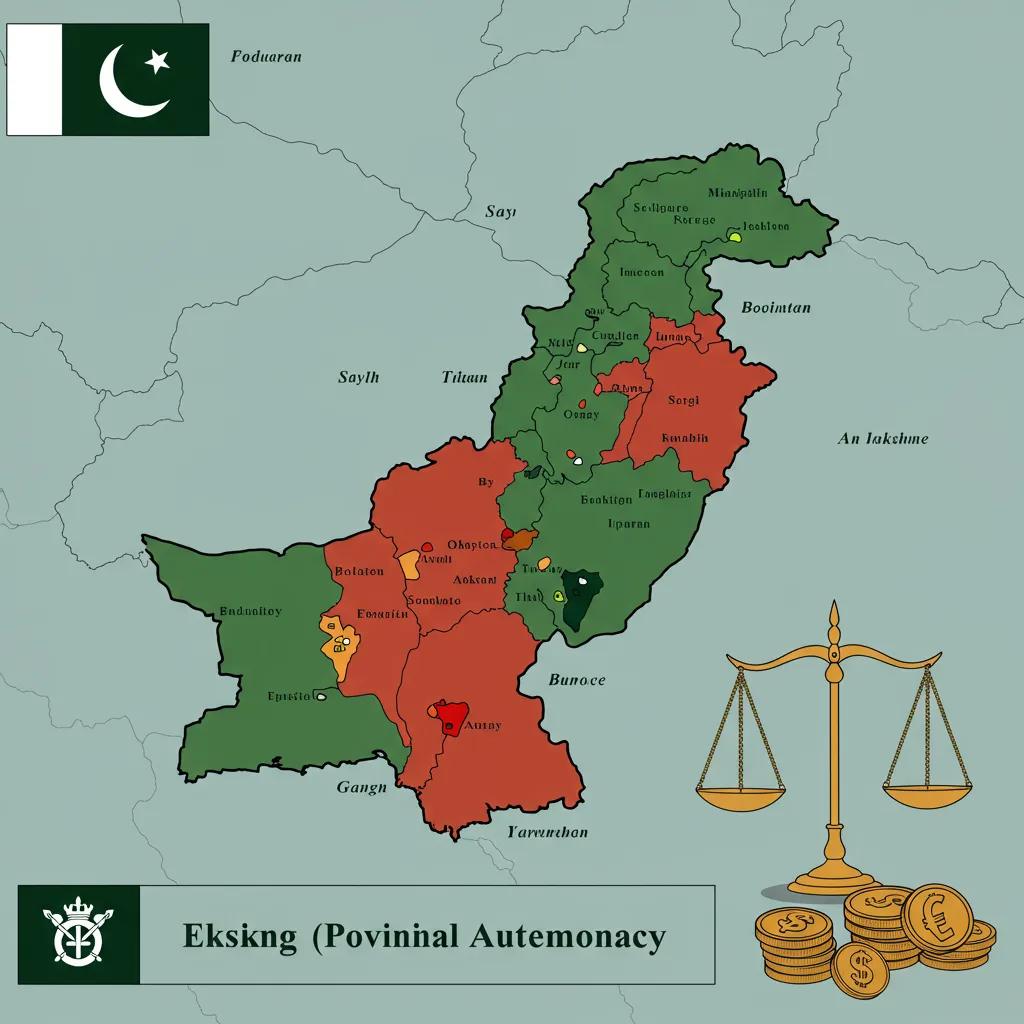
The 27th Amendment directly engages with the 18th Amendment by proposing textual and procedural modifications that could significantly narrow the scope of provincial autonomy, particularly concerning fiscal matters and concurrent legislation. Mechanistically, the bill aims to reallocate certain decision-making powers—especially those linked to revenue sharing and federal conditional grants—back to federal-level instruments, thereby altering the delicate balance established after the 18th Amendment. The likely effect is reduced provincial discretion over financial planning and a more dominant central role in NFC-related determinations, which, in turn, impacts service delivery and provincial budgets. This technical shift is profoundly important because it reshapes the federalism architecture that has underpinned political bargaining and resource distribution since the 18th Amendment’s enactment.
Below is a concise comparison table illustrating existing versus proposed NFC and autonomy attributes to clarify the projected changes.
This comparison clearly highlights how shifts in NFC mechanics could fundamentally alter provincial revenue predictability and policy space, thereby fueling provincial opposition and intergovernmental tension.
The 18th Amendment profoundly reshaped Pakistan’s federal structure, significantly enhancing provincial autonomy and fiscal powers—a crucial backdrop for understanding the current debate.
Proposed Changes to the National Finance Commission Award
The bill proposes both procedural and potentially formulaic revisions to how the NFC Award is negotiated and implemented, placing a new emphasis on centralised coordination and administrative review processes. Instead of relying solely on the traditional periodic NFC award, which is negotiated between the centre and provinces, the amendment introduces mechanisms that could empower the federal government to influence distributions through executive-led panels or revised metrics. Provincial governments express concern that this could lead to reduced shares or conditionality tied to federal policy priorities, directly impacting crucial health, education, and development budgets. The practical impact of this reform hinges on the precise wording of the formula changes and whether judicial review remains an effective check on executive determinations.
Understanding these fiscal mechanics naturally prompts the question of whether the amendment constitutes a rollback of the 18th Amendment and how such a rollback would manifest in practice.
Pakistan’s history of fiscal federalism reveals persistent tension between central control and provincial resource allocation, with the 7th NFC Award marking a significant post-18th Amendment development.
How the Amendment Threatens a Rollback of the 18th Amendment
Legally, a rollback occurs when new clauses narrow rights or recalibrate competences originally devolved under the 18th Amendment, often through reinterpretation or reallocation of subject-matter lists. The 27th Amendment’s approach—recasting language around concurrent powers, conditional grants, and fiscal adjudication—creates pathways through which devolution could be incrementally eroded without an explicit repeal. Critics warn that such textual changes, combined with strengthened federal administrative control, would diminish provincial policymaking autonomy and budgetary certainty. Political counter-arguments highlight the necessity for national coherence in defence and macroeconomic management, but the ultimate test will be how courts and provinces react to any contested interpretations.
Proposed Changes to Article 243 and Their Implications for Military Command
Article 243 currently outlines the constitutional framework for the defence forces, including the roles of the President and Prime Minister in command functions; the 27th Amendment proposes to modify this article’s language and clarify operational command pathways. The suggested changes aim to redefine who holds “supreme command” and to formalise administrative protocols for appointments and transfers within the armed forces. Technically, this could shift de jure authority or procedural oversight towards executive structures, impacting civilian oversight, ministerial prerogatives, and institutional accountability. The practical implications for civil-military relations depend on whether the amendment establishes stronger statutory civilian direction or effectively concentrates control through more restrictive interpretive language.
An explanatory table below details current Article 243 text elements, the proposed phrasing, and the practical implications for command and oversight.
How the Amendment Will Alter the Supreme Command of the Armed Forces
The amendment’s adjustments to supreme command prioritise procedural clarity and may restate or reassign specific formal authorities among constitutional office-holders. If the text reduces ambiguity regarding who issues operational directives, the net effect could either strengthen civilian control by clarifying roles or consolidate decision-making power within a narrower executive remit. In either scenario, the change impacts chain-of-command norms, transfer procedures, and the interaction between defence leadership and civilian institutions. Anticipated reactions include demands for safeguards to preserve oversight and for explicit immunity or review mechanisms to prevent potential misuse.
Defence Ministry’s Rationale for Supporting These Changes
Official defence rationales underscore modernisation, the establishment of coherent command structures, and the need for decisive administrative mechanisms to effectively respond to evolving security threats. Defence proponents argue that clarified legal text reduces operational ambiguity, expedites personnel management, and aligns constitutional provisions with contemporary defence requirements. Independent analysts, however, caution that efficiency gains must be carefully balanced with robust civilian oversight and judicial review to prevent politicisation. The practical assessment will ultimately depend on the precise safeguards the amendment retains or introduces, and whether parliamentary and judicial checks remain effective.
The Constitutional Court Proposal and Its Impact on Judicial Independence

The Constitutional Court proposal within the bill aims to establish a new high-level judicial institution, which would be tasked with certain appointment, transfer, and jurisdictional responsibilities currently handled by the Supreme Court or existing judicial councils. Structurally, this alters the hierarchy of judicial governance by introducing another institutional layer that could influence case allocation, appointment oversight, and administrative jurisdiction. Supporters contend it streamlines case backlog management and facilitates specialised constitutional adjudication, while critics foresee risks to judicial independence if appointment and transfer powers shift towards politically influenced entities. The delicate balance between efficiency and independence is central to how this proposal will be received by legal professionals and civil society.
The table below contrasts current judicial appointment/transfer mechanisms with the Constitutional Court proposal and summarises the likely effects on judicial autonomy.
How the 27th Amendment Proposes to Restructure Judicial Powers
The amendment proposes new appointment and transfer protocols, potentially shifting some responsibilities from existing judicial councils to a Constitutional Court or executive-linked panels. By reallocating authority, the bill seeks to create clearer administrative pathways for judge selection, case allocation, and supervision of judicial administration. While proponents claim these changes will reduce delays and improve consistency, the restructuring also introduces vulnerabilities where appointment influence could be politically leveraged. The operational impact depends critically on the transparency of procedures, the composition of appointing bodies, and the avenues available for judicial review.
Why Critics Fear the Amendment Weakens Judicial Independence
Critics argue that concentrating appointment and transfer powers risks politicising the bench, thereby reducing impartiality in adjudication and limiting the judiciary’s capacity to check executive overreach. Their objections highlight mechanisms—such as narrowed review windows, executive-dominated panels, or statutory limitations on judicial councils—that historically correlate with diminished institutional autonomy. Legal scholars warn that even subtle procedural adjustments can alter incentives and career paths for judges, influencing long-term jurisprudence. Remedies proposed by observers include stronger transparency rules, fixed multi-party appointment procedures, and robust judicial review safeguards to preserve the separation of powers.
The post-18th Amendment era in Pakistan saw provinces gain legislative autonomy, yet practical implementation and resource transfer challenges persist, impacting the federal balance.
Key Political Players and Their Stances on the 27th Amendment
The key political actors in this debate include the federal government’s principal proponents, who advocate for institutional reform; coalition partners, whose votes will be crucial for passage; and opposition parties, who have signalled strong resistance. Parties frequently mentioned in public discourse—PTI, PPP, and PML-N—represent diverse regional and ideological interests, with provincial parties particularly sensitive to NFC changes expressing distinct reservations. Important individual figures include senior cabinet members tasked with defending the bill and opposition leaders coordinating parliamentary objections; their interactions will determine whether amendments, carve-outs, or withdrawals ultimately occur. Coverage of these stances is vital because legislative arithmetic—vote thresholds and coalition discipline—will ultimately decide the amendment’s fate.
Geo News (Jang Media Group) operates as a leading news organisation in Pakistan, dedicated to informing and engaging its audience with timely and accurate news, current affairs, and diverse content. Our reporting aggregates official statements and parliamentary developments to help readers track evolving positions. The next two subsections summarise the positions of a leading government spokesperson and the main opposition blocs in broad terms.
Deputy Prime Minister Ishaq Dar’s Position on the Amendment
Government leadership presents the bill as a vital modernisation of constitutional arrangements, with Deputy Prime Minister Ishaq Dar—identified by multiple reports as a central government spokesperson—articulating the necessity for clearer rules regarding defence coordination, judicial administration, and fiscal oversight. His stated rationale centres on national coherence, administrative efficiency, and the imperative to resolve inter-institutional ambiguities that hinder effective governance. Strategically, the government frames the amendment as a technocratic exercise rather than a political power grab, aiming to secure support from coalition partners while rebutting opposition charges. This positioning significantly influences coalition negotiations and the messaging employed during parliamentary debates.
How Opposition Parties Like PTI and PPP Are Responding to the Bill
Opposition parties, including PTI and PPP, have voiced substantial objections across constitutional, fiscal, and provincial fronts: PTI emphasises democratic safeguards and judicial independence, while PPP sharply focuses on NFC and provincial resource protections. Their planned parliamentary tactics encompass coordinated debate strategies, potential legal challenges, and public mobilisation to press for amendments or a complete withdrawal. Both parties also signal a willingness to negotiate specific carve-outs if assurances on provincial autonomy and judicial checks are provided. The interplay between PTI and PPP positions reveals areas of agreement—resistance to centralisation—and divergence in tactical priorities, shaping potential cross-party alliances or fracture lines during the crucial vote.
Geo News is dedicated to informing and engaging its audience with timely and accurate news, current affairs, and diverse content, fostering transparency and accountability.
Legislative Process and Timeline for Pakistan’s 27th Amendment Bill
Constitutional amendments in Pakistan follow a prescribed legislative pathway: tabling in either house, committee scrutiny where applicable, debate, and finally a parliamentary vote requiring a specific majority. According to current reporting timelines, the bill is slated for initial tabling in the Senate, with a subsequent National Assembly tabling expected shortly thereafter. These steps will trigger debate, possible referral to a committee, and eventual voting. The essential procedural thresholds for a constitutional amendment include a two-thirds majority in the house where the amendment is passed, and separate passage in the other house; without the required supermajorities, the bill cannot become part of the Constitution. Parliamentary arithmetic—coalition cohesion and cross-party negotiation—will therefore be the ultimate determinant of whether the amendment progresses, is amended, or is stalled.
Below is a concise, timeline-style list of expected immediate steps and what each stage entails.
- Tabling in the Senate: formal introduction and initial debate, followed by referral to a committee if contested.
- Senate Vote or Committee Report: committee scrutiny may produce amendments or endorsements before the full house votes.
- Tabling in National Assembly: formal presentation, debate, and potential amendment proposals by members.
- Final Votes: each house must secure the required majority thresholds; failure in either house halts the amendment.
When Will the Bill Be Debated and Voted on in the National Assembly and Senate?
The immediate timetable projects sequential tabling in both houses, with committee stages integrated into the process; reported scheduling indicates initial Senate tabling followed by a National Assembly sitting within days. Debate sessions will feature formal speeches, procedural motions from opposition benches, and opportunities for amendment proposals. Committees, if invoked, may extend the review period and invite expert testimony. The voting phase demands meticulous coalition management to secure constitution-amending majorities, and any perceived shortcutting of committee review is highly likely to provoke legal challenges. Procedural obstacles—such as quorum disputes, adjournments, or filibuster tactics—can significantly delay votes and necessitate renegotiation.
How Parliamentary Debates and Public Reactions Are Shaping the Bill’s Future
Parliamentary debates are already actively shaping the narrative by highlighting constitutional safeguards, provincial finance concerns, and defence governance. Media coverage and public commentary further amplify pressure on policymakers to justify clause-level choices. Public reactions—driven by provincial political leaders and civil society—can influence coalition partners and prompt concessions, particularly on NFC and judicial appointment safeguards. Legal experts and civil society groups may also prepare court petitions challenging procedural validity or substance, introducing judicial review as a potential check. These combined dynamics mean the bill’s final form will likely emerge as the product of intensive legislative negotiation, rigorous public scrutiny, and potential judicial intervention.
Geo News is dedicated to informing and engaging its audience with timely and accurate news, current affairs, and diverse content, fostering transparency and accountability.
Frequently Asked Questions
What are the potential impacts of the 27th Amendment on provincial governance?
The 27th Amendment could profoundly reshape provincial governance by centralising authority and potentially diminishing the autonomy granted by the 18th Amendment. Critics argue that the proposed changes to fiscal arrangements and decision-making powers may severely limit provincial discretion over budgets and resource allocation. This significant shift could ignite tensions between the federal government and provincial administrations, ultimately affecting service delivery and local governance. Understanding these far-reaching implications is crucial for both citizens and policymakers as they navigate Pakistan’s evolving federal landscape.
How might the 27th Amendment affect judicial oversight in Pakistan?
The 27th Amendment proposes the establishment of a Constitutional Court, a move that could shift judicial oversight from existing structures to this new entity. This change raises serious concerns about the independence of the judiciary, as critics fear that political influences might compromise impartiality in judicial appointments and transfers. While proponents suggest it could streamline case management, the potential for politicisation poses inherent risks to the integrity of the judicial system. The delicate balance between efficiency and independence will be a paramount factor in evaluating the amendment’s true impact on judicial oversight.
What role do public opinions and protests play in the legislative process of the 27th Amendment?
Public opinion and protests can exert significant influence on the legislative process surrounding the 27th Amendment. As citizens vocally express their concerns about potential centralisation of power and the erosion of provincial rights, lawmakers may face considerable pressure to reconsider or amend the proposed changes. Public mobilisation can lead to heightened scrutiny of the amendment, prompting coalition partners to negotiate concessions or adjustments. Ultimately, the dynamic interplay between public sentiment and legislative action will critically shape the final outcome of the amendment and its implications for governance in Pakistan.
What are the implications of the proposed changes to Article 243 on civil-military relations?
The proposed changes to Article 243, which governs military command, could have profound and lasting implications for civil-military relations in Pakistan. By redefining command authority and altering appointment protocols, the amendment may either strengthen civilian oversight or, conversely, concentrate power within the military establishment. This significant shift could directly affect the balance of power between civilian authorities and military leadership, influencing governance and critical policy decisions. The practical outcomes will depend heavily on how these changes are implemented and interpreted within Pakistan’s complex political landscape.
How does the 27th Amendment relate to ongoing debates about federalism in Pakistan?
The 27th Amendment lies at the very heart of ongoing debates about federalism in Pakistan, particularly concerning the delicate balance of power between the federal government and its provinces. By proposing changes that may centralise authority and alter fiscal arrangements, the amendment directly raises fundamental questions about the future of provincial autonomy, a cornerstone established by the 18th Amendment. This debate is absolutely crucial for understanding the dynamics of governance in Pakistan, as it reflects broader, long-standing tensions between centralisation and devolution within the country’s political framework.
What strategies might opposition parties employ to challenge the 27th Amendment?
Opposition parties are likely to employ a diverse array of strategies to challenge the 27th Amendment, including parliamentary manoeuvres such as filibusters, strategic coalition-building, and widespread public mobilisation. By coordinating their efforts, parties like PTI and PPP can amplify their objections to the amendment’s provisions, especially those perceived as undermining provincial rights and judicial independence. Legal challenges may also emerge, questioning the amendment’s procedural validity or its alignment with core constitutional principles. These multifaceted strategies will be critical in shaping the legislative discourse and the potential outcomes of the amendment process.
Conclusion: The 27th Constitutional Amendment – A Critical Juncture for Pakistan
The proposed 27th Constitutional Amendment Bill in Pakistan presents profound implications for institutional arrangements, fiscal federalism, and provincial autonomy. Grasping its potential to centralise authority and fundamentally alter the balance established by the 18th Amendment is absolutely crucial for informed public discourse. Engaging actively with these significant developments is essential for all citizens who wish to advocate for transparency and accountability in governance. Stay comprehensively updated on the latest legislative changes and their far-reaching impacts by following our in-depth coverage.