Political History of Pakistan: Comprehensive Overview of Independence, Leadership, and Constitutional Development
The political history of Pakistan traces the country’s evolution from partition-era statehood through cycles of democratic experiment, military intervention, and constitutional change up to the present day. This article explains key phases, major events, and institutional shifts using chronological and thematic lenses so readers can contextualize current developments and policy debates. To provide timely and comprehensive context, ARY News — operating as an “Ai Reporting Yard” and powered by AI for accuracy, speed, and reliability — frames this hub as part of its effort: To provide timely and comprehensive news and current affairs coverage, keeping the audience informed and engaged with diverse content. The piece maps independence, coups, constitutional evolution, leader profiles, major crises, institutional roles, and timelines, and it offers structured tables and timelines to support scanning and deeper study.
When and How Did Pakistan Achieve Independence?
Pakistan achieved independence on 14 August 1947 through the partition of British India, which separated Muslim-majority provinces into a new state; this political separation established Pakistan’s foundational institutions and defined its early diplomatic and security priorities. The mechanism combined negotiated constitutional reform and mass mobilization led by the All-India Muslim League, producing a territorial and political break that required immediate administrative consolidation. Independence delivered sovereign governance but also produced urgent challenges: refugee flows, contested borders, and nascent institutions that had to be built quickly. Understanding independence frames later constitutional choices and civil-military dynamics that shaped Pakistan’s political evolution.
What Was the Role of Muhammad Ali Jinnah in Pakistan’s Independence?
Muhammad Ali Jinnah served as the chief architect and political leader who translated the Muslim League’s demand for a separate state into a realized polity through negotiation and legal-political strategy. Jinnah’s leadership combined constitutional advocacy, coalition-building, and appeals to Muslim identity as a political basis for statehood; his speeches and legal background helped legitimize the movement domestically and internationally. After independence, Jinnah acted as governor-general and a transitional statesman tasked with institution-building and managing refugee resettlement. His vision for Pakistan — a constitutional, rights-based polity — continued to shape elite debates even as subsequent events diverged from his early aspirations.
Jinnah’s Charismatic Leadership and Constitutional Vision for Pakistan
This study aims to critically evaluate the charismatic leadership of Quaid-i-Azam Muhammad Ali Jinnah. Moreover, to examine his vision and constitutional approach towards the issues of the Muslims. Through an extensive review of the literature, primary and secondary sources have been consulted. This paper provides an in-depth analysis of the various aspects of Jinnah’s charismatic leadership. Mainly this study provides insight to understand his vision to solve the issues of his community through a constitutional approach. These constitutional means provided him with a comprehensive direction to negotiate the issues with British authorities and the All-India National Congress. The findings of this study reveal that his methods and approaches help a reader to understand the situational factor and task management of Jinnah, which rightly ascertained him as a charismatic leader. Max Weber’s theory of charisma is utilized to evaluate the political leadership of Jinnah. In this resea
How Did the 1947 Partition Shape Pakistan’s Political Landscape?
Partition produced one of the largest human displacements in modern history, transforming demographics and creating long-term security and governance pressures that influenced political priorities for decades. Massive refugee migration required emergency management and redirected resources to rehabilitation, while communal violence and contested lines led to enduring tensions with neighboring India over territory and security. Administratively, the new state faced an institutional vacuum: civil service structures, defense organization, and provincial governance had to be reconstituted rapidly. These immediate pressures fed into long-term political patterns, including prioritization of security and centralization by early governments.
Who Were the Founding Fathers and Early Political Leaders of Pakistan?
Founding leaders combined legal, political, and bureaucratic experience to shape the new state’s institutions and policy directions in the immediate post-1947 years. Key figures included Muhammad Ali Jinnah as leader and governor-general, Liaquat Ali Khan as Pakistan’s first prime minister who guided fiscal and foreign policy, and provincial actors who negotiated early power-sharing arrangements. Early elite alignments favored central administration and coalition governance amid regional diversity, setting patterns of political patronage and elite competition. These foundational actors established precedents in constitutional drafting and civil-military interaction that reverberated through later decades.
What Were the Key Military Coups in Pakistan’s Political History?
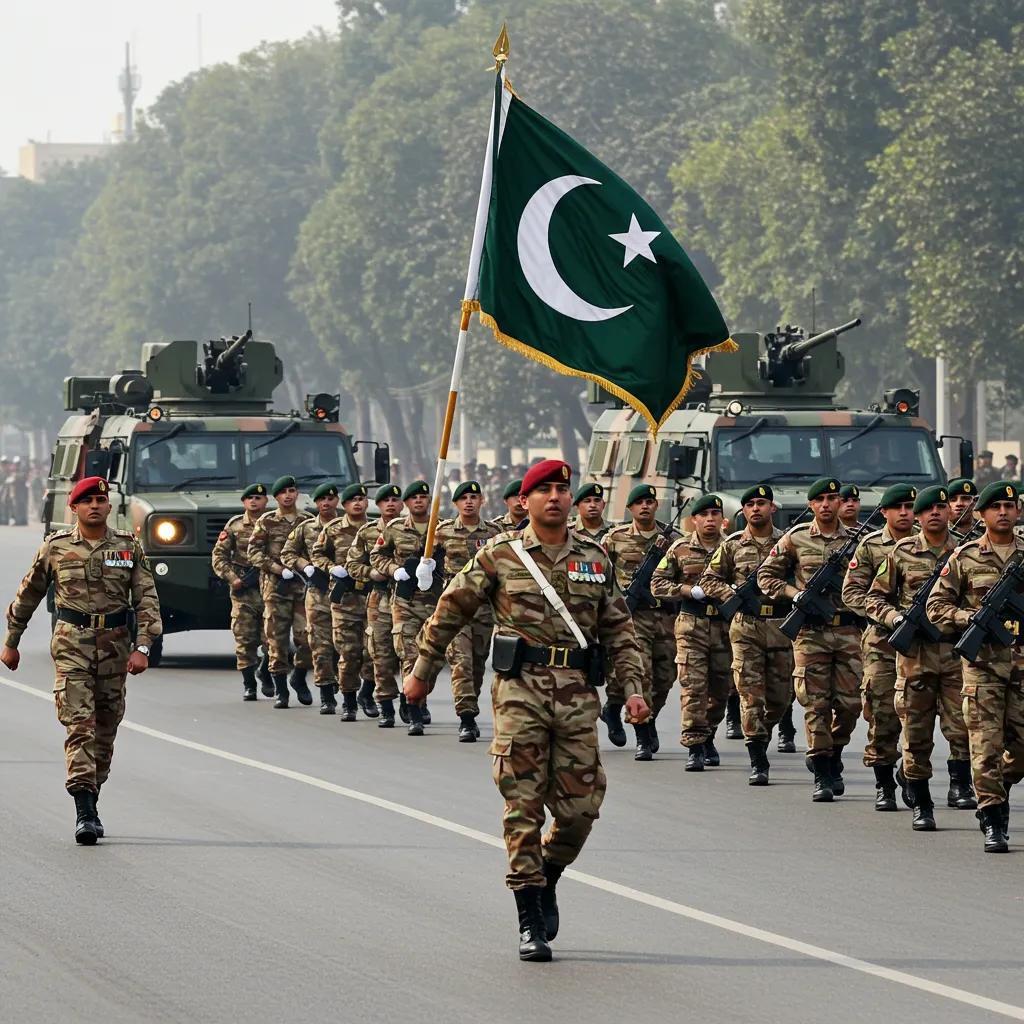
Military coups punctuated Pakistan’s political trajectory, altering constitutions and shifting the balance between civilian institutions and the armed forces; each intervention reshaped governance norms and policy priorities. Coups typically invoked political breakdown or national security as justification, then implemented legal instruments (ordinances, provisional orders) to restructure executive authority and curb parliamentary oversight. The long-term consequences included institutional erosion, periods of authoritarian consolidation, and subsequent attempts to restore civilian rule — dynamics that continue to inform civil-military relations today. The following subsections examine major coups and their impacts.
How Did the 1958 Military Coup Change Pakistan’s Governance?
The 1958 coup marked the first prolonged military takeover, replacing parliamentary structures with centralized executive authority and setting a precedent for future interventions. The coup suspended political parties, dissolved legislatures, and introduced martial law mechanisms that concentrated power in the executive and military hierarchy. This reconfiguration weakened civilian political institutions and normalized extra-constitutional solutions for governance crises. Understanding 1958 clarifies how institutional gaps and elite fragmentation can create openings for non-civilian actors to intervene in politics.
What Was the Impact of Zia-ul-Haq’s Islamization and Martial Law?
Zia-ul-Haq’s era combined military rule with a systematic program of Islamization that altered legal codes, education, and public policy while consolidating executive control over politics. Reforms introduced religiously framed laws and institutional changes that affected civil liberties, criminal codes, and the judiciary’s role; these measures also reshaped party politics and social norms. The long-term effects included deeper legal-religious entanglement in governance and altered civil-military relations, as military authority became linked to ideological legitimacy. This period demonstrates how policy shifts under military rule can have lasting social and institutional consequences.
How Did Pervez Musharraf’s Coup and Reforms Shape Modern Pakistan?
Pervez Musharraf’s 1999 takeover combined a technocratic reform narrative with political restructuring aimed at stabilizing the state and stimulating economic reforms while retaining strong military oversight. His tenure introduced devolution measures, regulatory reforms, and attempts to modernize governance, but also generated controversies over democratic deficits, emergency rule episodes, and judicial confrontations. Musharraf’s period illustrates the dual dynamic of administrative modernization coexisting with constrained political freedoms and contested legitimacy, influencing debates about reform versus accountability in transition periods.
How Many Times Has Pakistan Experienced Military Rule and What Were the Consequences?
Pakistan has experienced several extended periods of direct military rule and multiple interventions that cumulatively shaped state-society relations and institutional capacities. Military interventions have ranged in duration and intensity, often leaving behind constitutional suspensions, altered party systems, and persistent tensions between civilian authorities and security establishments. Consequences include intermittent democratic backsliding, legal ambiguities resolved by courts, and recurrent debates over the military’s economic and political roles. Comparing these periods highlights patterns of institutional vulnerability and resilience in Pakistan’s political system.
How Has Pakistan’s Constitution Evolved Over Time?

Pakistan’s constitutional evolution moved from early parliamentary ambitions to alternating presidential and parliamentary frameworks, culminating in the 1973 constitution as a durable foundation later adjusted by major amendments. Constitutions reflected competing visions of centralization, religious provisions, and the balance of executive and legislative power; amendments and judicial interpretations further reshaped those balances. Institutional actors — especially the presidency, parliament, and judiciary — negotiated power through legal instruments that influenced governance and federation dynamics. The following table compares major constitutions to clarify core differences and continuity.
This comparison shows how shifts in constitutional design altered executive-legislative balances and influenced long-term federal-provincial relations.
What Were the Major Features of the 1956 and 1962 Constitutions?
The 1956 constitution instituted a parliamentary system with a ceremonial president and emphasis on representative institutions, while the 1962 constitution moved toward a strong presidential model and centralized governance. The 1956 document aimed to create parliamentary accountability but struggled amid political fragmentation; the 1962 law prioritized stability through executive concentration and altered provincial autonomy. These contrasting frameworks set competing institutional norms that affected political culture and future reform debates. Recognizing these differences is essential to understanding why the 1973 constitution sought a middle path.
Why Is the 1973 Constitution Considered a Landmark in Pakistan’s Political History?
The 1973 constitution restored parliamentary democracy with a federal structure and clearer division of powers between center and provinces, marking a consensus-driven milestone after earlier disruptions. Drafted in a context of political reordering, it enshrined fundamental rights and designed mechanisms for governance, while leaving space for future amendments to adapt to changing realities. The 1973 framework became the baseline for legitimacy and legal continuity, with subsequent amendments and judicial interpretations shaping its practical application. Its endurance underlines its role as the organizing charter of Pakistan’s political order.
How Have Constitutional Amendments Affected Pakistan’s Political System?
Major amendments — including shifts that expanded or contracted presidential authority and the notable devolution under later reforms — have repeatedly redistributed power among federal and provincial institutions. Amendments addressed governance gaps, altered the balance between president and prime minister, and adjusted resource and administrative allocation to provinces. These legal changes often resulted from political bargains or elite compromises and had ripple effects on electoral dynamics and institutional accountability. Tracking amendment patterns reveals how constitutional engineering became a tool of political strategy.
What Role Has the Supreme Court Played in Pakistan’s Political Stability?
The Supreme Court has acted both as interpreter of constitutional boundaries and as an arbiter in political crises, employing doctrines that sometimes validated extra-constitutional measures while at other times checking executive overreach. Judicial interventions — including application of the doctrine of necessity and landmark rulings — influenced government survival, transitions, and constitutional continuity. The Court’s evolving posture reflects tensions between legal principles and political realities, and its decisions have significantly affected perceptions of institutional legitimacy. Judicial practice thus remains central to Pakistan’s political stability.
Pakistan’s Constitutional Democracy: Judicial Independence and the 26th Amendment
Judicial independence is the bedrock of Pakistan’s constitutional democracy, safeguarding the rule of law through an impartial judiciary. The Twenty-Sixth Constitutional Amendment Act, 2024, has fundamentally transformed the judicial appointment process by granting Parliament and the Executive decisive influence over the selection of the Chief Justice of Pakistan and the composition of the Judicial Commission of Pakistan. This paper critically argues that the Amendment fails to strike a legitimate balance between accountability and independence, instead threatening to subordinate the judiciary to political control. Through analytical and comparative lenses, it explores Pakistan’s history of judicial reforms, evaluates the corrosive implications of the amendments for the separation of powers, and contrasts them with appointment systems in other common-law jurisdictions. The paper concludes that the 26th Amendment risks profound politicization, endangering the constitution
Who Are the Most Influential Political Leaders in Pakistan’s History?
Pakistan’s political trajectory has been shaped by leaders whose policies, party-building, and institutional choices produced lasting legacies across governance, economy, and society. Leadership styles ranged from founding statesmanship to populist mobilization and technocratic reform, each creating different institutional incentives and public expectations. Comparative profiles help clarify how individual agendas translated into structural change, and the table below summarizes key leaders and contributions for quick reference.
What Was Zulfikar Ali Bhutto’s Role in Shaping Pakistan’s Democracy?
Zulfikar Ali Bhutto combined charismatic leadership with institutional activism, founding a mass-based party and steering the political process that produced the 1973 constitution. His policies emphasized economic nationalism, populist socio-economic measures, and central political leadership that sought to reconstruct political legitimacy after military rule. Bhutto’s legacy includes both democratic institution-building and concentrated party control, influencing subsequent political alignments and the role of personality in politics. His tenure illustrates how policy and political mobilization can restructure institutional landscapes.
How Did Benazir Bhutto Break Barriers as Pakistan’s First Female Prime Minister?
Benazir Bhutto’s election symbolized a breakthrough for women’s political representation while presenting governance challenges amid polarized politics and security threats. Her leadership marked both symbolic progress and practical difficulties in consolidating stable governance, as she navigated coalition politics, reform agendas, and persistent institutional resistance. Her assassination decades later intensified debates about political violence and democratic resilience. Benazir’s trajectory underscores how gender, party identity, and state capacity intersect in high-stakes political contexts.
What Are the Political Contributions of Nawaz Sharif and Imran Khan?
Nawaz Sharif and Imran Khan represent different political pathways: one rooted in industrialist-backed development promises and provincial power bases, the other centered on populist anti-corruption and outsider narratives that mobilized new electorates. Both leaders influenced economic and infrastructure agendas, engaged in recurrent legal and political crises, and reshaped party competition and media politics. Comparative analysis shows how divergent leadership styles produce distinct governance patterns and institutional stress points. Their careers highlight interactions between electoral politics, legal accountability, and elite bargaining.
How Have Political Rivalries Influenced Pakistan’s Political Landscape?
Sustained rivalries among party leaders, institutions, and regional actors have driven cycles of coalition formation, polarization, and judicialization of politics that affect governance continuity and public trust. Rivalries often precipitate legal confrontations, fragmentation in legislatures, and episodic crises that create openings for non-electoral actors to assert control. Case examples reveal how personal and party competition can impede policy consistency and institutional reform, leading to recurring debates about consensus mechanisms and political culture. Managing rivalries remains central to strengthening democratic norms.
What Were the Major Political Events and Crises in Pakistan’s History?
Major crises — wars, secession, assassinations, and judicial upheavals — have punctuated Pakistan’s history and produced lasting institutional and geopolitical consequences. Each event reshaped public perceptions, elite behavior, and international alignments, with collective effects on state legitimacy and policy priorities. Examining representative cases clarifies how shocks translated into structural adjustment, political realignment, and long-term changes in civil-military relations. The subsections below explore some of the most consequential episodes.
How Did the 1971 Bangladesh Liberation War Affect Pakistan?
The 1971 secession dramatically altered Pakistan’s territorial composition and national psychology, leading to the loss of East Pakistan and prompting deep reflection on governance, military strategy, and national identity. The conflict exposed systemic political failures, military defeat, and international pressures that forced political restructuring and accountability debates. The fallout included reorganization of national institutions, new foreign policy calculations, and enduring implications for civil-military relations. The magnitude of this event underlines how geopolitical crises can trigger profound constitutional and political change.
What Were the Causes and Effects of Political Assassinations in Pakistan?
High-profile assassinations — including those of early statesmen and later political figures — have produced abrupt leadership vacuums, waves of public unrest, and shifts in party dynamics that complicate institutional continuity. Political assassinations often catalyze security clampdowns, legal inquiries, and long-term polarization, affecting how political movements operate and how the state prioritizes security versus civil liberties. The recurring pattern of violence against leaders has intensified debates about political stability, rule of law, and protection of democratic processes. These tragedies leave both symbolic and practical legacies that shape subsequent politics.
How Have Political Crises Shaped Pakistan’s Democratic and Military Relations?
Crises have frequently precipitated military interventions or expanded military influence, as perceived governance breakdowns or security threats became justifications for non-civilian involvement. This interplay created cycles where weak civilian institutions invite military assertion, and military rule then reshapes political incentives for civilian actors. Over time, the pattern produced hybrid governance arrangements with persistent ambiguities about civilian supremacy. Identifying these cause-effect pathways helps explain recurring vulnerabilities in Pakistan’s democratic consolidation.
What Are the Key Moments of Judicial Activism and Their Political Impact?
Judicial activism — through landmark rulings and constitutional interventions — has alternately constrained and enabled political actors, affecting government formation and validating or annulling executive actions. Courts have applied doctrines that sometimes retroactively legitimized extra-constitutional moves, while other times the judiciary has asserted independence to remove or restrict governments. These decisions influence political accountability, separation of powers, and public perceptions of justice. Judicial moments thus serve as inflection points in political crises and transitions.
How Have Pakistan’s Political Institutions Evolved Over Time?
Pakistan’s institutions — the military, parliament, judiciary, and parties — have each changed in responsibilities, influence, and interaction patterns as the state navigated crises, reforms, and electoral competition. Institutional evolution reflects legal reform, elite choices, and public pressures that alternately strengthened or weakened checks and balances. Structural adjustments in one institution often produced compensatory shifts in others, creating a dynamic political ecosystem. The subsections below unpack core institutional roles and party dynamics, with a comparative list summarizing institutional functions.
Pakistan’s core institutions perform distinct functions that shape governance and political outcomes:
- The military frequently acts as both a security provider and a political actor.
- The parliament is the locus for legislative contestation and representation.
- The judiciary interprets constitutional disputes and arbitrates political legality.
- Major political parties structure electoral competition and policy agendas.
These institutional roles interact continuously, influencing stability, accountability, and reform trajectories.
What Is the Role of the Military in Pakistan’s Politics?
The military functions as a central security institution while also exercising political influence through direct rule, behind-the-scenes intervention, and control over strategic policy areas. Its role extends into economic enterprises and national policymaking, giving it wide-ranging levers that affect civilian authority. Over time, the military has been justified as a guarantor of stability in moments of crisis, which has reinforced its institutional prominence. Understanding the military’s formal and informal instruments clarifies persistent civil-military tensions.
How Has Pakistan’s Parliamentary System Developed Since Independence?
Pakistan’s parliamentary system has undergone cycles of strengthening and erosion, shaped by constitutional changes, electoral reforms, and political fragmentation that affected coalition-building and legislative durability. Periods of robust parliamentary activity have alternated with executive consolidation under presidential or military regimes, producing variable norms for accountability and representation. Electoral law reforms and party institutionalization efforts have aimed to stabilize governance but face challenges from patronage politics and elite competition. The parliamentary evolution reflects ongoing negotiation between democratic ideals and practical politics.
What Influence Has the Judiciary Had on Political Stability and Governance?
The judiciary has been a decisive actor in political transitions, sometimes legitimizing extraordinary measures and at other times protecting constitutional order through review and injunctions. Landmark rulings have shaped the balance between branches and influenced who governs and how power is exercised. Judicial involvement in political disputes has fostered both corrective accountability and controversy over separation of powers. The Court’s trajectory thus remains a key determinant of constitutional resilience and political contestation.
How Do Political Parties Like PPP, PML, and PTI Shape Pakistan’s Political System?
Major parties structure ideological competition, regional representation, and leadership dynamics in Pakistan, each drawing on distinct constituencies and organizational styles that influence coalition prospects and policy priorities. Party platforms and mobilization strategies shape legislative behavior and executive agendas, while inter-party rivalries affect government durability. Parties also mediate between state institutions and social groups, channeling demands into political bargains. Comparative analysis of party origins and influence clarifies their role in shaping institutional development.
What Are the Key Timelines and Milestones in Pakistan’s Political History?
A scannable timeline helps correlate leadership changes, constitutional reforms, coups, and major crises so readers can trace causal patterns and turning points across decades. Itemizing milestones by date and short descriptor provides an accessible roadmap for learners and researchers seeking chronological clarity. Interactive timelines that layer documents, biographies, and multimedia can deepen engagement and permit filtered views by theme (e.g., constitutional change, military rule, elections). The list below highlights major phases from founding to contemporary politics.
Major phases summarize the arc of Pakistan’s political history:
- Founding and Early Years (1947–1958): State-building amid partition pressures and institutional formation.
- First Military Era and Reconfiguration (1958–1971): Presidential experiments, political tensions, and eventual crisis.
- Rebuilding and 1973 Constitution (1971–1977): Return to civilian rule and constitutional consolidation.
- Prolonged Military Influence and Islamization (1977–1988): Military governance and ideological restructuring.
- Fragmented Democracy and Judicial Politics (1988–1999): Alternating civilian governments and institutional contestation.
- Military Takeover and Reforms (1999–2008): Technocratic governance with contested legitimacy.
- Democratic Resurgence and Contemporary Dynamics (2008–Present): Electoral competition amid institutional reform and media evolution.
What Are the Major Phases of Pakistan’s Political History from 1947 to Present?
Phases reflect dominant governance modes and prevailing institutional arrangements during specific periods, from founding consolidation to contemporary democratic attempts interspersed with military episodes. Each phase features hallmark events — constitutional enactments, coups, wars, or reform pushes — that mark transitions. Identifying these phases helps analysts link short-term events to long-term structural shifts and to compare Pakistan’s trajectory with regional post-colonial experiences. The phase model clarifies how institutional legacies persist across time.
How Can Interactive Timelines Help Understand Pakistan’s Political Evolution?
Interactive timelines allow users to filter events by category (constitutional, military, elections), view primary-source documents, and access multimedia explainers that make complex sequences comprehensible for younger audiences and researchers alike. Recommended features include zoomable chronology, entity tagging for leaders and institutions, embedded EAV data cards, and cross-referenced biographies for rapid context. ARY News proposes an archival hub and interactive timeline that bundles verified articles, primary documents, and short explainers to facilitate exploration and civic education. This hub would enable users to trace events, compare constitutional texts, and view leadership profiles in a unified interface.
What Are the Most Significant Constitutional and Political Changes Over the Decades?
Decade-by-decade highlights demonstrate how constitutional enactments, coups, and policy shifts concentrated power or restored devolved authority: the 1970s produced the 1973 constitution; the 1980s brought Islamization; the 1990s saw unstable democratic alternation; the 2010s featured significant devolution via the 18th Amendment. Each change reconfigured federal-provincial relations and executive-legislative balances, with consequent effects on governance and civil rights. Mapping these shifts decade-wise clarifies trajectories and policy legacies across generations.
How Do Political Events Correlate with Changes in Leadership and Governance?
Cross-referencing events with leadership turnover reveals patterns whereby crises accelerate leadership changes and institutional innovation, while stable periods allow for policy consolidation and reform. Political events such as wars, assassinations, or judicial rulings frequently precipitate leadership transitions that then reshape governance strategies. Recognizing these correlations helps explain why institutional resilience depends on both legal frameworks and political culture. Comparative tables and timelines make these cause-effect relationships visible for analysis and public understanding.
For readers who want structured comparative references, ARY News’ hub complements this article with verified timelines and archived materials curated for accuracy and usability. The timeline concept packs primary documents, multimedia explainers, and entity-linked biographies to support research and civic learning.
Political History of Pakistan: Comprehensive Overview of Independence, Leadership, and Constitutional Development
This final paragraph reaffirms the purpose of this hub: To provide timely and comprehensive news and current affairs coverage, keeping the audience informed and engaged with diverse content. ARY News, operating as an “Ai Reporting Yard” and powered by AI for accuracy, speed, and reliability, continues to produce entity-rich reporting, timelines, and concise explainers to help audiences follow ongoing political developments and historical context. Readers are encouraged to explore the hub’s linked topical modules, timeline features, and leader profiles to deepen their understanding of Pakistan’s political history and its implications for present-day governance.
Conclusion
Understanding the political history of Pakistan reveals the intricate interplay of independence, leadership, and constitutional evolution that has shaped its governance. This comprehensive overview highlights the significance of key events and figures, providing valuable insights into the ongoing challenges and dynamics within the country. To further explore these themes and enhance your knowledge, we invite you to delve into our curated resources and interactive timelines. Stay informed and engaged with the latest developments in Pakistan’s political landscape by visiting our hub today.