Responsible Travel: Comprehensive Guide to Sustainable, Ethical, and Eco-Friendly Tourism
Responsible travel is travel that minimizes harm and maximizes benefit for environments, cultures, and local economies by combining sustainable tourism practices, ethical travel choices, and community-first planning. This guide explains what responsible travel means, how it differs from related concepts like sustainable and ethical tourism, and why mindful travel choices matter for biodiversity, cultural heritage, and livelihoods. Many travelers seek practical ethical travel tips, from choosing wildlife-friendly experiences to reducing carbon footprints, and this article offers clear steps, evidence-based mitigation strategies, and regional context for Pakistan. You will also find trend analysis, policy considerations, and a news-reading guide so you can follow developments in responsible travel. Read on for definitions, actionable checklists, comparison tables, Pakistani case studies, and ways to stay informed about sustainable tourism, regenerative initiatives, and emerging tools like AI for carbon tracking.
What Is Responsible Travel and Why Does It Matter?
Responsible travel is the practice of visiting places in ways that protect the environment, respect cultures, and provide measurable benefits to local communities by reducing negative impacts and supporting sustainable development. This approach works by aligning traveler behavior and industry practices with environmental stewardship, social equity, and local economic benefit, creating better outcomes for destinations and visitors alike. The result is healthier ecosystems, stronger cultural preservation, and more resilient local economies that retain tourism value rather than losing it through leakage. Understanding these core goals helps travelers choose options that are both ethical and sustainable.
Responsible travel offers three main benefits that matter for destinations and travelers:
- Environmental: reduces pollution, conserves habitats, and lowers carbon footprints through low-impact choices.
- Social: enhances community well-being via fair employment, cultural respect, and local participation.
- Economic: increases local income retention and supports small businesses and community projects.
How Does Responsible Travel Differ from Sustainable and Ethical Tourism?
Responsible travel, sustainable tourism, and ethical travel overlap but emphasize different angles: sustainable tourism focuses on long-term environmental and economic viability, ethical travel stresses moral obligations and fair treatment, while responsible travel is a traveler-centered practice combining both sustainability and ethics into everyday choices. Responsible travel therefore emphasizes actionable behaviors—like supporting community-led accommodations and reducing single-use plastics—whereas sustainable tourism often addresses policy, certification, and industry-level planning. For example, choosing a community-run guesthouse supports both ethical and sustainable outcomes by directing revenue to local stakeholders and maintaining conservation incentives, illustrating how the three concepts interact in practice.
Community-Based Tourism Development: A Comprehensive Model
Community-based tourism (CBT) offers both opportunities and challenges in the quest for holistic community development. The evolution and development of CBT projects can follow different trajectories. This conceptual paper’s main contribution is the formulation of a comprehensive model of the development of CBT. The model suggests that CBT projects can be initiated from within and outside the community by the private, public and non-governmental sectors or a combination of these using a topdown or bottom-up approach. It also posits that CBT projects can take a formal or informal character depending on the conditions leading to their initiation. The paper highlights the benefits and
Promoting community-based tourism development: Why, what, and how?, C Ashley, 1994
What Are the Key Principles of Responsible Travel?
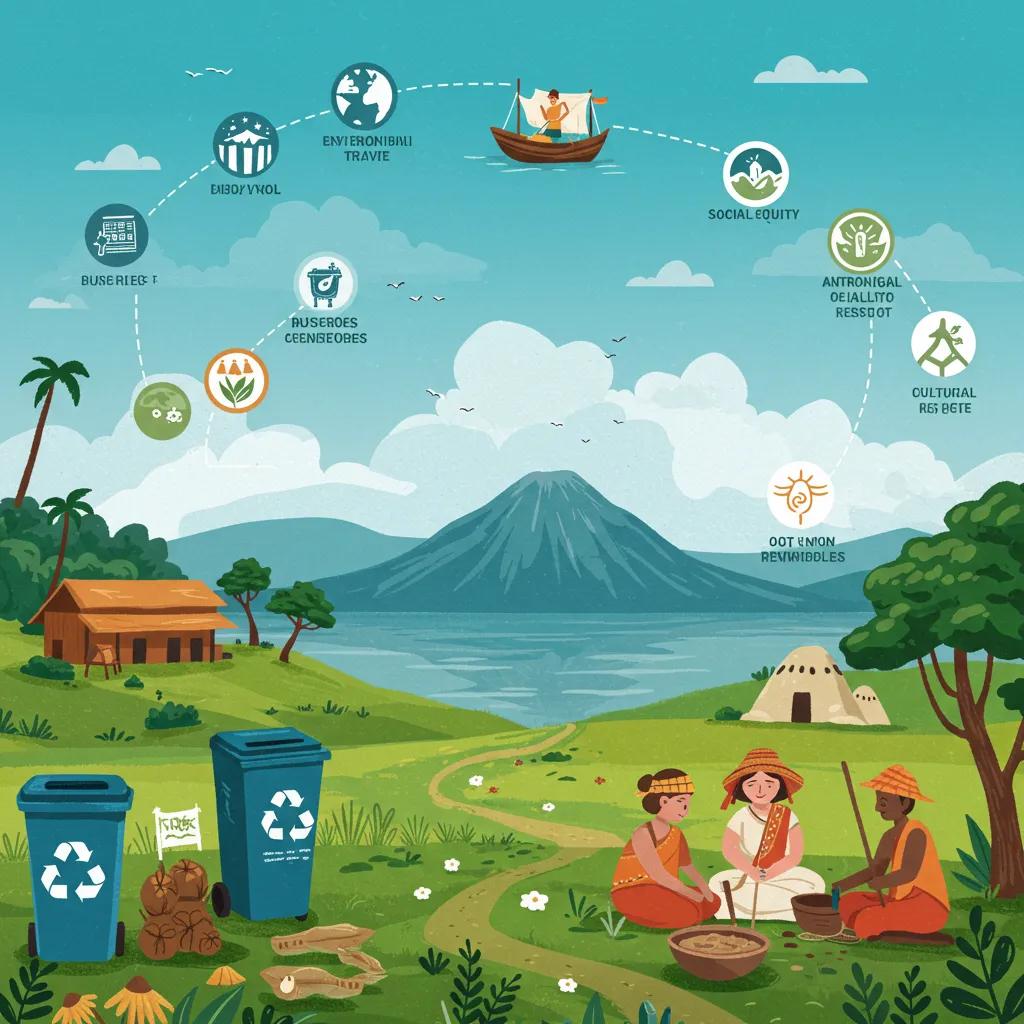
The key principles of responsible travel provide a practical checklist to guide decisions and policies that reduce harm and expand benefits across destinations. These principles form the operational core of sustainable tourism development and guide travelers, operators, and policymakers toward measurable outcomes. Applying these principles consistently helps protect natural and cultural heritage while improving local livelihoods, which in turn sustains tourism value over time. Use them to assess choices from transport to accommodation and activities.
- Environmental stewardship: minimize waste, conserve water, and reduce emissions through low-impact choices.
- Social equity: ensure fair wages, equitable participation, and informed consent for cultural experiences.
- Economic benefit: prioritize local procurement, hire local staff, and reduce revenue leakage.
- Cultural respect: seek permission for cultural interactions, follow local customs, and protect sacred sites.
- Transparency and accountability: favor operators with clear reporting and verified sustainability measures.
These principles guide practical behavior, which leads naturally to specific traveler actions such as choosing certified accommodations and ethical tours.
Why Is Responsible Travel Important for Local Communities and the Environment?
Responsible travel matters because unchecked tourism can erode ecosystems, displace cultural practices, and leak profits out of local economies, while mindful tourism supports conservation, cultural resilience, and community livelihoods. Environmentally, responsible practices reduce habitat degradation and resource strain; socially, they foster community empowerment through participation and fair benefit sharing; economically, they increase the share of tourism revenue that circulates locally. For instance, community-managed conservation areas that rely on visitor fees are stronger when tourists choose local guides and services, creating direct incentives for protection. Maintaining these positive feedbacks requires ongoing monitoring, policy support, and traveler education so long-term benefits persist beyond individual visits.
How Can Travelers Practice Responsible and Eco-Friendly Travel?
Practical, actionable steps let travelers turn the principles of responsible travel into measurable practices that reduce impact and increase benefits for destinations. This section highlights behavior changes you can adopt immediately, from packing choices to spending patterns, and compares common practices on ease, cost, and impact so you can prioritize actions that deliver the most value. Understanding trade-offs helps travelers make consistent, high-impact decisions that align with sustainable tourism goals. The following table compares common responsible-travel practices by ease, cost, and practical examples to guide decision-making.
Introductory comparison of responsible-travel practices, showing relative ease, likely cost, and concrete examples to help travelers choose high-impact behaviors.
Choosing a few high-impact practices—like favoring local services and cutting single-use waste—often yields disproportionate benefits compared with more costly choices like offsetting that are harder to verify.
What Are the Top Green Travel Tips for Ethical Tourism?

Top green travel tips are simple, repeatable actions that reduce environmental and social harm while improving travel experiences; they work by shifting consumption and behavior toward lower-impact options. These tips focus on transport, packing, spending locally, and engaging respectfully with communities, which together form a practical toolkit for ethical travel. Apply them consistently to reduce your carbon footprint and amplify benefits for destinations. The list below gives immediate steps travelers can start using today.
The most effective green travel tips include:
- Prioritize slow transport: Choose rail, bus, or shared transfers when feasible to lower emissions.
- Pack reusable essentials: Bring a refillable bottle, reusable bags, and cutlery to avoid single-use plastics.
- Support local providers: Hire local guides, eat in community-run restaurants, and buy handicrafts directly.
- Select low-impact activities: Prefer guided nature walks and cultural exchanges over mass attractions.
- Minimize energy use: Turn off lights and AC, and choose accommodations with demonstrated conservation practices.
- Respect wildlife and sites: Keep distance from animals and follow posted rules around sacred or protected areas.
Adopting several of these tips on each trip compounds benefits and encourages the travel industry to respond with more sustainable options.
How to Choose Eco-Friendly Accommodations and Sustainable Transport?
Selecting eco-friendly accommodation and sustainable transport requires assessing certifications, operational practices, and the degree of local benefit; these criteria together indicate whether a provider delivers genuine sustainability. Look for properties that demonstrate waste reduction, water-saving measures, local hiring, and transparent reporting, and favor transport operators that consolidate services to reduce empty legs and unnecessary emissions. While third-party certifications can be useful signals, travelers should also ask direct questions about sourcing, staff pay, and community contributions. Balancing comfort with impact means recognizing trade-offs—sometimes a modest, locally run guesthouse delivers more community benefit than a large certified resort.
How Can Travelers Support Community-Based Tourism and Local Economies?
Supporting community-based tourism means choosing experiences and purchases that channel revenue to local people, strengthening livelihoods and giving communities control over development. Practical examples include hiring local guides, booking homestays, buying food from neighborhood vendors, and selecting tours whose profits fund conservation or social programs. Avoid package deals that centralize spending through external operators and look for transparent descriptions of how fees are distributed. By prioritizing local services, travelers help reduce economic leakage and maintain incentives for cultural and environmental stewardship.
Introductory table explaining differences in ease, cost, and impact for traveler practices (see earlier table), and next we examine environmental footprints and mitigation.
What Is the Environmental Impact of Travel and How Can It Be Reduced?
Travel generates environmental impacts across transport, accommodation, and activities; reducing these impacts requires both individual behavior changes and sector-wide policy shifts. Air travel and road transport typically account for the largest share of traveler emissions, lodging consumes energy and water, and certain activities can damage habitats or wildlife if poorly managed. Effective mitigation combines choices like low-impact transport, green accommodation, and verified carbon reduction strategies, with industry measures such as clean-energy investments and regulated visitor management. Understanding where emissions arise helps travelers prioritize the most effective reductions.
Before exploring mitigation approaches, the table below outlines common travel activities, their primary environmental attribute, and concrete reduction strategies to guide traveler choices and policy advocacy.
These reduction strategies show where traveler choices intersect with systemic changes; individual actions matter most when combined with transparent industry commitments.
How Does Responsible Travel Help Reduce Carbon Footprint?
Responsible travel reduces carbon footprint by changing mode choices, shortening travel distances, and selecting low-energy accommodations, which together lower per-trip emissions. For example, choosing rail over short-haul flights, taking direct flights when necessary, and consolidating itineraries into longer stays reduce emissions per travel day. Carbon offsetting can complement reductions, but offsets vary in quality and should not replace direct reductions; prefer verified programs with transparent monitoring. As travelers adopt these practices, demand shifts can spur operators and policymakers to invest in cleaner infrastructure and lower-carbon options.
What Role Does Wildlife Conservation Play in Responsible Tourism?
Wildlife conservation is central to responsible tourism because tourism revenue can fund protected areas and community-managed reserves when activities are designed to benefit species and habitats. Responsible wildlife experiences avoid direct contact, follow accredited guidelines, and prioritize observation over interaction to prevent habituation or harm. Travelers should look for operators that contribute to conservation funds, engage local communities, and limit visitor numbers where necessary; avoiding exploitative attractions protects both animals and long-term tourism value. When wildlife-friendly tourism succeeds, it enhances biodiversity protection and connects visitors to conservation outcomes.
How Can Travelers Respect and Preserve Cultural Heritage?
Respecting cultural heritage means seeking informed consent for cultural exchanges, following local protocols at sacred sites, and supporting cultural custodians through fair payment and recognition. Simple practices—asking permission before photographing, dressing appropriately, and participating in community-led tours—prevent cultural harm and strengthen mutual respect. Where possible, favor initiatives that return a share of tourism income to cultural preservation projects and support artisans through direct purchases rather than imports. These respectful actions help ensure that tourism sustains rather than erodes cultural identity.
What Are the Current Trends and Future Outlook of Responsible Travel?
Responsible travel is evolving with market demand, technological tools, and new models like regenerative tourism and AI-enabled carbon tracking, shaping both consumer expectations and industry responses. Recent trends show growing interest in authentic experiences, community-based initiatives, and measurable environmental outcomes, driven especially by younger travelers. Technology—from AI to improved data collection—enables better monitoring of impacts and personalized recommendations to reduce footprints. These changes suggest a future where travel is more accountable, data-driven, and regenerative rather than extractive.
How Is the Responsible Travel Market Growing Globally and in Pakistan?
Global interest in sustainable tourism is increasing as consumers demand ethical options and regulators push for greener industry practices; in Pakistan, signals such as rising domestic interest and local pilot projects indicate a growing market for eco-tourism. Demand patterns favor authentic, nature-based, and community-centered experiences, which align with Pakistan’s rich landscapes and cultural heritage. Market growth depends on infrastructure, policy support, and quality reporting from local media and NGOs to highlight opportunities and risks. Tracking these signals helps travelers and operators prioritize investments in community resilience and conservation.
What Are Emerging Trends Like Regenerative Tourism and AI in Sustainable Travel?
Regenerative tourism goes beyond sustainability by actively restoring ecosystems and cultural systems through tourism revenue and collaborative projects, while AI supports better tracking of carbon footprints, visitor flows, and resource use for smarter management. Examples include projects that plant native vegetation funded by visitor fees and AI tools that optimize routing to reduce congestion and emissions. These innovations require rigorous measurement and equitable governance to ensure benefits reach local stakeholders. The combination of regenerative principles and AI-enabled transparency can shift tourism from extraction to restoration.
How Are Millennials and Gen Z Driving Demand for Responsible Travel?
Millennials and Gen Z drive demand for responsible travel through preferences for authenticity, sustainability, and value-aligned experiences, often willing to pay premiums for verified ethical options. These cohorts prioritize social media-validated experiences, community interaction, and demonstrable impacts, prompting brands and destinations to adopt clearer sustainability credentials. Providers targeting younger travelers should emphasize transparent reporting, community stories, and low-impact itineraries to meet expectations. This demographic pressure accelerates industry adoption of responsible practices and innovative models.
How Is Responsible Travel Practiced and Promoted in Pakistan?
Responsible travel in Pakistan is practiced through community-based projects, protected-area initiatives, and growing policy attention that aim to balance tourism income with conservation and local benefit. Notable regions, particularly in the northern areas, host community-led guesthouses and guided nature experiences that keep revenue within villages and sustain conservation incentives. Promotion relies on local champions, NGOs, and media coverage that highlight success stories and cautionary lessons, supporting the scaling of effective models. Below is a quick-reference table of representative project types, their local benefits, and typical status to help readers identify where impact is concentrated.
ARY News serves as an information hub for these developments through its Travel section, which publishes topical reporting, features, and analyses that keep people informed about responsible travel initiatives across Pakistan. The Travel section—supported by an AI Reporting Yard for speed and accuracy—functions as a regional resource for case studies, expert interviews, and timely updates that help travelers and policymakers understand evolving projects and policy moves. Readers can use such local reporting to identify credible community initiatives and avoid exploitative operators.
What Are Key Eco-Tourism Destinations and Community Projects in Pakistan?
Key eco-tourism destinations in Pakistan include mountain and rural areas where community-based tourism offers nature experiences while channeling benefits locally; these initiatives typically combine homestays, guided treks, and cultural workshops. Community projects often focus on conserving watersheds, reforesting degraded slopes, and promoting traditional crafts, thereby linking environmental and economic objectives. Travelers can support these outcomes by choosing locally run services, contributing to entrance fees that fund conservation, and engaging with cultural custodians respectfully. Local reporting helps verify which projects distribute benefits equitably.
How Are Local Policies and Initiatives Supporting Sustainable Tourism?
Local policy responses include pilot incentives for community tourism, conservation-area management plans, and regulatory efforts to formalize benefits for host communities, although enforcement and resourcing remain challenges. Government and NGO initiatives increasingly emphasize capacity-building, training for guides and small businesses, and infrastructure investments that lower environmental impacts. Continued progress depends on transparent monitoring, public reporting, and inclusive policy design that centers community voices. Media coverage and data-driven reporting can expose gaps and highlight scalable solutions.
Who Are the Experts and Travelers Leading Responsible Travel in Pakistan?
Experts and practitioners include conservationists, community leaders, and travel entrepreneurs who combine local knowledge with sustainable practice to deliver ethical experiences that benefit residents. These leaders often work with NGOs, academic partners, and media to co-design projects, document outcomes, and advocate for supportive policy. Travelers can follow these voices through regional reporting and feature stories to learn best practices and identify credible operators. Supporting local leadership is a practical way to ensure tourism contributes to long-term resilience.
What Challenges Does Responsible Travel Face and How Can They Be Overcome?
Responsible travel faces challenges such as greenwashing, overtourism, limited infrastructure, and uneven policy enforcement; addressing these requires transparency, capacity-building, and multi-stakeholder governance. Greenwashing undermines trust by promoting unverifiable claims, while overtourism strains ecosystems and local services; both problems need consumer vigilance and stronger regulation. Practical solutions blend certification, community governance, and public reporting to create accountability and build traveler confidence. The following list outlines common greenwashing red flags to help travelers assess claims.
- Vague language: Claims like “eco-friendly” without specific evidence or metrics are suspect.
- Lack of third-party verification: No credible certification or documented monitoring suggests weak claims.
- Token gestures: Single initiatives presented as systemic sustainability indicate greenwashing.
- No community benefit evidence: If local economic or social benefits are not documented, claims may be hollow.
Summarizing, spotting these red flags and asking for evidence helps travelers avoid misleading offers and encourages operators to adopt verifiable practices.
What Is Greenwashing and How Can Travelers Avoid It?
Greenwashing is the practice of making misleading or unsubstantiated environmental claims to enhance marketability without delivering real benefits; avoiding it requires asking specific questions about evidence, certification, and local impact. Travelers should request data on waste reduction, energy use, community contributions, and third-party verification, and favor operators that publish transparent reports. Practical checks include verifying whether certifications are current, whether sustainability measures are embedded across operations, and whether local stakeholders confirm benefits. By preferring transparency and accountability, travelers reduce the market for superficial claims and reward genuine sustainability efforts.
How Does Overtourism Affect Destinations and What Are Responsible Alternatives?
Overtourism damages environments, increases waste, drives up prices for residents, and erodes social cohesion, especially when visitor numbers exceed local carrying capacity. Responsible alternatives include dispersing visitors across seasons and regions, promoting smaller-group experiences, and supporting community-led visitor caps where needed. Destination management that combines data-driven quotas, improved infrastructure, and local governance helps maintain quality of life for residents while preserving tourism value. Encouraging off-season travel and supporting less-visited communities can redistribute benefits and reduce pressure on hotspots.
What Are Practical Solutions to Promote Ethical and Sustainable Tourism?
Practical solutions require coordinated action from travelers, operators, and policymakers including certification, capacity-building for local businesses, and transparent revenue-sharing mechanisms. Encouraging industry reporting, investing in waste and water management, and strengthening legal protections for cultural sites create structural support for responsible tourism. Policies that require impact assessments and community consent for large projects help prevent displacement and ecological harm. When stakeholders collaborate with clear metrics and public accountability, tourism becomes a tool for regeneration rather than extraction.
Where Can You Find the Latest Responsible Travel News and Updates?
Staying informed about responsible travel requires following authoritative news sources, industry bodies, and local reporting that offer policy updates, project launches, and evidence-based analysis. Reliable sources include international organizations, conservation NGOs, and specialized travel media that prioritize data-driven reporting and expert interviews. For Pakistan-focused updates, local journalism and regional travel sections provide timely reporting on pilot projects, policy changes, and emerging destinations. The next paragraph explains how ARY News covers responsible travel topics in a methods-focused way.
ARY News provides timely and comprehensive coverage of responsible travel through news briefs, feature articles, and data-driven reports following its mission to inform and engage audiences with current affairs. Its Travel section publishes on-the-ground case studies, interviews with experts, and policy analyses that highlight local initiatives and their impacts, leveraging an AI Reporting Yard to improve accuracy and speed. Readers interested in Pakistani developments can follow such reporting for updates on eco-projects, policy shifts, and community stories that matter to travelers and stakeholders.
What Are Recent Global and Local Policy Changes Affecting Sustainable Tourism?
Recent policy shifts globally and locally have focused on improving sustainability standards, incentivizing community-based projects, and integrating climate considerations into tourism planning; these moves affect funding, permitting, and destination management. In many jurisdictions, regulators now require environmental assessments and promote certifications that aim to standardize sustainability claims. Locally, pilot programs and incentives for community tourism seek to expand participation while enforcement and capacity remain areas for improvement. Monitoring policy updates helps travelers and operators adapt and align with evolving requirements.
Which New Eco-Tourism Projects Are Emerging in Pakistan and Worldwide?
New eco-tourism projects typically include community homestays, conservation-funded visitor experiences, and regenerative restoration initiatives that reinvest tourism revenue into local ecosystems. Around the world, pilots focus on habitat restoration, sustainable supply chains, and inclusive governance; in Pakistan, emerging projects commonly center on mountain community enterprises and conservation partnerships that combine income with environmental protection. Short news-style updates on these projects highlight lead organizations, expected impacts, and current status so readers can assess credibility and contribution to local resilience.
How Can Travelers Stay Informed About Responsible Travel Trends?
Travelers can stay informed by subscribing to authoritative newsletters, following conservation organizations, and monitoring specialized travel reporting that highlights policy, projects, and expert commentary; use alerts to track topics like sustainable tourism, conservation, and local initiatives. Set topic alerts for keywords such as sustainable tourism, regenerative tourism, and community-based tourism, follow organizations like UNWTO, GSTC, and WWF for global perspectives, and read regional media for ground-level reporting. Combining global guidance with local journalism gives a fuller picture of evolving practices and where to make the most responsible choices as a traveler.
- Subscribe to specialized newsletters: Receive curated updates on policy and projects.
- Follow conservation and certification bodies: Monitor guidance from organizations and standards bodies.
- Use alerts and hashtags: Set up keyword alerts and follow relevant social tags for real-time updates.
Following these methods keeps travelers and practitioners informed and able to respond to new opportunities or risks in responsible travel.
UK advises against travel to parts of Pakistan:
- UK advises against travel to parts of Pakistan, Published on Friday, August 01
Conclusion
Embracing responsible travel not only enriches your personal experiences but also fosters environmental conservation, cultural respect, and economic support for local communities. By making mindful choices, such as opting for community-run accommodations and reducing waste, travelers can significantly impact the destinations they visit. This guide provides the tools and insights needed to navigate your journey responsibly and sustainably. Start your adventure today by exploring our resources and committing to ethical travel practices.