Comprehensive Guide to Sleep Health: Benefits, Disorders, and How to Improve Sleep Quality
Sleep health refers to the regular, restorative patterns of sleep that support physical recovery, cognitive function, and emotional stability, and it matters because sleep underpins nearly every aspect of human health. This guide explains how sleep produces restorative effects through hormonal regulation and sleep-stage processes, describes common sleep disorders such as insomnia and sleep apnea, and offers evidence-informed strategies—from sleep hygiene checklists to cognitive behavioral therapy for insomnia (CBT-I)—to improve nightly rest. Many readers struggle with fragmented sleep, circadian rhythm disruption, or daytime impairment that reduces productivity and increases long-term cardiometabolic risk; this article provides practical, research-aligned approaches and culturally relevant examples to address those challenges. We cover the key benefits of good sleep, differentiate major sleep disorders and their diagnostic pathways, present an actionable sleep-hygiene checklist and habit matrix, review medical and behavioral insomnia treatments, outline red flags for professional referral, examine links between sleep and mental well-being, and summarize recent trends and research relevant to 2024–2025. Throughout, target terms like sleep health, insomnia, sleep apnea, melatonin, restless legs syndrome, and CBT-I are used to help readers find clear, usable guidance.
What Are the Key Benefits of Good Sleep?
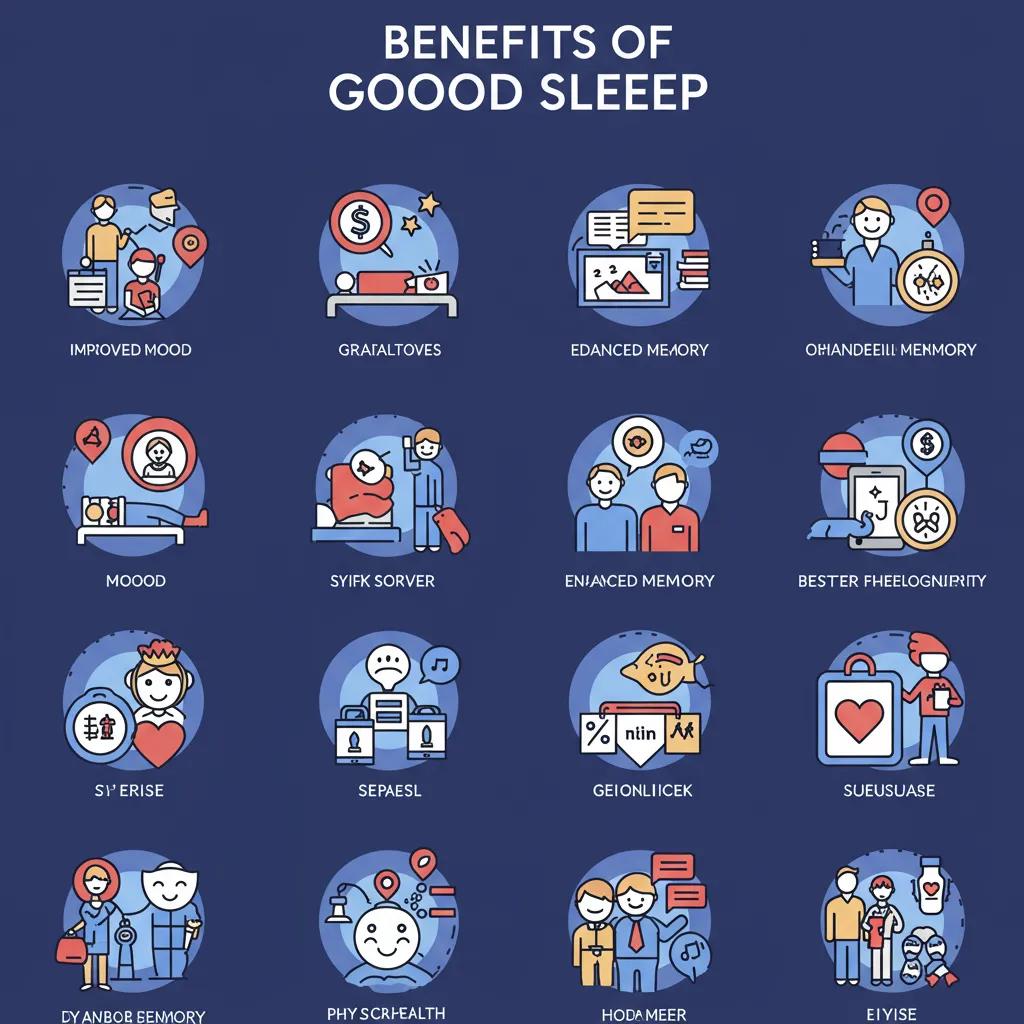
Good sleep supports body repair, immune resilience, memory consolidation, and daytime performance through coordinated physiological and neurological mechanisms that occur during REM and NREM sleep stages. Hormonal regulation—reduced evening cortisol and nocturnal growth hormone release—enables tissue repair and metabolic balance, while immune processes clear inflammation and restore host defenses; as a result, adequate sleep lowers susceptibility to infections and supports chronic disease prevention. Cognitively, sleep promotes memory consolidation and attention by coordinating hippocampus-to-neocortex transfer during slow-wave sleep, producing measurable gains in learning and problem solving. The next section breaks these broad benefits into physiological, cognitive, and performance domains with concrete examples and measurable outcomes.
Good sleep produces measurable benefits across multiple body systems:
- Physical restoration: Hormonal balance and tissue repair reduce illness risk and support metabolism.
- Mental health regulation: Sleep stabilizes mood and lowers anxiety and depression risk.
- Cognitive performance: Memory consolidation and attention improve learning and decision-making.
- Daytime productivity: Better sleep reduces errors, increases alertness, and improves workplace safety.
These benefits translate directly into daily functioning and long-term health, and they point to practical targets—like maintaining circadian rhythm alignment and a consistent sleep schedule—to preserve sleep health.
Different facets of sleep map to specific functional outcomes, shown below to clarify how sleep supports everyday abilities and long-term wellbeing.
This table highlights how distinct sleep components contribute to clear, actionable benefits; understanding these links helps prioritize which sleep behaviors to change first.
How Does Quality Sleep Improve Mental and Physical Health?
Quality sleep improves mental and physical health by coordinating hormonal, immune, and neural repair processes that operate overnight to restore daytime capacity. Nighttime reductions in cortisol and pulses of restorative hormones support tissue repair and metabolic balance, which lowers long-term risk for cardiometabolic conditions and supports energy regulation. Simultaneously, sleep modulates immune signaling—enhancing vaccine responses and aiding recovery from infections—so chronic sleep loss disrupts these protective dynamics and increases inflammation. Understanding these physiological pathways clarifies why sleep interventions often show benefits across mental health and chronic disease risk, and it leads naturally into the cognitive advantages discussed next.
What Cognitive Functions Are Enhanced by Sleep?
Sleep enhances memory consolidation, attention, executive control, and emotional regulation by using distinct sleep stages to process and stabilize new information. Slow-wave sleep consolidates declarative memory through hippocampal replay, while REM sleep supports procedural memory and emotional memory integration; together, these processes strengthen learning and problem-solving. Regular sleep improves sustained attention and reduces cognitive lapses, which boosts productivity and decreases errors in complex tasks. These cognitive mechanisms explain why students and shift workers alike experience clear performance gains after consistent sleep, and they set up the discussion of how sleep quality affects workplace and daily functioning.
How Does Sleep Affect Productivity and Daily Performance?
Sleep quality directly influences daytime productivity, reaction time, and occupational safety by affecting vigilance, decision-making, and error rates, with even moderate sleep loss producing measurable declines in performance. Studies show that restricted sleep increases lapses in attention and slows processing speed, raising the risk of accidents such as drowsy driving and workplace errors; conversely, restorative sleep enhances concentration and task-switching. Practical measures—like strategic scheduling, short naps for shift workers, and prioritizing sleep before high-stakes tasks—can reduce performance deficits. These performance links underscore why improving sleep health is a workplace and public-safety priority, leading to the next section that outlines common sleep disorders which often underlie impaired performance.
What Are the Most Common Types of Sleep Disorders?
Sleep disorders encompass a range of conditions—insomnia, obstructive and central sleep apnea, restless legs syndrome, narcolepsy, and parasomnias—that disrupt sleep quantity or quality through distinct mechanisms and symptoms. Accurate identification relies on recognizing hallmark signs (difficulty falling or staying asleep, loud snoring with pauses, daytime sleepiness, or involuntary movements) and following diagnostic pathways such as sleep diaries, home testing, or polysomnography. Treatments vary by disorder and can include behavioral therapies like CBT-I for insomnia, CPAP for obstructive sleep apnea, iron correction and medications for restless legs syndrome, and specialist referral for narcolepsy. The following list summarizes core disorders and why distinguishing among them matters for selecting effective therapy.
- Insomnia: Persistent difficulty initiating or maintaining sleep with daytime impairment.
- Sleep apnea: Repeated breathing interruptions causing fragmented sleep and cardiovascular risk.
- Restless legs syndrome: Urge to move legs, often disrupting sleep onset and continuity.
- Narcolepsy and hypersomnolence disorders: Excessive daytime sleepiness and disturbed nighttime sleep.
Clarifying symptoms and typical treatments helps guide decisions about diagnostics and referral, which we break down in the comparative table below.
What Are the Symptoms and Causes of Insomnia?
Insomnia presents as trouble initiating sleep, frequent night awakenings, or early-morning wakening with associated daytime impairment such as fatigue, concentration problems, or mood changes. Causes range from acute stress and poor sleep hygiene to psychiatric comorbidities, chronic pain, medications, and circadian rhythm disruptions; acute insomnia often resolves with short-term behavioral adjustments, while chronic insomnia typically requires structured behavioral treatment. Differentiating acute from chronic insomnia is important because CBT-I is the first-line long-term treatment for chronic cases and addresses maladaptive sleep behaviors and thoughts, whereas short-term pharmacologic strategies may be used temporarily. Recognizing triggers and the pattern of symptoms helps determine whether self-help, primary care, or specialist referral is appropriate.
Research indicates that cognitive behavioral therapy for insomnia (CBT-I) is a highly effective treatment.
Cognitive Behavioral Therapy for Insomnia: A Comparative Effectiveness Review
Insomnia is common in primary care, can persist after co-morbid conditions are treated, and may require long-term medication treatment. A potential alternative to medications is cognitive behavioral therapy for insomnia (CBT-I).
In accordance with PRISMA guidelines, we systematically reviewed MEDLINE, EMBASE, the Cochrane Central Register, and PsycINFO for randomized controlled trials (RCTs) comparing CBT-I to any prescription or non-prescription medication in patients with primary or comorbid insomnia. Trials had to report quantitative sleep outcomes (e.g. sleep latency) in order to be included in the analysis. Extracted results included quantitative sleep outcomes, as well as psychological outcomes and adverse effects when available. Evidence base quality was assessed using GRADE.
Five studies met criteria for analysis. Low to moderate grade evidence suggests CBT-I has superior effectiveness to benzodiazepine and non-benzodiazepine drugs in the long term, while very low grade evidence suggests benzodiazepines are more effective in the short term. Very low grade evidence supports use of CBT-I to improve psychological outcomes.
CBT-I is effective for treating insomnia when compared with medications, and its effects may be more durable than medications. Primary care providers should consider CBT-I as a first-line treatment option for insomnia.
Comparative effectiveness of cognitive behavioral therapy for insomnia: a systematic review, MD Mitchell, 2012
How Is Sleep Apnea Diagnosed and Treated?
Sleep apnea is diagnosed through sleep studies—either in-lab polysomnography or validated home sleep apnea tests—that quantify breathing events, oxygen desaturations, and sleep fragmentation; primary care providers often initiate screening when patients present with loud snoring, witnessed apneas, or excessive daytime sleepiness. Obstructive sleep apnea results from upper-airway collapse and is frequently treated with CPAP therapy, which restores airway patency and markedly reduces cardiometabolic risk when used consistently; alternative options include mandibular advancement devices, weight management, positional therapy, and selected surgeries. Central sleep apnea, which involves unstable respiratory drive, requires specialist evaluation to determine appropriate treatment. Early diagnosis and treatment are critical because untreated sleep apnea increases hypertension, heart disease, and stroke risk.
What Are Restless Legs Syndrome and Narcolepsy?
Restless legs syndrome (RLS) is characterized by an uncomfortable urge to move the legs—often accompanied by creeping or tingling sensations—that worsens in the evening and disrupts sleep onset; management emphasizes identifying and correcting low iron stores, optimizing sleep hygiene, and using pharmacologic options when necessary. Narcolepsy is a neurologic disorder of sleep-wake regulation marked by excessive daytime sleepiness, often with cataplexy, sleep paralysis, or hypnagogic hallucinations; diagnosis and care require sleep specialist referral for tailored pharmacologic and behavioral strategies. Both conditions can substantially reduce sleep quality and daytime functioning, and early recognition permits targeted therapy that improves safety and quality of life. Understanding these disorders supports appropriate referral pathways and realistic expectations for symptom control.
How Do Sleep Disorders Impact Overall Health?
Sleep disorders raise the risk of cardiometabolic disease, worsen mood disorders, and impair cognitive function by creating chronic physiological stressors such as inflammation, sympathetic activation, and metabolic dysregulation. For example, obstructive sleep apnea is linked to hypertension, atrial fibrillation, and insulin resistance, while chronic insomnia elevates risk for depression and anxiety and can accelerate cognitive decline in vulnerable populations. Treating underlying sleep disorders—whether via CPAP, CBT-I, or targeted medications—can mitigate these risks and improve long-term outcomes. Recognizing the systemic consequences of sleep pathology emphasizes the importance of timely diagnosis and integrated treatment approaches.
How Can You Improve Sleep Quality with Healthy Sleep Habits?

Improving sleep quality combines consistent sleep schedules, optimized sleep environments, lifestyle timing (meals, caffeine, and exercise), and stress-management techniques that align circadian rhythm with daily demands. Sleep hygiene practices create predictable cues for sleep onset, while behavioral strategies such as stimulus control and limiting screens reduce arousal at night; together these approaches lower sleep latency and increase sleep efficiency. For many people, modest habit changes—like fixed wake times and reducing late heavy meals—produce measurable improvements in sleep health and daytime function. The following checklist and habit matrix provide practical, culturally relevant steps and mechanisms to apply immediately.
Practical sleep-hygiene checklist to try for at least two weeks:
- Keep a Consistent Wake Time: Rising at the same time daily anchors circadian rhythm and improves sleep stability.
- Create a Wind-Down Routine: 30–60 minutes of relaxing, low-light activities signals the brain to prepare for sleep.
- Limit Evening Screens: Reduce blue-light exposure and stimulating content to lower arousal before bed.
- Optimize the Sleep Environment: Cool, dark, and quiet bedrooms promote deeper sleep and fewer awakenings.
These basic practices set the stage for deeper behavioral changes such as stimulus control and sleep restriction when insomnia persists.
Different habits support sleep through specific mechanisms and simple tips suited to regional routines.
The habit matrix links simple behaviors to how they improve sleep and offers realistic tips to implement within diverse lifestyles, including night-shift or rotating schedules.
What Are Effective Sleep Hygiene Practices?
Effective sleep hygiene involves routines and environmental changes that reduce physiological and psychological arousal at night and strengthen cues for sleep onset. Core steps include keeping a consistent sleep–wake schedule, reserving the bed for sleep and intimacy only, establishing a calming pre-sleep ritual, controlling light and temperature in the bedroom, and limiting stimulants like caffeine late in the day. Cultural practices—such as late social dinners or religious activities—can be accommodated by adjusting meal timing and planning quiet wind-down periods that respect family schedules. These practices are foundational and often produce significant gains in sleep quality when practiced consistently, preparing readers for more targeted behavioral interventions if problems persist.
How Do Diet and Exercise Influence Sleep Health?
Diet and exercise influence sleep through timing and content: heavy, spicy, or richly spiced meals close to bedtime can increase arousal and reflux symptoms, while caffeine and nicotine delay sleep onset and reduce depth; conversely, regular physical activity enhances sleep efficiency and slow-wave sleep when scheduled at appropriate times. Adjusting meal timing to allow digestion and limiting stimulants in the afternoon or evening supports sleep onset, and scheduling exercise earlier in the day avoids late-night activation that can interfere with sleep. For readers in regions with late evening social meals, incremental shifts—such as lighter evening options or spacing exercise away from bedtime—offer practical ways to reap sleep benefits without large lifestyle disruptions.
How Can Stress Management Enhance Sleep Quality?
Stress reduction techniques lower cognitive and physiological arousal that commonly maintain insomnia and fragmented sleep, and integrating simple practices into evening routines can shorten sleep latency and improve continuity. Evidence-based approaches include diaphragmatic breathing, progressive muscle relaxation, mindfulness meditation, and elements of cognitive behavioral therapy that challenge catastrophic sleep beliefs; these reduce hyperarousal and recondition the bed as a cue for sleep. Brief daily practice of relaxation techniques and addressing underlying anxiety through structured CBT or counseling often produce improvements within weeks. Combining stress management with sleep hygiene creates synergistic effects that increase the likelihood of long-term sleep health gains.
What Role Does Circadian Rhythm Play in Sleep Patterns?
Circadian rhythm governs timing of sleep propensity and synchronizes physiological processes to the 24-hour day through light exposure, activity patterns, and feeding times; misalignment—such as late-night screen exposure or irregular schedules—disrupts sleep quality and daytime alertness. Practical entrainment strategies include morning light exposure to advance wake time, consistent wake times to stabilize rhythm, and appropriately timed melatonin for specific circadian disorders under medical guidance. Shift workers face special challenges and benefit from targeted light therapy, scheduled naps, and strategic sleep timing to align sleep windows with biological night as much as possible. Aligning behavior with circadian principles is a high-impact route to improving sleep health.
Understanding the impact of light exposure on our internal body clocks is crucial for managing circadian rhythms.
Light Exposure’s Impact on Human Circadian Rhythms: A Systematic Review
In addition to deepening the understanding of the circadian rhythm disruption caused by artificial light exposure, the review will also serve as a basis for developing a human health-
Systematic review of light exposure impact on human circadian rhythm, AK Pesonen, 2019
How Is Insomnia Treated: Medical and Behavioral Approaches?
Insomnia treatment emphasizes behavioral therapies—especially cognitive behavioral therapy for insomnia (CBT-I)—as first-line for chronic cases, while pharmacologic agents like melatonin or short-term hypnotics may be used selectively under clinical supervision. CBT-I targets maladaptive thoughts and behaviors that perpetuate insomnia using structured components such as sleep restriction, stimulus control, cognitive restructuring, and sleep hygiene education; this approach produces durable improvements without the risks associated with long-term medication. Medications can help in circadian rhythm-related problems or brief symptomatic relief, but they often do not address the underlying behavioral drivers. The following components and comparisons clarify why CBT-I is prioritized and when medications are considered.
CBT-I core components are practical and structured:
- Sleep Restriction: Limits time in bed to consolidate sleep and increase sleep efficiency.
- Stimulus Control: Re-associates bed with sleep by restricting non-sleep activities in bed.
- Cognitive Restructuring: Challenges unhelpful beliefs about sleep that increase anxiety.
- Sleep Education and Hygiene: Teaches habits that support sleep physiology.
These components work together to change behaviors and cognitions that maintain insomnia, offering long-term benefits compared with short-term pharmacologic approaches.
Numerous studies have confirmed the efficacy of CBT-I for primary insomnia.
Meta-Analysis: CBT-I Effectiveness for Primary Insomnia Treatment
Previous meta-analyses have shown the effectiveness of cognitive behavioral therapy for insomnia (CBT-I). However, conclusive information about therapeutic effects (especially during follow-up), effect sizes of objective sleep parameters and self-rating scales, and the problem of publication bias has not been obtained. We conducted a meta-analysis focusing on these issues. We identified 14 randomized controlled studies published between 1990 and 2009 that fulfilled our selection criteria. Intra-group comparison of CBT-I and comparison between CBT-I and control groups were performed on these studies. The intra-group comparison revealed that the effect sizes of CBT-I for subjective sleep variables from sleep diaries were medium to large at the end point of treatment, and these effect sizes were favorably maintained on follow-up. A between-group comparison revealed that CBT-I was more effective than the control for subjective sleep variables at the end of treatment and that its effectiveness was also recognized on follow-up. With regard to self-rating scales, as compared to the control group, the effect sizes in the CBT-I group were medium to large both at the end of treatment and on follow-up. However, there were problems of publication bias in some of the subjective or objective sleep variables. The abovementioned results support the effectiveness of CBT-I for the treatment and prevention of relapse of primary insomnia despite the existence of a certain publication bias.
A meta-analysis on the treatment effectiveness of cognitive behavioral therapy for primary insomnia, 2011
What Is Cognitive Behavioral Therapy for Insomnia?
Cognitive Behavioral Therapy for Insomnia (CBT-I) combines behavioral interventions—sleep restriction and stimulus control—with cognitive strategies to reduce maladaptive sleep-related thoughts and arousal. Evidence shows CBT-I improves sleep latency, efficiency, and daytime functioning, and its benefits persist after treatment ends, distinguishing it from symptom-focused medications. CBT-I is available through trained clinicians and increasingly via validated digital programs that expand access; selecting a structured, evidence-based program maintains fidelity to the therapeutic components. Understanding CBT-I’s mechanics clarifies why it is recommended as first-line care and how it integrates with lifestyle adjustments to sustain gains.
When Are Medications Like Melatonin Recommended?
Melatonin and other sleep medications are indicated selectively: melatonin is often helpful for circadian rhythm disorders (e.g., delayed sleep phase, jet lag) or short-term use to shift timing, whereas hypnotics may be used for acute insomnia under clinician oversight. Dosing, timing, and duration matter: melatonin is typically administered at specific intervals before desired sleep phase and should be used based on practitioner guidance, while chronic hypnotic use carries risks of tolerance and adverse effects. Clinicians weigh risks and benefits, preferring behavioral interventions for long-term management and reserving medications for defined indications or as bridges to behavioral therapy. Consultation with a healthcare provider ensures appropriate selection and monitoring.
How Can Lifestyle Changes Support Insomnia Management?
Lifestyle changes amplify formal insomnia treatments by stabilizing circadian cues, reducing physiological arousal, and removing perpetuating factors such as late caffeine or erratic schedules. Key actions include fixed wake times, limiting evening stimulant use, scheduling regular exercise earlier in the day, and adopting a calming pre-sleep ritual; these steps enhance the effectiveness of CBT-I and reduce relapse risk. Cultural practices—like social evening meals—can be adapted through lighter options or shifting timing to minimize sleep interference. Consistent lifestyle modifications create a foundation on which behavioral and medical interventions can build lasting sleep health improvements.
What Are the Signs of Poor Sleep and When Should You Seek Help?
Signs of poor sleep range from transient tiredness to persistent daytime impairment and safety risks; distinguishing normal occasional fatigue from disorder-level symptoms requires attention to duration, severity, and functional impact. Red flags that warrant professional evaluation include loud, disruptive snoring with witnessed breathing pauses, excessive daytime sleepiness impairing work or school, persistent insomnia lasting months despite good sleep practices, frequent nighttime movement or choking, and symptoms suggestive of narcolepsy. Early assessment using sleep diaries, screening tools, and primary care evaluation helps triage who needs sleep clinic referral for diagnostic testing such as polysomnography. The next subsections provide practical checklists, diagnostic overviews, and referral thresholds to guide timely care.
Common warning signs that merit further assessment include:
- Persistent difficulty falling or staying asleep for several weeks with daytime consequences.
- Loud snoring accompanied by witnessed pauses in breathing.
- Excessive daytime sleepiness interfering with daily tasks or causing lapses while driving.
- Unusual nighttime behaviors (complex movements, talking, or confusion) or sudden muscle weakness with emotions.
How to Identify Symptoms of Sleep Deprivation and Disorders?
Identifying symptoms begins with a structured checklist: daytime sleepiness measured by reduced alertness or microsleeps, cognitive slowing, mood instability, and impaired occupational performance suggest sleep deprivation, while disorder-specific signs—snoring with apneas, leg sensations, or sudden sleep attacks—point to particular sleep disorders. Duration and frequency matter: transient sleep loss is common, but persistent symptoms over weeks justify further evaluation. Maintaining a sleep diary for two weeks helps quantify patterns, and paired with screening questionnaires it clarifies whether primary care or specialist referral is needed. A clear symptom assessment streamlines the diagnostic pathway described next.
What Diagnostic Methods Are Used for Sleep Disorders?
Diagnostic methods include sleep diaries and actigraphy for longitudinal sleep-wake patterns, home sleep apnea testing for suspected obstructive sleep apnea, and in-lab polysomnography for complex or multi-domain evaluations; each method balances precision, accessibility, and cost. Polysomnography remains the gold standard for many disorders because it records brain activity, breathing, limb movements, and oxygenation, while validated home tests are effective for straightforward obstructive sleep apnea screening. Primary care often initiates basic screening and refers to sleep clinics for advanced diagnostics when indicated. Understanding the strengths and limitations of each test guides appropriate use and timely diagnosis.
When to Consult a Sleep Specialist or Healthcare Provider?
Consult a healthcare provider when red flags—such as loud snoring with witnessed apneas, excessive daytime sleepiness affecting safety, chronic insomnia resistant to self-help, or symptoms suggestive of narcolepsy—are present, and seek a sleep specialist if preliminary evaluation suggests a complex or treatment-resistant disorder. Typical next steps include targeted history-taking, screening questionnaires, daytime function assessment, and ordering sleep studies when indicated. Early referral speeds diagnosis and management, reducing risks like cardiovascular complications from untreated sleep apnea or severe mood consequences from chronic insomnia. Knowing when to escalate care empowers patients to get appropriate interventions promptly.
How Does Sleep Health Relate to Mental Well-being?
Sleep and mental health are bidirectionally linked: poor sleep increases risk for anxiety and depression, while mood disorders themselves disturb sleep architecture and continuity, creating a cycle that amplifies distress and functional impairment. Mechanisms include stress-axis dysregulation, heightened inflammatory signaling, and impaired emotional memory processing during dysfunctional REM and slow-wave sleep; treating sleep problems often reduces psychiatric symptoms and improves therapeutic response to standard mental health interventions. Local reporting and clinician interviews highlight that social stressors, academic pressure, and screen time among youth are important contextual drivers of sleep disturbance, which we explore further in the Pakistan-relevant subsection. Addressing sleep in mental health care enhances overall recovery and resilience.
What Is the Link Between Sleep, Anxiety, and Depression?
Epidemiological data and mechanistic studies indicate that insomnia and disrupted sleep increase the risk of developing anxiety and depression, while mood disorders themselves disturb sleep architecture and continuity, forming a reinforcing loop. Physiologically, chronic sleep loss heightens stress-axis activity and inflammatory mediators implicated in mood dysregulation; psychologically, sleep deprivation impairs emotion regulation and cognitive coping strategies. Clinically, improving sleep through CBT-I or targeted interventions often reduces depressive and anxious symptoms, underscoring sleep treatment as a core component of mental health care. This bidirectional relationship explains why integrated approaches that target both sleep and mood yield better outcomes than isolated treatments.
How Can Improving Sleep Reduce Stress and Improve Mood?
Improving sleep reduces physiological hyperarousal and restores regulatory neural circuits responsible for emotion processing, typically translating into measurable reductions in perceived stress and improved mood over weeks to months. Interventions such as sleep hygiene, relaxation training, and CBT-I target the behavioral and cognitive drivers of insomnia and can produce downstream improvements in anxiety and depressive symptoms; patients often report better daytime energy, clearer thinking, and enhanced coping ability. Setting realistic expectations—improvements often occur within several weeks—and combining sleep-focused therapy with broader psychological care maximizes benefits. These intervention effects emphasize practical steps clinicians and patients can adopt to break the sleep–mood cycle.
What Are Local Insights on Sleep and Mental Health in Pakistan?
Local factors—such as late-evening social schedules, academic and economic pressures, and widespread smartphone use—contribute to circadian misalignment and elevated sleep disturbances among youth and working adults, and clinicians in Pakistan highlight stressors like high-stakes exams and erratic shift work as common drivers of insomnia. Regional reporting indicates a need for culturally tailored public health messaging that respects family and religious routines while promoting consistent sleep practices and screen-time boundaries for adolescents. Expanding local clinician training in CBT-I and integrating sleep assessment into primary care are frequently recommended approaches to close care gaps. These local insights inform targeted strategies that balance cultural realities with evidence-based sleep health promotion.
What Are the Latest Trends and Research in Sleep Health?
Recent research through 2024–2025 emphasizes scalable behavioral interventions, growth of digital CBT-I programs, and increasing interest in precision approaches that tailor sleep interventions to individual circadian profiles and comorbidities. Studies also highlight rising awareness of the public health impacts of sleep disorders and the effectiveness of integrated lifestyle and behavioral treatments compared with medication-focused models. In parallel, policy and clinical capacity gaps in many regions—including Pakistan—remain, prompting calls for improved public education, clinician training, and research into region-specific prevalence and drivers. The next subsections summarize recent prevalence trends, local initiatives, and emerging treatments for 2025.
Conclusion
Prioritizing sleep health is essential for enhancing physical recovery, cognitive function, and emotional stability, ultimately leading to improved overall well-being. By understanding the mechanisms behind sleep and implementing effective strategies, individuals can significantly reduce the risk of sleep disorders and their associated health impacts. We encourage you to explore our comprehensive resources and actionable tips to cultivate better sleep habits today. Take the first step towards a healthier sleep routine and unlock the benefits of restorative rest.