Social Entrepreneurship: Understanding Impact, Models, and Opportunities in Pakistan
Social entrepreneurship combines mission-driven goals with business methods to solve social problems at scale, creating measurable social value while pursuing financial sustainability. This article explains the core concepts of social entrepreneurship and situates them within Pakistan’s development priorities, showing how social enterprises translate ideas into services, jobs, and systemic change aligned with the Sustainable Development Goals. Readers will learn clear definitions, common legal and revenue models in Pakistan, the role of impact investing, profiles of leading innovators, regulatory and funding challenges, how technology shapes social ventures, and practical measurement frameworks for impact. The piece blends conceptual clarity with local context, case-style examples, and actionable guidance for founders, funders, policymakers, and ecosystem builders. Each section emphasizes mechanisms—how social enterprises create outcomes—followed by operational implications and recommended next steps to strengthen Pakistan’s social innovation ecosystem.
What is Social Entrepreneurship and How Does It Drive Social Impact?
Social entrepreneurship is an approach where entrepreneurs deploy market-based strategies to address social and environmental problems, using business models to deliver public value while sustaining operations financially. The mechanism centers on combining a mission-first orientation with revenue generation, which enables scaling of services such as education, healthcare, and livelihoods. By integrating measurement into governance, social enterprises convert activities into demonstrable outcomes that attract impact-oriented capital and partnerships. Understanding these mechanics helps clarify distinctions with charity and traditional commercial ventures and points toward opportunities where systemic change is possible through enterprise design and policy support.
How is Social Entrepreneurship Defined Globally and in Pakistan?
Globally, social entrepreneurship is defined by intentional social impact, innovation, and financial sustainability; practitioners aim to generate both social value and economic returns. In Pakistan, this definition maps onto locally pressing needs—education gaps, health access, rural livelihoods and climate resilience—so enterprises often emphasize community engagement and context-sensitive delivery. Pakistani social ventures frequently operate within hybrid legal and operational frameworks, adapting nonprofit registration, company structures, and cooperative forms to local regulatory realities. These local adaptations illustrate how global definitions travel into practice: the core attributes remain constant while legal form and sector focus reflect national priorities and constraints.
Research indicates that while global definitions of social entrepreneurship remain consistent, their application in Pakistan is shaped by local needs and regulatory adaptability.
Social Entrepreneurship in Pakistan: Challenges and Prospects Explored
Social Entrepreneurship (SE) benefits the society by helping to achieve social and economic goals. SE is receiving scholarly attention around the globe but its development is still moderate in Pakistan. Despite the growing trend, the dominant focus of scholars remains the ideological debate about the meaning and definition of SE. Such an approach inhibits the exploration of its other facets. Casting the gap in literature, this paper aims to find out the challenges and prospects that social entrepreneurs face in their journey, specifically in Pakistan. Keeping in view the emerging importance of this sector, this study discusses the findings of 14 in-depth semi-structured interviews conducted with leading social entrepreneurs, practitioners and academicians related to the field to understand the phenomenon at hand. Drawing upon the findings of the study, useful insights have been put forth as its theoretical contribution. Moreover, local and national government can benefit
What Are the Key Characteristics That Differentiate Social Enterprises?
Social enterprises share several distinctive traits that separate them from pure charities or conventional firms: a mission-first orientation, blended value creation, governance for accountability, and systematic measurement of outcomes. Mission-first orientation means social objectives drive strategy rather than profit maximization alone, which affects decisions from pricing to hiring. Blended value combines financial sustainability with measurable social return, while governance structures—often boards with mixed expertise—protect mission integrity. Robust impact metrics and transparency enable enterprises to demonstrate effectiveness to communities and funders, which in turn improves access to patient capital and partnership opportunities.
How Does Social Innovation Relate to Social Entrepreneurship?
Social innovation is the process of creating new solutions—products, services, processes, or models—that address social needs; social entrepreneurship operationalizes those innovations into sustainable organizations. Innovation provides the prototype or practice, and entrepreneurship provides the pathway to scale through revenue models, partnerships, and operational systems. In Pakistan, social innovation often emerges from community-led pilots, university labs, or accelerator programs, then graduates into social enterprises that refine models for broader replication. This progression from idea to enterprise is a core mechanism by which local innovations deliver measurable improvements in education, health, and livelihoods.
What Role Do Sustainable Development Goals Play in Social Entrepreneurship?
The Sustainable Development Goals (SDGs) offer a shared framework that helps social enterprises align missions, measure impact, and access international funding streams that prioritize SDG outcomes. Enterprises commonly map activities to SDGs such as quality education (SDG 4), good health and well-being (SDG 3), decent work and economic growth (SDG 8), and climate action (SDG 13), which clarifies both operational targets and reporting metrics. Using SDG-aligned indicators improves comparability for impact investors and government agencies, enabling enterprises to demonstrate contribution to national development agendas. Mapping to SDGs also strengthens narrative coherence when seeking blended finance and policy support.
What Are the Main Types and Models of Social Enterprises in Pakistan?
Social enterprises in Pakistan use a mix of legal forms and revenue strategies tailored to sectoral needs, with common models including nonprofit-with-earned-income, hybrid companies, cooperatives, and fee-for-service social businesses. Each model balances impact focus and financial sustainability differently: nonprofit-with-earned-income prioritizes mission with complementary commercial activities, hybrids create separate social-purpose companies to attract investment, and cooperatives emphasize member ownership and local governance. Sector differences matter: health and education ventures often use sliding-scale fees, while agricultural and livelihoods projects use value-chain models to capture margin. Understanding trade-offs among models is essential for founders deciding how to structure governance, taxation, and fundraising.
Different models suit different problems; the following table summarizes common models, revenue structures, legal forms, and examples of fit-for-purpose sectors to guide enterprise design.
This comparison helps founders select structures that match financial needs, investor expectations, and mission protections. Choosing the right model influences access to capital and long-term governance.
Which Social Enterprise Models Are Most Common in Pakistan?
Hybrid approaches and nonprofits with earned-income streams are widespread in Pakistan because they permit mission continuity while generating sustainability through fees, product sales, or service contracts. Cooperatives and community-based models thrive in rural contexts where collective ownership and local governance align incentives for agricultural productivity and market access. Regulatory and tax frameworks influence choice: many organizations adopt dual-structure arrangements to receive grant funding while operating revenue-generating units to scale services. Selecting a model involves weighing investor expectations, legal constraints, and the enterprise’s tolerance for mission dilution in pursuit of growth.
The dual logic of social and commercial objectives presents significant scaling challenges for social enterprises in Pakistan, requiring careful strategic integration.
Social Enterprises in Pakistan: Scaling Challenges and Strategies
PurposeThis study aims to explore the challenges and strategies that SE in Pakistan faces when scaling while integrating dual logic – social and commercial. By focusing on scaling as a tool for enhancing social impact rather than merely
How Do Pakistani Social Enterprises Address Local Social Challenges?
Pakistani social enterprises typically address challenges through localized solution design, community engagement, and partnerships with government and NGOs to reach scale. They co-create services with beneficiaries to ensure cultural fit and operational feasibility, using local staff and networks to improve uptake and impact. Examples include mobile health units adapting clinical protocols for rural delivery and vocational programs designed with local employers for job readiness. These operational choices emphasize practical scalability rather than theoretical models, balancing depth of local impact with replicability across regions.
What Are Some Notable Pakistani Social Enterprises and Their Missions?
Several Pakistani organizations have gained recognition for combining sustainable revenue models with measurable social outcomes in education, health, and livelihoods. Profiles often highlight missions such as improving rural education access, providing affordable primary healthcare, or enabling smallholder farmers to access markets and climate-resilient inputs. These enterprises typically demonstrate outcomes through enrollment data, patient volumes, or increased household incomes, and they use blended finance to expand operations. Shortlisted profiles often serve as templates for newer ventures seeking similar sectoral impact and growth strategies.
How Does Impact Investing Support Social Entrepreneurship in Pakistan?

Impact investing is the deployment of capital with the explicit intention to generate social or environmental impact alongside financial returns, using instruments like equity, debt, and blended finance. The mechanism supports social entrepreneurship by providing patient capital tailored to mission-driven businesses that require longer time horizons or concessional returns. Impact investors often require robust impact metrics, governance clarity, and scalable models before committing, which pressures enterprises to professionalize operations and measurement. In Pakistan, impact investing can close funding gaps for sectors that commercial capital overlooks, such as education in underserved regions or clean-energy solutions for low-income households.
What Is Impact Investing and How Does It Work?
Impact investing combines three core elements: intentionality (explicit social/environmental goals), expectation of financial returns (ranging from below-market to market-rate), and measurement (tracking outcomes). Instruments include equity stakes to support growth, debt to finance working capital or expansion, and blended finance that mixes grants with repayable capital to reduce risk. Investors evaluate deals through an impact thesis, financial model, and exit pathway, aligning fund structures to the enterprise life cycle. This structure differentiates impact investing from pure philanthropy and from venture capital focused solely on high returns.
Who Are the Key Impact Investors in Pakistan?
Impact capital in Pakistan comes from a mix of domestic funds, international development finance institutions (DFIs), CSR arms of corporations, and philanthropic foundations deploying catalytic capital. Each investor type typically has characteristic ticket sizes and return expectations: DFIs and international funds may provide larger tickets and focus on systemic sectors, CSR programs often support pilot scaling through grants, and local impact funds target smaller, growth-stage enterprises. The table below summarizes investor types, typical ticket sizes, return expectations, and focus areas to guide entrepreneurs seeking capital.
What Are the Opportunities and Challenges of Impact Investing in Pakistan?
Impact investing in Pakistan has clear opportunities and structural challenges. Opportunities include unmet market demand in education, healthcare, agriculture and clean energy, plus a growing ecosystem of accelerators and digital platforms enabling scale. Challenges include limited deal flow quality, insufficient impact data, regulatory ambiguities for hybrid models, and investor concerns about exit pathways. Addressing these constraints requires blended finance structures, technical assistance for enterprises, improved impact measurement, and policy clarity to unlock patient capital. Pairing finance with capacity-building improves enterprise readiness and increases likelihood of sustainable impact.
How Are Impact Metrics Used to Measure Success?
Impact metrics operationalize social goals into quantifiable indicators such as learning outcomes, patient treatment volumes, income increases, or carbon emissions avoided, often mapped to SDG indicators for comparability. Frameworks like IRIS+ and SROI are used to structure metrics, while pragmatic KPIs are preferred by early-stage enterprises to balance rigor with resource constraints. Data collection leverages mobile surveys, administrative records, and third-party verification where possible, and metrics guide investor decision-making and performance-based funding. Clear articulation of indicators and data sources increases investor confidence and supports scaling strategies.
Who Are the Leading Social Innovators and Entrepreneurs in Pakistan?
Pakistan’s social innovation landscape features founders and organizations applying entrepreneurial approaches to entrenched challenges, often combining technology, local networks, and sector expertise to scale impact. Leading innovators typically demonstrate measurable outcomes, partnerships across public and private sectors, and adaptive models that respond to local constraints. Their stories illustrate how mission-driven leadership, strong governance, and disciplined measurement convert social ideas into sustainable enterprises. Media coverage and data-driven reporting amplify these profiles, which helps attract partners and funders that accelerate growth.
Which Pakistani Social Entrepreneurs Are Driving Change?
Prominent social entrepreneurs in Pakistan include individuals and teams who have launched ventures improving access to essential services such as healthcare, education, and financial inclusion; their backgrounds range from community organizers to technologists and social sector professionals. These leaders often combine lived experience with domain expertise to design programs that meet beneficiary needs, leveraging partnerships with local governments and NGOs to extend reach. Their recognition comes from demonstrable impact—measured increases in service uptake, livelihoods, or educational attainment—which creates a virtuous cycle of visibility, funding, and replication.
What Are Their Business Models and Social Impact Stories?
Leading Pakistani social innovators deploy diverse revenue models—subscription services, service contracts with government, product sales to last-mile customers, and hybrid fundraising strategies—to sustain operations and scale. Business models are matched to impact objectives: for example, telehealth platforms may use per-consultation fees plus institutional contracts, while agricultural ventures combine input sales with market linkage fees to increase farmer incomes. Impact stories focus on measurable changes such as improved learning outcomes, increased household earnings, or reduced out-of-pocket healthcare costs, illustrating how model design ties directly to outcomes and future investment appeal.
The landscape of social business in Pakistan is evolving, with models drawing inspiration from successful initiatives in other developing economies like Bangladesh.
Social Business Models in Pakistan: An Empirical Investigation
This study explores the concept of social business (SB) and its relationship with corporate social responsibility (CSR) in the context of developing nations, with a specific focus on Bangladesh and Pakistan. Social business, as a self-sustaining and impact-driven model, offers an alternative approach to addressing socio-economic challenges by integrating business principles with social objectives. This research employs a qualitative methodology, utilizing secondary data from various publications and publicly available records of Grameen Bank, a pioneering microfinance institution founded by Nobel laureate Dr. Muhammad Yunus in Bangladesh. By examining Grameen Bank’s initiatives, the study identifies key forms, principles, and funding mechanisms of SB and attempts to draw comparisons with Pakistan’s emerging SB landscape. The study systematically organizes and assesses the long-term implications of the SB model, hypothesizing its scalability and applicability to other dev
How Do These Innovators Leverage Technology for Social Good?
Technology amplifies reach and measurement for Pakistani social enterprises through mobile platforms, data analytics, telehealth, and digital payments, improving targeting, efficiency, and accountability. Startups employ mobile-first interfaces to reach dispersed populations, use analytics to optimize service delivery, and adopt digital payment rails to improve financial inclusion. However, innovators must address data privacy, digital literacy, and infrastructure gaps to maintain equitable access. Thoughtful application of technology reduces unit costs and enhances monitoring, which in turn strengthens evidence for impact investors and policymakers.
(ARY News integration) As an information hub covering business, innovation, and social affairs, ARY News reports on developments in Pakistan’s social entrepreneurship space—profiling entrepreneurs, tracking funding announcements, and explaining policy shifts that affect impact capital and regulation. Timely journalistic coverage helps raise public awareness, connect stakeholders, and surface data-driven stories that inform both practitioners and policymakers. Readers interested in ongoing profiles and interviews can follow ARY News’ Business and Innovation coverage for reported updates and contextual analysis.
What Challenges Do Social Entrepreneurs Face in Pakistan and How Can They Overcome Them?
Social entrepreneurs in Pakistan confront a set of interrelated obstacles—limited access to patient capital, regulatory constraints on hybrid forms, shallow impact measurement capacity, talent shortages, and low public awareness—that collectively slow scaling and sustainability. Overcoming these barriers requires coordinated action across ecosystem actors: capacity-building programs to strengthen business and measurement skills, policy reforms to clarify legal forms and tax treatment, and partnerships that bundle finance with technical assistance. Strengthening local incubators, promoting blended finance vehicles, and improving media visibility are practical levers that can accelerate enterprise maturity and impact.
What Are the Funding and Regulatory Challenges?
Access to patient, risk-tolerant capital remains scarce, especially for early and growth-stage social enterprises that require time to demonstrate impact and financial viability. Regulatory ambiguity around hybrid organizational forms and tax incentives complicates choices about governance and investment. Barriers to cross-border funding and limited local exit options further deter larger-scale investment. Policy remedies include clearer legal pathways for social purpose entities, tax incentives for impact investments, and public instruments that de-risk private capital through first-loss buffers or guarantee schemes.
How Does Limited Awareness Affect Social Entrepreneurship Growth?
Limited awareness among consumers, investors, and policymakers constrains demand, funding, and supportive regulation for social enterprises. Public understanding affects willingness to pay for services and investor appetite for impact risk, while policymakers may under-prioritize enabling measures without visible evidence of enterprise effectiveness. Strategic storytelling, rigorous data collection, and consistent media coverage help bridge perception gaps by demonstrating viability, cost-effectiveness, and societal benefits. Building awareness drives both market adoption and policy support, creating an environment where social ventures can thrive.
What Strategies Help Balance Social Impact and Financial Viability?
Enterprises balance mission and margins through diversified revenue streams, tiered pricing, strategic partnerships, and disciplined cost management. Blended finance—combining grants, concessional capital, and market-rate investments—supports pilots and scale phases while protecting affordability. Strong governance, including mission-lock clauses and impact-linked board oversight, preserves social objectives as enterprises pursue growth. Operationally, focusing on unit economics and use of technology to lower costs improves sustainability without compromising service quality.
How Can Support Ecosystems Improve Outcomes?
Support ecosystems—incubators, accelerators, universities, media, and government programs—improve outcomes by providing mentorship, technical assistance, proof-of-concept funding, market linkages, and policy advocacy. These actors offer services such as business-model refinement, impact measurement training, demo days connecting funders to entrepreneurs, and seed grants to reduce early-stage risk. Coordinated ecosystem efforts reduce duplication, improve pipeline quality, and amplify successful models for replication across regions.
How Is Technology Shaping Social Innovation and Entrepreneurship in Pakistan?
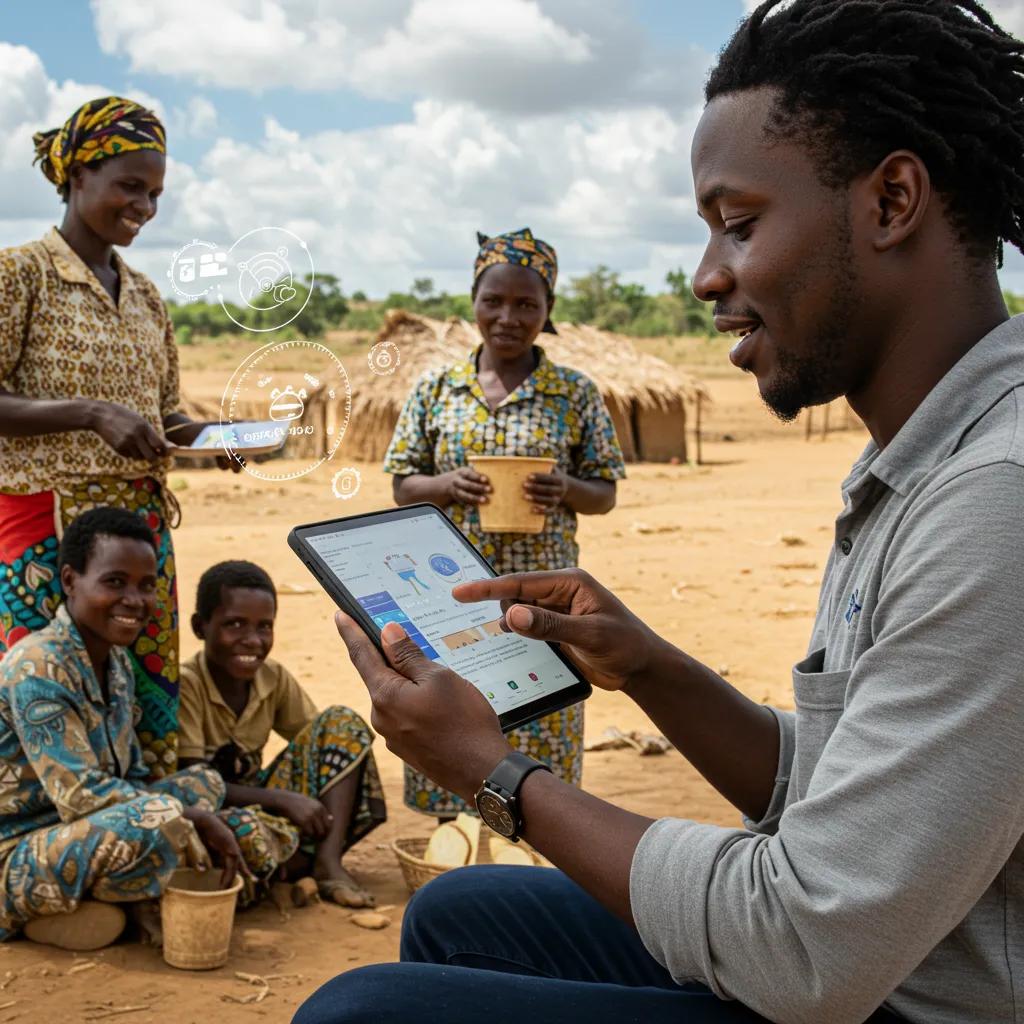
Technology is reshaping social ventures in Pakistan by enabling low-cost service delivery, improving data-driven decision-making, and expanding access to marginalized populations through mobile and digital platforms. The role of AI, mobile networks, and cloud services includes automating routine tasks, personalizing interventions, and enhancing monitoring. However, infrastructure limitations and digital divides mean technology complements rather than replaces strong local partnerships and context-aware design. Responsible deployment—emphasizing privacy, inclusivity, and human-centered design—maximizes benefits while minimizing harms.
What Role Does AI and Digital Innovation Play in Social Ventures?
AI and digital tools enhance targeting, diagnostic accuracy, and operational efficiency in sectors like telehealth, adaptive learning, and agricultural advisory services. Chatbots can triage common health inquiries; predictive analytics can forecast crop yields and optimize supply chains; mobile learning platforms can personalize education content. These tools reduce marginal costs and improve outcomes when combined with grounded field operations. Ethical considerations such as bias, transparency, and data protection must be addressed to ensure equitable benefits across populations.
How Are Social Innovation Hubs and Networks Supporting Entrepreneurs?
Innovation hubs and networks provide crucial services—mentorship, curriculum-based acceleration, demo days, investor introductions, and shared infrastructure—that improve venture readiness and survival rates. Hubs operating in major cities offer programming tailored to sectoral challenges and provide platforms for cross-sector collaboration, including partnerships with universities and private-sector mentors. Outcomes include stronger business models, improved measurement capacity, and enhanced visibility for promising startups. Effective hubs act as bridges between grassroots innovators and institutional funders.
What Future Trends Are Emerging in Pakistani Social Entrepreneurship?
Near-term trends include greater uptake of climate-smart agriculture solutions, youth-led digital ventures addressing local services, growth in blended finance structures, and expanded use of digital public goods for education and health. Diaspora engagement and impact-focused corporate partnerships are likely to increase cross-border capital flows. Data-driven measurement, standardization of impact indicators, and integration with national SDG strategies will strengthen accountability. These trends point toward a maturing ecosystem where technology, finance, and policy converge to scale impact.
- Climate-resilient agri-solutions integrating market linkages.
- Youth-founded digital platforms for education and informal employment.
- Expansion of blended finance to de-risk early-stage scaling.
- Standardization of SDG-aligned measurement for comparability.
- Increased public–private partnerships enabling service contracts.
These trends suggest avenues for founders and funders to align priorities and invest strategically in scalable interventions.
How Can Social Impact Be Measured and Enhanced in Pakistani Social Enterprises?
Measuring impact requires choosing frameworks that fit organizational capacity and stakeholder needs while linking metrics to funding and policy objectives. Common frameworks include IRIS+ for standardized indicators, SROI for monetizing social benefits, and SDG-aligned KPIs for comparability with national targets. Practical measurement balances rigor with feasibility: start with a limited set of high-signal indicators, use digital tools for routine data capture, and prioritize third-party verification for investor confidence. Enhanced measurement improves transparency, unlocks funding, and supports continuous improvement.
What Frameworks Are Used to Measure Social Impact?
Practitioners use IRIS+ for standardized metrics, SROI to quantify social value in monetary terms, and bespoke SDG-aligned KPIs to map to national targets. Each framework has trade-offs: IRIS+ enables comparability but can be resource-intensive; SROI offers compelling cost-benefit narratives but requires robust valuation methods; SDG mapping increases relevance to policymakers and international funders. Selecting a framework depends on enterprise scale, resource availability, and funder requirements; smaller ventures often start with a lean indicator set to demonstrate progress before adopting more complex systems.
Choosing an appropriate framework aligns measurement with funding strategies and policy engagement, enabling enterprises to demonstrate both effectiveness and scalability.
How Do Pakistani Enterprises Track Progress Toward Sustainable Development Goals?
Enterprises map activities to SDG targets, select measurable indicators (e.g., number of students reached, patient treatments, income uplift), and collect baseline and follow-up data to show trajectory. Practical steps include aligning indicators with national SDG metrics, using mobile surveys and administrative data for verification, and reporting outcomes at regular intervals to stakeholders. Clear mapping facilitates engagement with donors and government programs that prioritize SDG outcomes and helps enterprises position themselves for impact-linked financing.
What Data and Reporting Practices Improve Transparency and Accountability?
Best practices include regular reporting cycles (quarterly or biannual), use of third-party audits or verification for key claims, open data summaries accessible to stakeholders, and integration of monitoring into operational workflows to reduce reporting burden. Combining qualitative narratives with quantitative indicators enhances stakeholder understanding of context and mechanisms. Transparent reporting builds trust with beneficiaries, investors, and policymakers, improving the likelihood of sustained partnerships and scaling opportunities.
These practices support a culture of continuous improvement and strengthen links between evidence and funding decisions. As media coverage and data journalism highlight verified success stories, ecosystem actors can better allocate resources toward high-impact interventions.
(ARY News integration) ARY News, as a national information hub, plays an important journalistic role in documenting and amplifying progress in impact measurement and social entrepreneurship trends. By reporting on validated data, policy developments, and profiles of innovators, ARY News helps raise awareness and connect stakeholders across the ecosystem without offering investment or consulting services. Ongoing coverage in business and innovation reporting provides readers with timely context to evaluate how measurement advances influence funding and policy choices.
- Measurement strengthens funding: clear metrics attract impact capital.
- Transparency builds trust: reported outcomes improve public confidence.
- Media visibility scales best practices: stories accelerate adoption.
This final set of practices underscores how measurement, technology, finance, and informed reporting together advance social entrepreneurship in Pakistan.
Conclusion
Social entrepreneurship in Pakistan presents a unique opportunity to address pressing social challenges while fostering economic growth through innovative business models. By understanding the diverse frameworks, funding mechanisms, and impact measurement strategies, stakeholders can effectively contribute to a thriving ecosystem that supports sustainable development. Engaging with local social enterprises not only amplifies their impact but also aligns with global goals for a better future. Discover how you can support this transformative movement by exploring our resources and connecting with key players in the field.