SpaceX Tests First Quantum Communication Satellite for Secure Internet: How It Advances Secure Satellite Internet and Quantum Cryptography
Introduction
What if the next generation of internet security rode on a SpaceX satellite orbiting Earth? As cyberattacks cost organizations trillions of dollars annually, the launch of SpaceX’s first quantum communication satellite promises to transform how data is protected in space and on the ground. In this article, we define quantum communication satellites, explore core technologies like quantum key distribution and entanglement, examine SpaceX’s hardware and integration with Starlink and X-37B quantum navigation, compare global competitor programs, analyze technical hurdles, and outline the path toward a global, unhackable quantum internet.
What Is a Quantum Communication Satellite and How Does It Secure Internet Data?
A quantum communication satellite is a spacecraft that transmits cryptographic keys using quantum mechanics principles to guarantee unbreakable encryption. By leveraging properties such as superposition and entanglement, these satellites detect any eavesdropping attempt and instantly invalidate compromised keys. This approach improves data privacy, supports global coverage beyond ground-based fiber, and lays the groundwork for secure satellite internet.
What Is Quantum Communication and Its Role in Satellite Technology?
Quantum communication uses qubits—quantum bits encoded in photons—to exchange information that classical bits cannot mimic. Superposition allows a photon to exist in multiple states simultaneously, while the no-cloning theorem prevents exact copying of quantum data. In satellites, free-space optics transmit these qubits between orbiting platforms and ground stations, enabling secure links across vast distances and paving the way for a quantum backbone in satellite networks.
How Does Quantum Key Distribution (QKD) Enable Unbreakable Encryption?
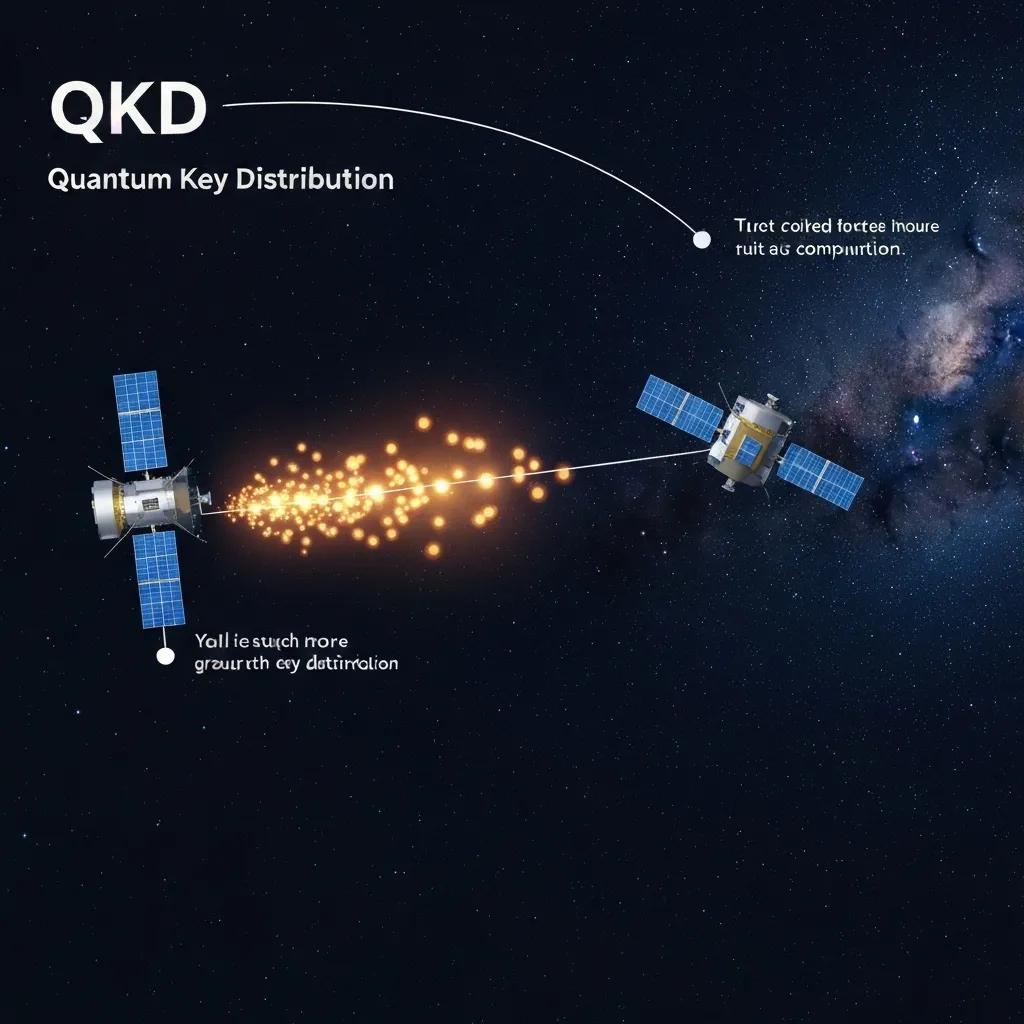
Quantum Key Distribution (QKD) generates and shares secret keys by encoding information in quantum states of photons. Any measurement by an eavesdropper alters those states, immediately revealing intrusion and preserving key integrity. This mechanism supports continuous key refresh cycles and eavesdropping detection, ensuring that encryption keys remain secret and unforgeable even against foreseeable quantum computing attacks.
What Is Quantum Entanglement and Why Is It Important for Secure Communication?
Quantum entanglement occurs when two particles share a linked state so that measuring one instantly determines the state of the other, regardless of separation distance. Entangled photon pairs distributed via satellite enable distant nodes to establish identical keys without direct transmission. This property underpins QKD’s security by ensuring that any external interference breaks the entangled state and triggers a secure abort.
How Do Quantum Satellites Overcome Terrestrial Communication Limitations?
Ground-based quantum links face distance-related photon loss and require trusted repeater nodes for long-haul transmission. Quantum satellites operate above atmospheric interference, extending secure communication beyond the ~421 km fiber limit and connecting continents without ground repeaters.
By moving quantum channels into low Earth orbit, satellites unlock global-scale secure networks that terrestrial fiber cannot achieve.
What Are the Key Features and Capabilities of SpaceX’s First Quantum Communication Satellite?
SpaceX’s inaugural quantum satellite integrates state-of-the-art quantum hardware with legacy satellite bus systems to demonstrate real-world QKD in orbit. Its capabilities include on-board entangled photon generation, high-precision beam steering, and seamless coordination with ground-based quantum nodes to validate secure key exchange under operational conditions.
What Technologies Does SpaceX Use in Its Quantum Communication Satellite?
SpaceX leverages a combination of quantum and aerospace innovations:
- Entangled-photon sources engineered for stable superposition across orbit-to-ground links.
- Cryogenic single-photon detectors that improve signal-to-noise ratios in variable thermal environments.
- Adaptive free-space optical terminals that maintain beam alignment despite satellite motion.
These components support robust key distribution and form the basis for integrating quantum channels into a future Starlink constellation.
How Does SpaceX’s Satellite Test Enhance Secure Data Transmission?
By executing end-to-end QKD experiments between the satellite and multiple ground stations, SpaceX verifies secure internet traffic channels that automatically detect and reject tampered keys. This in-orbit demonstration reduces key exchange latency, enhances data privacy, and validates protocols for scaling quantum channels across a commercial satellite network.
How Does This Satellite Fit Into SpaceX’s Broader Quantum Communication Strategy?
This test mission complements SpaceX’s integration of post-quantum cryptography (PQC) in Starlink user terminals and quantum navigation research on the X-37B. A hybrid approach of hardware-based QKD and software-based PQC ensures layered security, resilience against future quantum threats, and a modular platform for deploying a secure quantum internet constellation.
What Are the Milestones and Timeline of SpaceX’s Quantum Satellite Development?
SpaceX’s roadmap to operational quantum satellites spans several phases:
- Concept validation and partnership structuring completed in early 2023.
- Prototype design, subsystem testing, and ground calibration through Q4 2023.
- Launch of the first quantum payload on a Falcon 9 mission in Q2 2024.
- Initial in-orbit key exchange demonstrations by mid-2024.
- Planning for a multi-satellite quantum constellation deployment in 2025 and beyond.
Progress through these milestones demonstrates SpaceX’s commitment to rapid iteration and secure internet innovation.
How Does SpaceX Integrate Quantum Security with Starlink and Other Space Missions?
SpaceX embeds quantum resilience across its service ecosystem, combining QKD, PQC, and quantum navigation to deliver comprehensive threat protection for satellite internet and defense applications.
What Is Post-Quantum Cryptography (PQC) and How Is It Used in Starlink?
Post-Quantum Cryptography employs classical cryptographic algorithms designed to resist quantum-computer attacks. Starlink modems incorporate PQC libraries that secure command channels and user traffic, adding a software layer of protection that complements QKD’s hardware-based assurance. This ensures that satellite internet remains secure even if quantum key distribution is temporarily unavailable.
How Does Quantum Navigation on the X-37B Complement Quantum Communication?
SpaceX’s X-37B mission tests quantum inertial sensors based on matter-wave interferometry. These sensors improve autonomous satellite positioning without GPS, reducing reliance on external signals that could be spoofed. By integrating positioning data with secure communication channels, SpaceX advances a fully quantum-secured space infrastructure.
What Partnerships and Collaborations Support SpaceX’s Quantum Efforts?
SpaceX collaborates with government agencies and academic institutions, including:
- NASA’s SEAQUE experiment on the ISS for entanglement tests in microgravity.
- Department of Defense programs for quantum navigation validation.
- University and industry consortia researching free-space quantum optics.
These partnerships expand testing capabilities and accelerate deployment of quantum technologies across multiple mission profiles.
What Is the Vision and Future of the Global Quantum Internet Enabled by SpaceX’s Satellite Technology?
A global quantum internet uses satellite nodes to interconnect ground stations in a mesh of entangled links, delivering end-to-end security guaranteed by quantum laws. SpaceX’s satellites serve as critical backbone nodes, supporting secure key distribution, entanglement swapping, and distributed quantum computing experiments on a planetary scale.
How Will Quantum Satellites Enable a Global, Unhackable Quantum Internet?
Quantum satellites distribute entangled photon pairs to distant nodes, which then perform entanglement swapping to extend secure links. A network of these satellites and ground stations forms a quantum mesh that rejects any eavesdropping attempt, ensuring that data packets remain confidential and tamper-proof across continents.
What Are the Key Applications of Quantum Internet in Finance, Defense, and Healthcare?
Quantum-secured links unlock transformative use cases:
- Finance institutions gain absolute assurance for cross-border transactions and data vault replication.
- Defense organizations achieve unbreakable command-and-control channels for satellites and UAVs.
- Healthcare providers protect patient records in telemedicine networks and remote diagnostics.
These early applications highlight the strategic value of quantum networks for critical sectors.
How Does SpaceX’s Quantum Satellite Contribute to Building a Secure Quantum Network?
By delivering a scalable platform for in-orbit QKD tests, SpaceX’s quantum satellite validates hardware and protocols required for a multi-node quantum internet. Integration with future Starlink upgrades and ground infrastructure projects cements SpaceX’s role in the emerging global quantum ecosystem.
What Are the Main Challenges and Research Directions for Space-Based Quantum Communication?
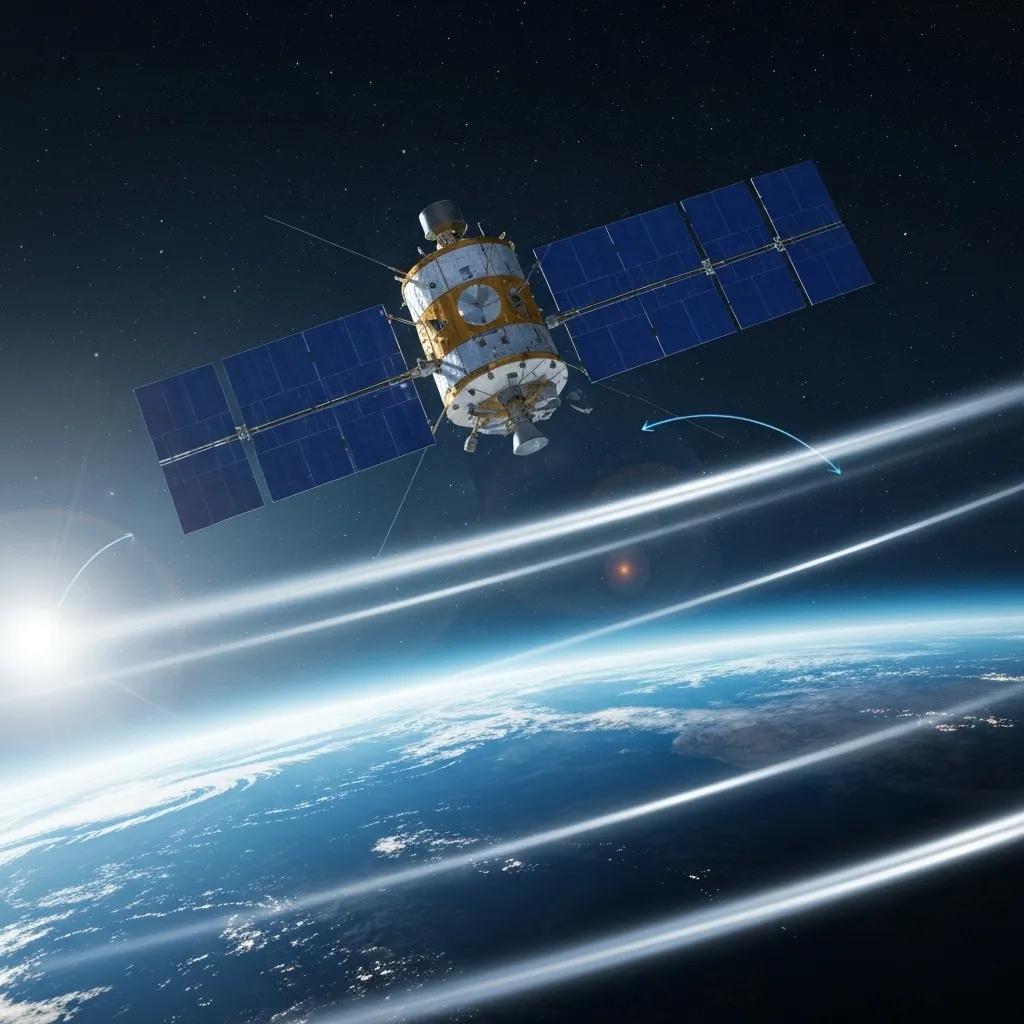
Space-based quantum links face environmental and engineering hurdles, but ongoing research targets solutions that enhance reliability and scalability.
What Technical Challenges Affect Quantum Satellite Communication?
Key obstacles include:
- Atmospheric turbulence causing beam wandering and photon scattering.
- Decoherence from thermal fluctuations in optical equipment.
- Photon loss in long-distance free-space links limiting key rates.
Overcoming these issues is essential for continuous, high-rate key distribution.
How Is SpaceX Addressing These Challenges Through Innovation?
SpaceX develops advanced solutions such as:
- Adaptive optics and wavefront sensors for beam stabilization through atmospheric pockets.
- Low-temperature optical assemblies that reduce detector noise and maintain quantum coherence.
- Error-correction protocols tailored to free-space QKD channels that recover lost qubits.
These innovations improve link performance and drive research into next-generation quantum payloads.
What Are the Regulatory and Ethical Considerations for Quantum Satellite Internet?
Deploying quantum satellites requires coordination on spectrum allocation, orbital slots, and export controls for quantum hardware. Ethical frameworks address data sovereignty and privacy, ensuring that unbreakable encryption aligns with international security and human-rights norms.
How Does SpaceX’s Quantum Communication Satellite Compare to Global Competitors?
SpaceX’s approach stands out against programs led by other space agencies and research consortia, combining rapid iteration with commercial-scale deployment plans.
What Are China’s and ESA’s Quantum Satellite Programs?
China’s Micius satellite has proven entanglement distribution over thousands of kilometers, while ESA’s QKDSat project validates interoperability of QKD payloads with European ground networks. Both initiatives focus on pure entanglement tests, whereas SpaceX merges QKD hardware with existing satellite constellations for rapid service rollout.
How Does SpaceX’s Approach Differ in Technology and Strategy?
SpaceX adopts a modular, hybrid strategy by combining hardware-based QKD with software-based PQC and quantum navigation experiments. This layered model enhances resilience, supports incremental upgrades, and aligns with commercial service goals, distinguishing it from single-purpose research satellites.
What Are the Market Trends and Growth Projections for Space-Based Quantum Cryptography?
Market forecasts project the space-based QKD sector to grow from $500 million in 2025 to $1.1 billion by 2030, driven by cybersecurity demands and national security budgets. Increasing government and commercial investment reflects the urgent need for quantum-resistant communication platforms.
What Are the Security Benefits and Implications of SpaceX’s Quantum Communication Satellite?
SpaceX’s quantum satellite offers a paradigm shift in cybersecurity by transforming encryption from computational hardness to physical law enforcement.
How Does Quantum Communication Protect Against Quantum Computing Threats?
Quantum Key Distribution protects data by using measurement disturbance: any interception attempt alters quantum states and aborts key exchange. This future-proof mechanism guards against decryption by even the most advanced quantum computers.
What Advantages Does SpaceX’s Satellite Provide Over Classical Secure Communication?
SpaceX’s quantum satellite delivers:
- Real-time eavesdropping detection that stops key distribution on intrusion.
- Elimination of trusted courier dependence for key provisioning.
- Rapid key refresh cycles that prevent key reuse attacks.
These capabilities represent a leap beyond VPNs and TLS, delivering security guaranteed by quantum physics.
How Will This Technology Impact National Security and Critical Infrastructure?
Quantum satellite links secure command-and-control channels for defense assets, protect smart-grid communication from cyber sabotage, and safeguard financial transaction networks. By embedding quantum resilience in critical systems, SpaceX contributes to national security and infrastructure robustness against evolving threats.
SpaceX’s first quantum communication satellite marks a turning point in data privacy and secure connectivity. By harnessing quantum mechanics, integrating with Starlink and X-37B missions, and addressing technical and regulatory challenges, SpaceX positions itself at the forefront of a new era in satellite internet. As this technology matures, the vision of a global, unhackable quantum internet draws near, redefining how governments, enterprises, and individuals protect their most valuable information.