The Evolution of Entertainment: History, Technology, Trends, and Future Insights
Entertainment is the collection of practices, technologies, and cultural forms that deliver pleasure, meaning, and shared narratives to audiences, and its evolution maps how societies communicate and consume stories. This article explains the evolution of entertainment by tracing key historical milestones, examining technological transformations, surveying 2025 trends, and projecting future scenarios while weaving in a Pakistan-focused perspective and how media organizations report on these shifts. Readers will gain a chronological timeline, technology-driven mechanisms, actionable trend summaries, and regionally relevant insights useful for creators, media professionals, and engaged audiences. The piece balances historical explanation with data-driven mechanisms—showing how inventions change distribution, how platforms reshape monetization, and why youth behaviors matter—before describing journalistic approaches to covering this evolution. Expect clear definitions, mechanism→benefit explanations, lists for quick reference, and tables that summarize eras and technologies to make complex shifts snippable and actionable.
What Are the Key Milestones in the History of Entertainment Media?
Key milestones in entertainment media are distinct eras marked by innovations that changed production, distribution, and communal experience: ancient performance traditions created public rituals, the printing press enabled mass storytelling, film and radio introduced mass visual and audio spectacle, television domesticized broadcast culture, and the digital revolution personalized access via the internet. Each milestone functioned by reducing friction—whether geographic, cost, or latency—thereby widening audiences and shifting cultural power toward new producers and intermediaries. The immediate benefit of understanding these milestones is seeing recurring patterns: technological affordances drive new business models and narrative forms, which in turn shape audience expectations. Recognizing this pattern clarifies how contemporary platforms like streaming or social video are not isolated disruptions but part of a historical trajectory that favors accessibility, interactivity, and personalization.
How Did Ancient and Medieval Entertainment Shape Early Culture?
Ancient and medieval entertainment established performance, storytelling, and ritual as mechanisms for social cohesion, moral education, and collective identity, with examples including Greek theatre and communal oral storytelling traditions. These forms worked by combining narrative memory with public ritual, producing shared repertoires that transmitted values across generations and reinforced civic bonds. The practical benefit was a resilient cultural infrastructure: stories and performances created common reference points that enabled cooperation and political legitimacy. Traces of those early mechanisms persist in modern entertainment through staged performance conventions, narrative archetypes, and the civic function of satire and spectacle.
What Impact Did the Printing Press and Vaudeville Have on Entertainment?
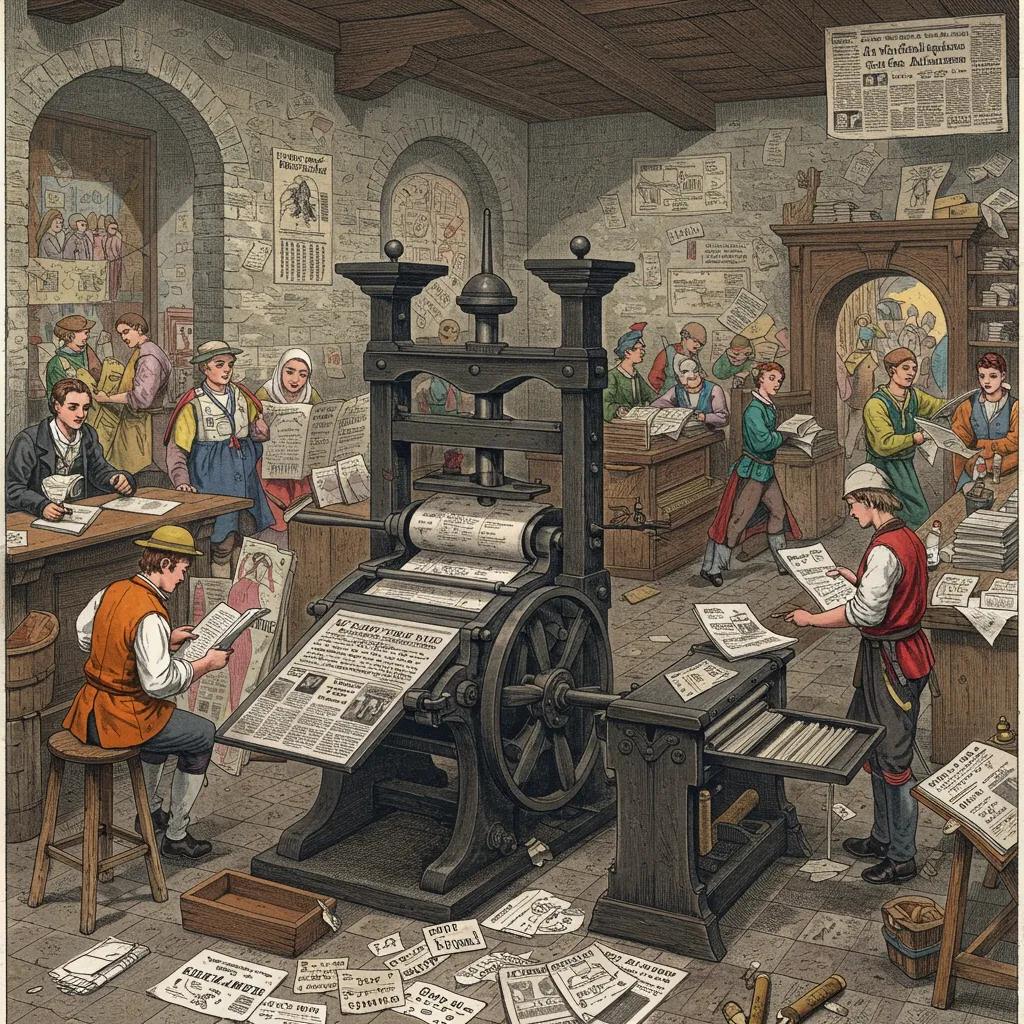
The printing press and vaudeville democratized content by lowering the cost of distribution and professionalizing popular performance, respectively; print spread stories widely while vaudeville commercialized variety shows that traveled across regions. Printing enabled serialized literature and mass newspapers, which scaffolded literacy and created national audiences, whereas vaudeville formalized circuits that trained performers and standardized popular tastes. The cultural effect was a shift from elite patronage to market-driven entertainment, making content more responsive to audience demand. This transition set the stage for later mass mediums like cinema and radio by demonstrating scalable production and monetization models.
How Did Film, Radio, and Television Transform 20th Century Entertainment?
Film introduced spectacle and global distribution, radio provided real-time audio reach that knitted distant listeners together, and television localized mass culture into the domestic setting, each transforming attention patterns and industry economics. Film professionalized visual storytelling and created a transnational star system; radio enabled serialized programming and shared national moments; television turned living rooms into communal viewing spaces influencing family rhythms and advertising models. These media reduced geographic barriers and created national cultural calendars, which in turn shaped political communication and consumer behavior. The 20th-century shift culminated in the industrialization of entertainment, with standardized genres, scheduling, and large-scale production infrastructures.
How Has the Digital Revolution Changed Entertainment Consumption?
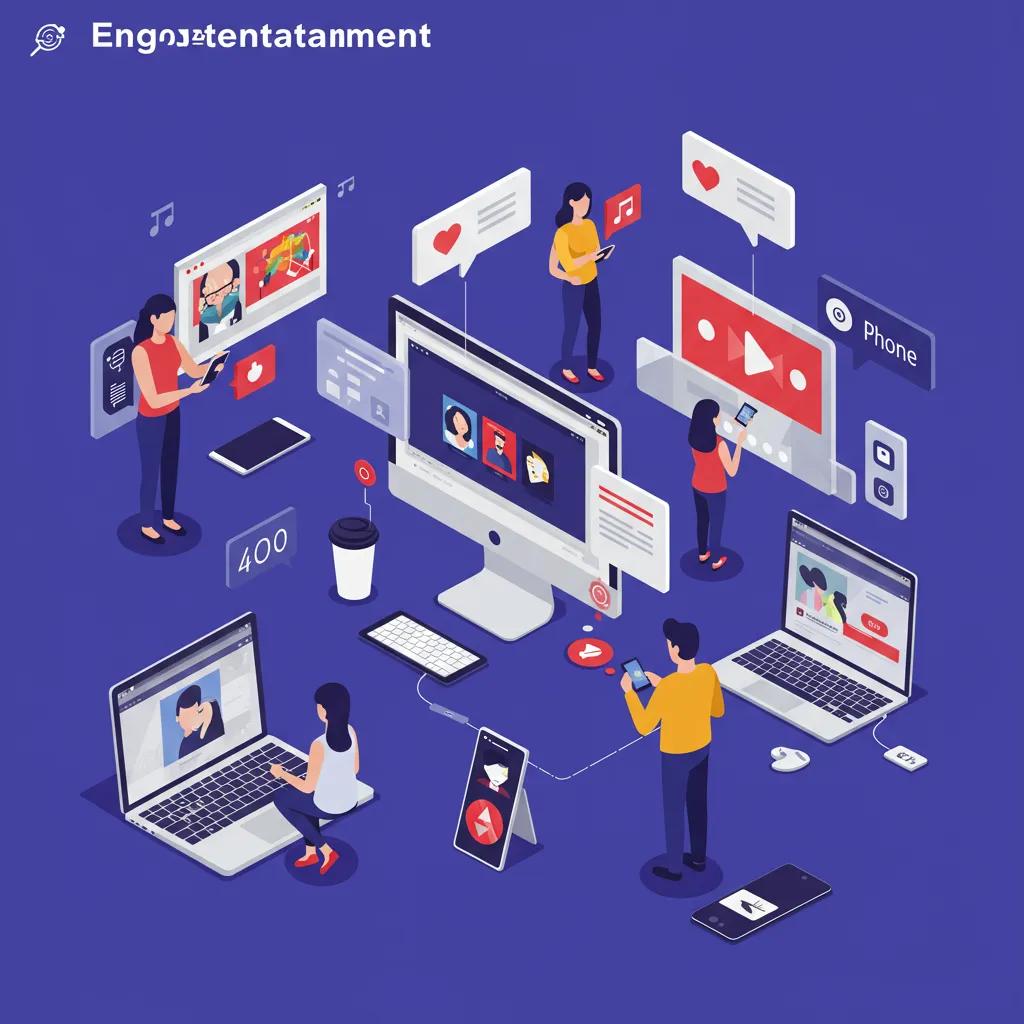
The digital revolution redefined consumption through on-demand access, user-generated content, and platform intermediaries that algorithmically curate attention, shifting power toward creators and platforms while fragmenting traditional mass audiences. Mechanisms include streaming protocols, social feeds, and recommendation algorithms that personalize discovery and enable creator monetization through subscriptions, ads, and direct fan payments. The value for audiences is choice and immediacy—viewers can access niche content anytime—while creators gain tools for distribution and direct fan relationships. This fragmentation also raises challenges for measurement and collective cultural moments, prompting new business models and metrics for success.
This timeline table shows how technical affordances produced predictable cultural shifts: each era expanded reach, lowered costs, and created new economic incentives that reshaped who produces culture and how audiences participate.
How Has Technology Transformed the Entertainment Industry?
Technology transformed entertainment by changing three core mechanisms: how content is produced (tools and automation), how it is distributed (channels and latency), and how it is monetized (subscriptions, ads, microtransactions). Technologies like streaming, cloud services, VR/AR, AI, and 5G link production efficiencies with real-time personalization and new revenue models, increasing the scale and diversity of available content. The primary benefit is multiplexed access—audiences receive more varied experiences while creators access scalable tools—yet the transformation also introduces concentration risks where platforms centralize discovery. Understanding these mechanisms clarifies strategic choices for creators and companies aiming to reach modern audiences.
What Role Do Streaming Services Play in Modern Entertainment?
Streaming services act as both distributors and curators by hosting vast libraries and using recommendation engines to personalize consumption, which encourages binge behavior and shifts release strategies toward series and library-first models. Platforms employ subscription and ad-supported tiers to balance revenue and accessibility, enabling niche regional content to find global audiences while intensifying competition for attention. For creators, streaming lowers distribution barriers but raises standards for discoverability and metadata optimization; for audiences, it delivers convenience and breadth. The shift forces traditional broadcasters and studios to adapt release windows and embrace platform partnerships and original content strategies.
- Streaming platforms provide immediate on-demand access, reducing appointment viewing.
- Recommendation systems personalize content discovery, increasing session lengths.
- Monetization models include subscriptions, ad-supported tiers, and hybrid approaches.
These mechanisms explain why streaming has become a dominant distribution model and why metadata, personalization, and platform strategy are crucial for creators.
How Has Gaming Evolved from Arcades to Esports and Cloud Gaming?
Gaming progressed from localized arcade cabinets to home consoles, mobile devices, and now esports and cloud gaming, transforming play into spectator entertainment and cloud-delivered experiences. Esports professionalized competitive play with leagues, sponsorships, and broadcast-quality production, making gaming a mainstream entertainment vertical with global audiences. Cloud gaming reduces hardware barriers, enabling more players to access high-fidelity titles across devices, while monetization expanded via live events, sponsorships, and in-game purchases. This evolution turned games into platforms for social interaction, live events, and cross-media franchises.
How Are Virtual Reality and Augmented Reality Creating Immersive Experiences?
VR and AR create immersion by using spatial audio, 3D graphics, and tracked interactions to place users inside narratives or overlay digital objects in physical spaces, enabling virtual concerts, interactive storytelling, and experiential marketing. Current use-cases focus on niche high-engagement experiences like virtual concerts and immersive theatre, with barriers including hardware cost and comfort, but benefits include higher engagement and novel monetization through virtual goods and experiences. As hardware becomes lighter and content ecosystems mature, VR/AR will move from boutique experiences to more regular entertainment formats.
This comparison table highlights how each technology shifts where and how audiences access content, illustrating direct cause-effect relationships between tech and consumption.
What Is the Impact of Artificial Intelligence on Content Creation and Personalization?
AI affects entertainment by automating production tasks, generating creative assets, and powering recommendation systems that tailor experiences to individual tastes; these mechanisms increase efficiency and scale personalization. Specific applications include script analysis for audience insights, AI-assisted visual effects, voice synthesis, and dynamic recommendation engines that increase engagement metrics. The benefits are faster production pipelines and improved discoverability, while ethical concerns—such as deepfakes, attribution, and bias in algorithms—require editorial oversight and transparent practices. Balancing AI’s efficiency with human creativity and regulation will shape sustainable content ecosystems.
What Are the Current Entertainment Industry Trends in 2025?
Current trends in 2025 include the maturation of streaming markets, rapid growth of short-form social video, AI-driven personalization, cloud gaming expansion, creator-first monetization, immersive experiences, blockchain experiments for royalties, and sustainability initiatives in production. These trends operate through mechanisms like algorithmic promotion, subscription diversification, and infrastructure upgrades (5G), creating both opportunities and strategic risks for producers and platforms. The immediate value of tracking these trends is tactical: creators and businesses can prioritize formats, distribution channels, and monetization strategies aligned with audience attention flows.
How Is Social Media Influencing Entertainment Consumption and Trends?
Social media platforms shape discovery, virality, and careers by amplifying short-form video, enabling direct fan engagement, and accelerating trends from local to global within days. Algorithms reward engagement patterns—likes, shares, completion rates—so creators optimize for platform-specific formats like vertical clips and serialized short episodes. For youth audiences, social platforms are primary entertainment sources where music, comedy, and serialized storytelling emerge and spread. This dynamic means marketing and content strategies must integrate platform mechanics to reach younger demographics effectively.
- Short-form video drives rapid trend cycles and music virality.
- Platform algorithms determine visibility and monetization potential.
- Creators leverage direct monetization tools and brand partnerships.
These platform-driven mechanisms explain the shift toward snackable formats and community-backed creator businesses.
Why Is Experiential Entertainment Growing in Popularity?
Experiential entertainment—live immersive theatre, themed attractions, virtual concerts—grows because audiences increasingly value shared, memorable experiences that contrast with solitary streaming consumption. The mechanism is psychological: live, co-present events create stronger memory encoding and social signaling, which brands and promoters monetize through premium pricing, merchandise, and exclusive access. Post-pandemic demand for social experiences accelerated investment in location-based entertainment and hybrid digital-physical events. The ROI for organizers is compelling when experiences build loyalty and generate unique content for social amplification.
How Are Blockchain and NFTs Changing Media Ownership and Royalties?
Blockchain and NFTs propose transparent provenance and programmable royalties through smart contracts, enabling creators to sell ownership stakes, receive ongoing payments on resales, and experiment with direct-to-fan commerce. Practical pilots show potential for metadata-rich rights management and alternative funding models, though volatility, environmental concerns, and interoperability challenges limit mainstream adoption. The nascent value is in niche collector markets and trial use-cases that test royalty automation and fan engagement models. Realistic adoption requires standardization, regulatory clarity, and user-friendly platforms.
What Role Does 5G and Ultra-Fast Connectivity Play in Entertainment?
5G improves latency and bandwidth, enabling high-quality mobile streaming, low-latency cloud gaming, and live AR/VR events that require real-time interaction, thereby unlocking new interactive formats and wider geographic reach. Infrastructure upgrades reduce technical barriers to immersive experiences and make remote production workflows more reliable, which supports live, interactive productions and edge computing for personalized content. Adoption depends on network rollout and device penetration, but where available 5G facilitates richer, lower-friction entertainment products and services.
What Does the Future of Entertainment Technology Look Like?
The future of entertainment technology will emphasize hyper-personalization, immersive social spaces, and sustainability, where AI refines individualized narratives, metaverse-like environments create persistent social venues, and production techniques reduce environmental impact. Near-term expectations include refined recommendation engines and more integrated social commerce; mid-term scenarios involve interoperable virtual spaces and mass-market VR, while long-term visions balance creative agency, ethical AI, and decentralized ownership. These trajectories imply creators will need multidisciplinary skills—storytelling, data fluency, and technical literacy—to thrive.
How Will Hyper-Personalization and AI Shape Entertainment Experiences?
Hyper-personalization combines user data and machine learning to deliver adaptive narratives, dynamic soundtracks, and curated content feeds that fit individual preferences, improving engagement and retention. Mechanisms include real-time preference modeling, content modularization, and procedurally generated elements that tailor pacing and structure to users. While personalization increases relevance, it raises privacy and fairness concerns that require transparent data governance and user controls. Responsible implementation balances enhanced user experience with safeguards for consent and algorithmic fairness.
What Is the Metaverse and How Will It Transform Entertainment?
The metaverse is a network of persistent, social virtual spaces where users interact via digital identities, attend events, and transact with virtual goods; it transforms entertainment by turning passive spectators into active participants and creators. Use-cases include virtual concerts, shared storytelling spaces, and branded interactive experiences that monetize through ticketing, virtual merchandise, and subscriptions. Challenges include interoperability across platforms, user experience consistency, and avoiding fragmentation, but the core promise is richer social engagement and new monetization avenues for creators.
How Will Emerging Technologies Like VR, AR, and Cloud Gaming Evolve?
VR, AR, and cloud gaming will evolve via hardware miniaturization, content libraries optimized for immersion, and distribution models that favor streaming-delivered interactive content, expanding access beyond niche early adopters. Business models will mix subscriptions, episodic content, and in-app purchases while content design shifts toward social, multiplayer, and event-based experiences. As latency decreases and devices improve, mainstream adoption will hinge on compelling social features and ease-of-use rather than raw graphical fidelity alone.
What Are the Sustainability Trends in Entertainment Production?
Sustainability trends include carbon accounting for productions, virtual production techniques that reduce travel and set construction, and green procurement practices for equipment and catering; collectively these reduce the environmental footprint of media creation. Mechanisms like LED volume stages and remote collaboration lower resource use, while industry commitments and standards encourage sustainable planning. The benefit includes cost savings, reduced logistical complexity, and improved public perception, making sustainability a practical operational objective as well as an ethical imperative.
- Virtual production reduces physical set requirements and travel.
- Carbon accounting reports emissions and identifies reduction opportunities.
- Sustainable sourcing and recycling decrease waste from shoots.
These practices show how ecological responsibility can align with creative and economic goals.
How Has Entertainment Evolved in Pakistan: A Cultural and Technological Perspective?
Entertainment in Pakistan has evolved from traditional folk performances and local storytelling to a modern mix of cinema, television, and digital platforms, mirroring global patterns while retaining distinct cultural forms. This evolution operates through mechanisms like language-specific content, diaspora audiences, and mobile-first consumption that amplify regional voices and genres. For local media ecosystems, the benefit is diversified cultural output and new revenue streams via OTT platforms and social creators. ARY News documents these shifts in its Entertainment coverage and reports on changes in audience behavior and industry dynamics; to provide timely coverage ARY News follows a mission to provide timely and comprehensive news and current affairs coverage, keeping the audience informed and engaged with diverse content.
What Are the Traditional Forms of Pakistani Entertainment?
Traditional Pakistani entertainment includes folk music, storytelling (dastan and qissa), regional theatre, and mela (fair) performances that serve as communal rituals and cultural transmission mechanisms. These forms work by embedding local languages, music modes, and moral narratives in public gatherings, creating strong place-based identities and intergenerational continuity. The modern equivalent often appears as regionally focused music videos, digital archiving of oral stories, and revived theatre festivals that adapt traditional content for contemporary audiences. Preserving and adapting these forms sustains cultural diversity within modern media markets.
How Has Pakistani Cinema and Television Developed Over Time?
Pakistani cinema (Lollywood) and television evolved from early studio-era films and state-dominated broadcasts to a diversified landscape with private channels, satellite access, and now digital distribution that amplifies regional stories. Key mechanisms include privatization of channels, satellite and cable penetration, and the rise of independent filmmakers who leverage digital platforms for wider reach. The result is a resurgence of varied storytelling, higher production values in some segments, and competition for talent between film, TV, and digital platforms.
How Is Digital Media Changing Entertainment Consumption in Pakistan?
Digital media has shifted Pakistani consumption to mobile-first viewing, with social platforms and local OTT services enabling instant access to short-form video, music, and serialized drama. Mechanisms include affordable smartphones, cheaper data, and platform-specific algorithms that prioritize local-language content, accelerating creator economies. For creators and advertisers, digital media provides data-driven targeting and direct-fan monetization methods that were unavailable in linear broadcast eras. This transition expands choice but also fragments audiences across many niche platforms.
What Are the Emerging Entertainment Trends Among Pakistani Youth?
Pakistani youth (roughly 16–32) show strong preference for social video platforms, gaming and esports participation, short-form creator content, and engagement with political and social discourse via entertainment channels. Mechanisms include platform virality, community-driven content, and hybrid creator-publisher collaborations that mix news and entertainment. The implication for producers is clear: format agility, platform-native storytelling, and youth-focused distribution strategies yield higher engagement and cultural impact.
How Does ARY News Cover the Evolution of Entertainment with AI-Powered Journalism?
ARY News approaches entertainment coverage by combining editorial expertise with data-driven monitoring and AI-assisted workflows to report trends quickly and reliably, prioritizing accuracy and relevance for diverse audiences. To provide timely and comprehensive news and current affairs coverage, keeping the audience informed and engaged with diverse content. This mission shapes ARY News’ Entertainment coverage by guiding investment in social listening, rapid verification processes, and short-form distribution to reach younger viewers while maintaining journalistic standards. The practical benefit is faster trend detection, broader coverage of creator economies, and localized analysis that connects global developments to Pakistani contexts.
How Does AI Enhance Accuracy and Speed in Entertainment Reporting?
AI enhances reporting by automating monitoring of social platforms, transcribing interviews, and flagging emergent topics, which enables journalists to prioritize verification and contextual analysis rather than raw collection. Automated systems surface trending clips, identify influential creators, and provide aggregation of cross-platform signals that would be time-consuming to compile manually. The editorial payoff is timelier, broader coverage without sacrificing factual checks, because human editors validate AI-flagged leads and add context before publication. This approach balances the speed of automation with the responsibility of editorial oversight.
What Exclusive Insights and Data Does ARY News Provide on Entertainment Trends?
ARY News leverages audience segmentation and cross-platform trend analysis to surface consumption metrics, regional preferences, and story angles that matter to Pakistani audiences, including youth engagement patterns and diaspora interest. Types of insights include which formats drive engagement, platform-specific virality signals, and comparative attention patterns that inform commissioning decisions. These data-driven insights help producers and advertisers understand local demand and adapt content strategies to shifting viewer behaviors while preserving editorial relevance and integrity.
How Does ARY News Engage Youth with Entertainment Content?
ARY News engages younger audiences through social-first formats, short-form video summaries, interactive polls, and platform-native features that invite participation and commentary, bridging authoritative reporting with shareable content. Tactics include bite-sized explainers, behind-the-scenes features with creators, and interactive live sessions that combine journalism with community dialogue. Balancing investigative rigor with shareable formats allows ARY News to retain trust while meeting youth expectations for fast, engaging content.
What Are the Most Frequently Asked Questions About the Evolution of Entertainment?
This section answers common user queries in concise, snippable formats to clarify core concepts about entertainment history, technology, and future trends, helping readers find quick, authoritative summaries and links to deeper sections above. Each answer provides a definition, mechanism, and a practical takeaway so readers can act on the information or explore related sections for more depth.
How Has Entertainment Changed Over the Years?
Entertainment has shifted from communal ritual and oral storytelling to mass broadcast and now to personalized, platform-mediated experiences; the mechanism driving change is technological affordance that reduces distribution friction and enables new monetization. Early public performances served civic functions, mass media created shared national cultures, and digital platforms personalized consumption while empowering creators. The takeaway is that while formats change, core functions—storytelling, identity, and shared meaning—persist and adapt to new media ecosystems.
What Is the Role of Technology in Entertainment Development?
Technology shapes production efficiencies, distribution reach, and personalization capabilities, enabling lower-cost creation, broader access, and individualized experiences through algorithms and connectivity. Key roles include enabling new storytelling forms, automating routine tasks, and creating platforms that mediate audience attention. Understanding these roles helps creators prioritize tools that increase discoverability and engagement.
- Production: automation and virtual tools reduce cost and time.
- Distribution: streaming and social platforms expand global reach.
- Personalization: algorithms tailor content to individual tastes.
These bullets summarize technology’s core impacts on the industry.
What Are the Earliest Forms of Entertainment?
The earliest entertainment forms were oral storytelling, ritual performances, public spectacles, and musical traditions that communicated values and maintained social cohesion. These forms relied on communal participation and memory, providing education, ritual, and leisure long before mechanical reproduction existed. Recognizing these roots helps explain the enduring power of live and participatory experiences.
How Has Digital Media Impacted the Entertainment Industry?
Digital media disrupted distribution, enabled the creator economy, and introduced new monetization channels like subscriptions, in-platform tipping, and microtransactions, shifting power toward agile creators and platform intermediaries. Mechanisms include algorithmic discovery, direct-to-fan commerce, and reduced gatekeeping. The result is greater diversity of content but also fragmentation in measurement and monetization.
What Are the Future Trends in Entertainment Technology?
Future trends center on AI-driven personalization, metaverse environments, immersive VR/AR experiences, and sustainable production practices that reduce environmental impact while enabling new content economies. These trends operate through data, connectivity, and platform design, suggesting creators should invest in data literacy, immersive storytelling, and green production methods.
- Hyper-personalization: adaptive narratives and dynamic content.
- Metaverse: persistent social virtual spaces for events and commerce.
- Sustainability: virtual production and carbon-aware workflows.
These concise points summarize likely near-to-mid-term developments.
To provide timely and comprehensive news and current affairs coverage, keeping the audience informed and engaged with diverse content.
ARY News is committed to covering entertainment as part of a broader mission that emphasizes AI-enabled accuracy, speed, and reliability for Pakistani and international audiences, combining data-driven trend reporting with platform-specific storytelling to reach younger viewers while upholding journalistic standards.
Conclusion
Understanding the evolution of entertainment reveals how technological advancements shape cultural consumption and audience engagement. By recognizing key milestones and current trends, creators and media professionals can strategically navigate the dynamic landscape of entertainment. Embrace the insights shared in this article to enhance your approach to content creation and distribution. Stay informed and explore more resources to elevate your understanding of this ever-evolving industry.