Trump Announces US-South Korea Trade Agreement Ahead of August 1 Tariff Deadline: Key Details and Impact
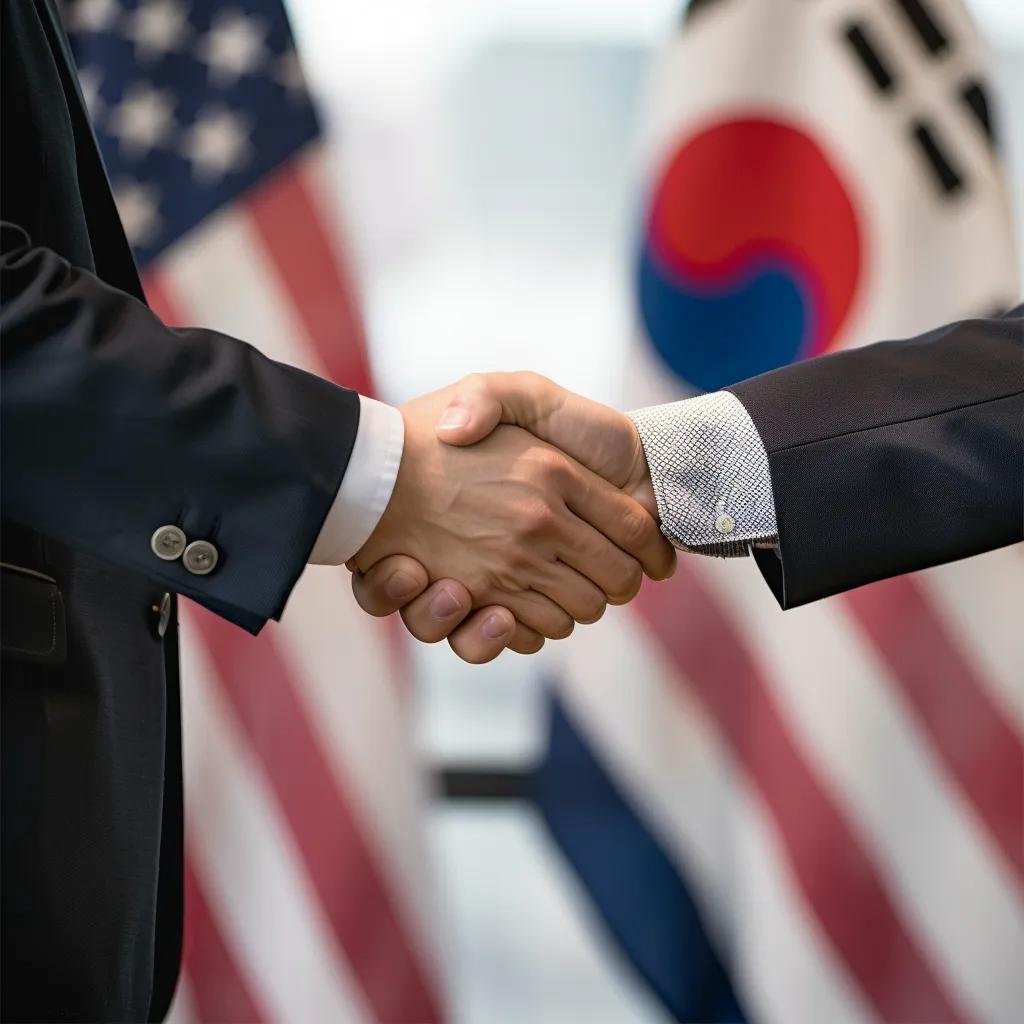
President Donald Trump’s July 31 announcement of a revamped US-South Korea trade agreement, signed just before the August 1 tariff deadline, marks a decisive shift in bilateral commerce. This article explains the new pact’s scope, key provisions and tariff changes, the deadline’s policy significance, economic consequences for both economies, global and diplomatic context, the KORUS FTA’s evolution, and the most common stakeholder questions.
What Is the New US-South Korea Trade Agreement Announced by Trump?
The new US-South Korea trade agreement is a bilateral pact signed on July 31, 2025, to adjust tariff rates and expand investment before the August 1 tariff deadline. It modifies the existing KORUS FTA framework to lower threatened tariffs, incentivize $350 billion in South Korean investment, and secure advanced market access for American exporters. For example, it replaces a planned 25 percent tariff with a 15 percent maximum on Korean imports. Understanding these core changes sets the stage for examining timing, relationship to KORUS, and key participants.
When and why was the trade agreement announced before the August 1 deadline?
The agreement was unveiled on July 31 to meet a firm August 1 cutoff established by the Trump administration for imposing new tariffs on countries without updated deals. This urgency arose because unresolved negotiations would have triggered punitive measures on imports from South Korea, potentially disrupting supply chains and raising consumer prices. By finalizing terms one day early, both governments averted sudden tariff impositions and maintained predictable trade flows into the new calendar.
How does this agreement modify the existing KORUS FTA?
This deal adjusts and expands the 2012 KORUS FTA by introducing new tariff rates, broader exemptions, and investment commitments. It sets a 15 percent cap on Korean exports to the US versus the original gradual elimination schedule, and adds quotas for steel and vehicle exemptions. Moreover, it mandates purchases of US liquefied natural gas (LNG) and agricultural goods, whereas the KORUS FTA primarily focused on tariff elimination without binding purchase targets. These enhancements deepen market access and reshape bilateral trade dynamics in line with current policy objectives.
Who are the key figures involved in the announcement?
The announcement featured US President Donald Trump and South Korean President Lee Jae-Myung, supported by trade representatives from both capitals. Trump framed the agreement as a win for American workers and manufacturers, while Lee emphasized mutual benefits and ongoing diplomatic cooperation. Their joint statement underscored high-level political backing and set a tone of partnership, demonstrating how leadership engagement solidifies trade pacts and navigates complex tariff deadlines.
What Are the Key Provisions and Tariff Changes in the 2025 Agreement?

The 2025 trade agreement introduces specific tariff rates, exemption schemes for steel and automotive exports, and purchase commitments for agricultural and energy goods. It also establishes a $350 billion South Korean investment fund for US infrastructure and technology ventures. These provisions align with strategic goals to rebalance trade, support key industries, and lock in predictable market access.
What tariff rates apply to South Korean imports under the new deal?
Below is a table outlining the major tariff adjustments:
The 15 percent tariff cap replaces a proposed 25 percent duty, ensuring stable import costs and preventing sudden price spikes. This rate reduction directly recalibrates the trade balance and underpins investment commitments described next.
Which steel and automotive tariff exemptions are included?
To protect vital industries, the agreement grants quota-based exemptions:
- Steel exports: The first 2.7 million tonnes of Korean steel imports to the US are exempt from the 25 percent duty.
- Automotive imports: US carmakers may export up to 50,000 vehicles annually under US safety standards, doubling prior limits.
These targeted exemptions safeguard supply chains in both nations while offering US manufacturers expanded market reach. The quotas bridge tariff policy and sector-specific competitiveness, leading into agricultural and energy commitments.
How does the agreement affect agricultural and energy product trade?
The pact requires South Korea to purchase at least $100 billion in US liquefied natural gas (LNG) and related energy products over five years, alongside enhanced access for American agricultural exports such as wheat and soybeans. These binding procurement targets create a stable demand channel for US producers, offsetting tariff reductions with guaranteed sales volumes. Anchoring energy and farm goods commitments solidifies bilateral economic ties beyond traditional tariff negotiations.
What are the investment commitments from South Korea to the US?
South Korea pledges a $350 billion investment fund aimed at US infrastructure, semiconductors, green energy, and technology startups. This fund, managed jointly by public and private entities, is structured to support industrial capacity and job creation. In return, US regulatory reviews are streamlined to expedite project approvals. The investment dimension transforms the agreement from a pure tariff pact into a comprehensive economic partnership, paving the way for deeper strategic collaboration.
How Will the August 1 Tariff Deadline Influence US-South Korea Trade Relations?
The August 1 tariff deadline served as a policy enforcement mechanism to press counterparties into updated trade deals. Its firm date heightened negotiation tempo, influenced extension decisions, and shaped future trade diplomacy.
What is the significance of the August 1 tariff deadline in US trade policy?
The August 1 deadline represents a clear policy lever: any country without a revised agreement faced prospective tariffs on all imports, signaling strict enforcement of trade objectives. By setting this cutoff, the administration prioritized swift negotiation progress and communicated seriousness about protecting domestic industries. The deadline’s clarity incentivized rapid concession exchanges and anchored trade talks in a concrete timeline.
Were any extensions granted for South Korea or other countries?
Unlike Mexico and Canada, which received temporary extensions under parallel negotiation tracks, South Korea did not seek or receive a formal extension. Both capitals opted to complete the agreement before the cutoff, demonstrating bilateral willingness to adhere to the timeline. This contrasts with other partners whose talks continued past August 1 under conditional relief, underscoring the unique urgency and alignment in US-Korea discussions.
How does the deadline affect tariff imposition and trade negotiations?
By enforcing a fixed date, the deadline created a binary choice: sign a deal or face broad tariffs. This structure compressed negotiation cycles, reduced leverage for protracted haggling, and accelerated final concessions. As a result, discussions prioritized headline items—tariff rates, exemptions, and investment commitments—while deferring peripheral issues. The model may influence future talks with other nations by demonstrating the efficacy of firm deadlines as a bargaining tool.
What Are the Economic Impacts of the New Trade Agreement on the US and South Korea?

This agreement will recalibrate trade flows, affect deficits, and create winners and losers across sectors. It also shapes macroeconomic indicators such as GDP growth and employment by altering export demand and investment patterns.
How will the agreement influence the US trade deficit with South Korea?
By raising the effective cost of Korean imports compared to a 25 percent tariff and boosting US sales commitments, the agreement is projected to narrow the US trade deficit. Analysts estimate a reduction of $5 billion to $10 billion annually in the goods deficit, driven by higher American exports of LNG, vehicles, and farm products. This rebalancing supports the administration’s goal of correcting trade imbalances with key partners.
Tariff Effects on Trade Deficits
Studies show that changes in tariff rates can influence trade deficits. Reducing tariffs can increase imports, potentially widening the deficit, while increasing tariffs can have the opposite effect. The actual impact depends on various factors, including the elasticity of demand and supply.
This citation supports the article’s discussion of how the agreement is projected to narrow the US trade deficit.
What industries in the US benefit or face challenges?
US sectors poised to benefit include:
- Energy producers: Secured LNG purchase targets foster long-term contracts.
- Agriculture: Expanded access for grains, meat, and dairy stabilizes rural incomes.
- Automotive: Higher export caps for US carmakers open new sales opportunities.
Conversely, steel mills may face increased Korean competition within exemption quotas. Overall, the agreement tilts in favor of service and energy exporters, while requiring domestic steelmakers to adapt to quota-augmented import pressure.
How will South Korean industries like semiconductors and steel be affected?
- Semiconductor firms: Attract capital through the $350 billion fund, enabling US-based expansions.
- Steel producers: Benefit from quota exemptions but face higher compliance costs tied to origin rules.
- Automakers: Gain US market share under adjusted safety standards, strengthening global competitiveness.
South Korean manufacturers will need to balance tariff relief against stricter origin requirements and investment obligations, reshaping supply chain strategies in advanced technology and heavy industry.
What are the projected effects on GDP and employment in both countries?
Economists forecast a modest GDP boost of 0.1–0.2 percent in each country over five years. US job growth is expected in manufacturing, energy, and agriculture sectors, while South Korea may see incremental gains in high-tech employment and infrastructure development. These macroeconomic uplifts reflect enhanced trade volume and capital inflows, reinforcing the agreement’s broader economic objectives.
Impact of Trade Agreements on GDP
Research indicates that trade agreements can lead to modest GDP growth in participating countries. The specific impact depends on the scope of the agreement, the size of the economies involved, and the existing trade relationships.
This research supports the article’s claim that the new US-South Korea trade agreement is projected to boost GDP in both countries.
How Does the New Agreement Fit into the Broader Global Trade and Diplomatic Landscape?
Beyond bilateral ties, this pact exemplifies economic diplomacy, reflects US global trade strategy, and sets precedents for future multilateral engagements.
What role does economic diplomacy play in US-South Korea relations?
Economic diplomacy underpins strategic alliances by aligning trade pacts with security and geopolitical goals. This deal strengthens the US-ROK alliance by intertwining market access, investment, and defense cooperation. By negotiating on both tariffs and investment, it elevates trade talks into a platform for broader diplomatic engagement, illustrating how commerce advances foreign policy objectives.
Economic Diplomacy and Trade Agreements
Economic diplomacy plays a crucial role in international relations, with trade agreements often serving as tools to strengthen alliances and achieve geopolitical goals. These agreements can foster cooperation on various fronts, including security and investment.
This citation supports the article’s assertion that the trade agreement strengthens the US-ROK alliance by intertwining market access, investment, and defense cooperation.
How does this agreement compare with other US trade deals (Japan, EU, Indonesia)?
This comparison highlights the US’s trend toward pairing tariff adjustments with binding investment and procurement targets, tailoring deals to each partner’s economic profile and strategic importance.
What are the future implications for international trade policies?
This framework—combining tariff caps, exemptions, and investment obligations—may become a template for future US trade pacts. It signals a shift from pure tariff liberalization toward integrated economic partnerships that include procurement and capital commitments. Other nations may adopt similar models or negotiate countermeasures, potentially reshaping global trade governance and multilateral negotiation norms.
What Is the Historical Background and Evolution of the KORUS FTA Leading to This Agreement?
Tracing KORUS from its inception to the 2025 deal reveals continuity and change in US-Korea trade relations.
What were the key provisions of the original 2012 KORUS FTA?
The 2012 KORUS FTA eliminated tariffs on most goods gradually, secured US automakers greater access, and liberalized services and intellectual property rules. It established dispute resolution mechanisms and regulatory cooperation frameworks. These foundational elements built the first modern bilateral pact between the US and an Asian ally, aiming to deepen economic integration.
How was the KORUS FTA renegotiated in 2017-2018?
Renegotiations led by President Trump focused on automotive safety standards, quota expansions, and enforcement enhancements. Vehicles meeting US standards saw higher export caps, and rules of origin were tightened. The 2018 amendments also addressed currency manipulation and expedited dispute settlement, reflecting evolving priorities around market access and trade fairness.
How does the 2025 agreement build upon or replace earlier versions?
The 2025 deal retains KORUS’s core structure but overlays new tariff caps, sectoral exemptions, and binding investment and procurement commitments. It replaces the gradual tariff phase-out with immediate, predictable rates and shifts from advisory purchase targets to enforceable quotas. By integrating capital flows and security-linked provisions, it modernizes the FTA to match current geopolitical and economic conditions.
What Are Common Questions About the US-South Korea Trade Agreement and Tariffs?
Stakeholders frequently inquire about core concepts, mechanisms, and implications surrounding the pact and the August 1 deadline.
Below are the most common queries that emerge:
- What is the KORUS FTA’s purpose and how has it evolved?
- How do tariff rate changes affect US-Korea trade volumes?
- Which products receive exemptions and under what conditions?
- What does South Korea’s $350 billion investment mean for the US economy?
- Were other countries granted extensions beyond the August 1 deadline?
These questions reflect key areas of interest—from foundational agreement structures to sector-specific impacts and policy enforcement—which guide audiences toward deeper analysis.
The prevalence of these inquiries underscores the need for clear explanations of tariff mechanics, investment provisions, and deadline significance.
President Trump’s announcement of this agreement not only prevented abrupt tariff impositions but also locked in concrete economic and diplomatic commitments. The pact’s combination of reduced tariffs, sectoral exemptions, and a landmark $350 billion investment fund reshapes US-Korea commerce while offering a blueprint for future trade frameworks. Its economic impacts—spanning deficit adjustments, industry gains, and GDP growth—demonstrate balanced benefits and trade-off management. As global trade dynamics evolve, stakeholders will track how this model influences broader policy and alliance structures in the years ahead.