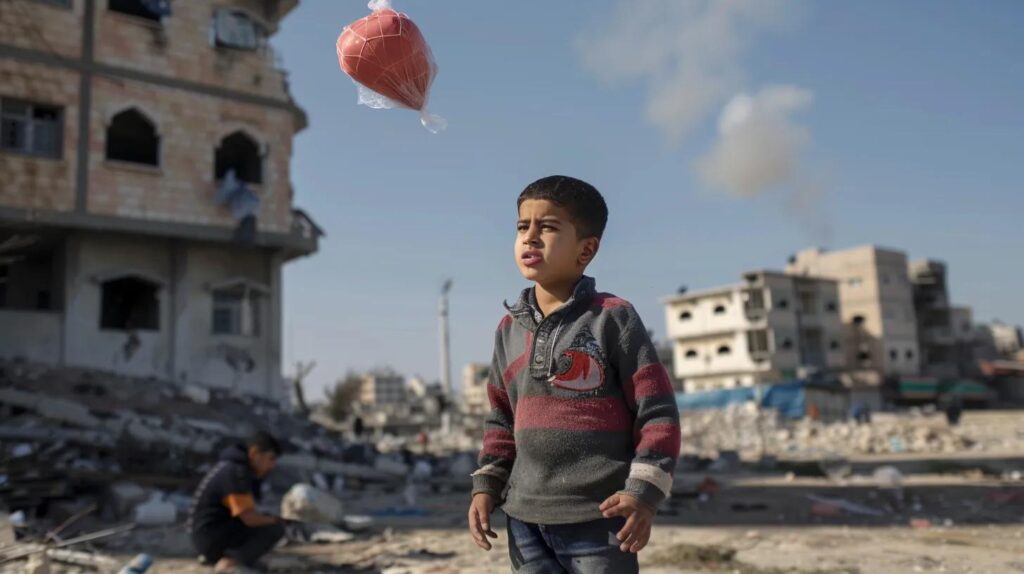
Article: Young Boy Struck and Killed by Falling Aid Airdropped into Gaza: Understanding the Incident and Humanitarian Impact
The tragic death of a Palestinian child underlines the lethal risks of misdirected relief—when a falling aid pallet struck 14-year-old Muhannad Zakaria Eid in central Gaza, it exposed a dangerous flaw in humanitarian delivery by air. This analysis defines the incident, examines why airdrops pose physical and logistical hazards, situates the event within Gaza’s broader crisis, evaluates alternative delivery methods, explores international legal responsibilities, highlights the impact on children, and outlines actionable recommendations for safer aid distribution.
What Happened in the Gaza Aid Airdrop Incident That Killed Muhannad Zakaria Eid?
Muhannad Zakaria Eid’s death occurred when a parachuted pallet containing food and medical supplies malfunctioned, striking him in Nuseirat Refugee Camp; this event demonstrates how mechanical failures in airdropping humanitarian aid can produce fatal outcomes even as they aim to relieve starvation in conflict zones. For example, his case has galvanized calls from aid agencies to rethink air delivery in Gaza’s crowded urban areas.
Who Was Muhannad Zakaria Eid and Where Did the Incident Occur?
Muhannad Zakaria Eid was a 14-year-old Palestinian boy living in the Nuseirat Refugee Camp in central Gaza. Known for attending local schools and helping his family distribute food, Eid was standing near Al-Nuwairi Hill when the pallet landed. His death at Al-Awda Hospital confirmed the seriousness of placing civilian populations within drop zones.
By understanding Eid’s background and the camp’s dense layout, we grasp how civilian proximity to drop areas dramatically increases risk, setting the stage for examining the airdrop mechanics that caused this fatality.
How Did the Aid Pallet Fall and Cause the Fatality?
Aid pallets depend on parachute integrity and correct release timing; a premature detachment or tangled lines can send packages off-course. In Eid’s case, observers reported that the pallet descended at an unexpected angle, hitting him directly. Key mechanical failure points include:
- Faulty parachute deployment mechanisms
- Strong crosswinds altering descent trajectory
- Inadequate altitude calculations by aerial operators
These factors combined to transform humanitarian supplies into deadly projectiles, illustrating a critical failure in delivery protocols.
Understanding these mechanical vulnerabilities underscores why simply scaling up airdrops without redesigning drop systems can perpetuate civilian harm and elevate casualty risk in future operations.
What Eyewitness Accounts Describe the Tragic Event?
Residents and nearby aid workers describe panic and confusion as the pallet fell without warning. One witness stated, “It came down too fast, and people had no time to move away.” Others recount that crowds had gathered too close to the drop perimeter, hoping to retrieve food packages. These testimonies highlight:
- Absence of clear perimeter enforcement
- Lack of pre-drop warning signals
- High desperation driving civilians to approach drop sites
Such human factors compound mechanical risks, demonstrating that without secure landing zones and public communication, even well-intentioned airdrops can endanger those they aim to help.
These firsthand narratives frame the incident within the lived reality of Gaza’s civilians, leading to a wider look at the scale of injuries and fatalities from similar operations.
How Many Fatalities and Injuries Have Resulted from Gaza Aid Airdrops?
Airdropped relief in Gaza has caused at least 23 deaths and 124 injuries among civilians since October 2023, according to the Gaza Government Media Office.
Gaza Aid Airdrop Fatalities and Injuries
Since October 2023, aid airdrops in Gaza have resulted in at least 23 civilian deaths and 124 injuries. These figures highlight the dangers associated with this method of aid delivery, emphasizing the need for safer alternatives.
This source provides the specific casualty numbers cited in the article, supporting the claims about the impact of airdrops.
Why Are Aid Airdrops in Gaza Considered Dangerous and Inefficient?
Aid airdrops are delivery events that deploy humanitarian packages via parachute over conflict zones; they aim to circumvent blockades but often result in scattered supplies and dangerous landing patterns. For instance, falling pallets can miss intended zones by hundreds of meters, striking civilians instead of relief centers.
What Risks Do Falling Aid Pallets Pose to Civilians?
Humanitarian pallets weigh hundreds of kilograms, creating blunt-force injuries upon impact. Civilians face:
- Head and torso trauma when pallets descend uncontrolled
- Crushing injuries amid chaotic retrieval attempts
- Secondary harm from shrapnel-like debris
Risks of Falling Aid Pallets
Falling aid pallets pose significant risks to civilians, including head and torso trauma, crushing injuries, and harm from debris. These dangers underscore the need for precise drop controls and safer alternatives to airdrops in conflict zones.
This citation supports the article’s claims about the physical dangers posed by falling aid pallets.
By acknowledging these direct hazards, we can understand how crowd behaviors and terrain further exacerbate the threat.
How Do Stampedes and Unsafe Landing Zones Increase Aid Airdrop Hazards?
Desperate crowds rushing toward falling packages often trigger stampedes, crushing vulnerable individuals underfoot. Unsafe landing zones—sloping fields, crowded urban streets, or mall entrances—lack secure perimeters. This combination leads to:
- Mass panic as packages approach
- Trampling injuries among families and children
- Blocked emergency routes for medical response
Such dynamics show that mechanical failures intertwine with human behavior, creating a feedback loop of danger around airdrop sites.
These crowd management failures are compounded by the underlying cost and logistics challenges when compared to ground convoys and sea shipments.
What Are the Cost and Logistical Challenges of Airdropped Aid Compared to Land Deliveries?
Airdrops incur dramatically higher expenses, deliver limited tonnage, and require specialized aircraft.
Airdrops are at least 100 times more costly per ton than truck deliveries, yet yield only a fraction of the volume and suffer unpredictable accuracy. These logistical shortcomings underpin repeated warnings from aid agencies and the United Nations.
With economic inefficiency clear, we turn to the formal advisories that have urged an end to large-scale air deliveries.
How Have Aid Agencies and the UN Warned About These Dangers?
The United Nations and leading NGOs have issued statements stressing that airdrops create avoidable civilian harm, inefficiency, and resource waste. Key calls include:
- UN OCHA advising suspension of indiscriminate airdrops
- UNICEF highlighting child injuries from falling crates
- World Food Programme urging expansion of land crossings
These official warnings reflect unified consensus: without secure zones, improved mechanics, and crowd control, airdrops will continue to endanger civilians rather than save lives.
A deeper exploration of Gaza’s wider humanitarian crisis clarifies why safe aid access remains so urgent.
What Is the Broader Humanitarian Crisis in Gaza Behind the Aid Airdrop Tragedy?
Gaza is enduring a multifaceted humanitarian crisis driven by blockade, conflict, displacement, and skyrocketing malnutrition; this context creates overwhelming demand for relief that air deliveries struggle to meet. For example, UNRWA has been barred from bringing aid via land for over five months, intensifying reliance on dangerous airdrops.
How Does the Blockade Affect Food Security and Aid Access in Gaza?
The Israeli blockade restricts goods entry to under 20% of pre-conflict levels, causing:
- Severe food shortages and price inflation
- Unsafe informal crossings risking civilian lives
- Deterioration of public infrastructure hampering distribution
This constricted access framework forces humanitarian organizations to seek risky delivery methods, including airdrops, which ultimately fail to cover Gaza’s needs.
By linking blockade-induced scarcity to inadequate air operations, we see why millions face daily hunger and why effective corridors are essential.
What Are the Effects of Starvation and Malnutrition on Gaza’s Children?
Malnutrition rates among children under five exceed 25%, leading to:
- Stunted growth and developmental delays
- Increased susceptibility to disease and infection
- Elevated mortality rates, with 217 reported malnutrition deaths since the war began (100 under age five)
Children bear the brunt of food insecurity, and airdrops supply only a small fraction of caloric needs, leaving many families unable to sustain child health.
These health crises are amplified by displacement and infrastructure collapse, which we examine next.
How Has the Gaza War Exacerbated Displacement and Civilian Suffering?
Ongoing hostilities have displaced over one million people—nearly half of Gaza’s population—into overcrowded shelters lacking sanitation and medical care. Consequences include:
- Disease outbreaks in makeshift camps
- Breakdown of law and order, exposing aid workers to attack
- Psychological trauma from repeated bombing
Such extreme conditions multiply civilian vulnerability, increasing demand for life-saving aid but constraining safe delivery options.
This cumulative suffering underscores the vital role of humanitarian agencies in navigating these challenges.
What Role Do Aid Organizations Play Amid These Challenges?
UN agencies (UNICEF, WFP, OCHA), NGOs (MSF, Save the Children, Islamic Relief), and local groups coordinate relief efforts by:
- Negotiating land corridor access with authorities
- Operating mobile clinics to treat malnutrition
- Deploying community volunteers to distribute supplies
Their initiatives aim to mitigate blockade effects, reduce reliance on airdrops, and maintain essential services under siege. Understanding these operational strategies leads naturally to exploring viable alternatives for delivering aid in Gaza.
What Are the Alternatives to Aid Airdrops for Delivering Humanitarian Aid to Gaza?
While airdrops offer rapid deployment, land-based convoys and sea routes provide safer and more cost-effective solutions for sustained relief; for instance, expanding the Kerem Shalom crossing could deliver hundreds of truck shipments daily, vastly outpacing pallet drops.
Why Do Experts Advocate for Land-Based Aid Delivery Over Airdrops?
Land convoys deliver larger volumes at lower cost per ton, allow secure chain of custody, and minimize civilian exposure to falling packages. Experts note that:
- Reliable road networks within Gaza can handle high cargo throughput
- Border negotiation frameworks can open multiple entry points
- Ground distribution hubs improve tracking and equitable allocation
These benefits demonstrate that land-based aid can better match Gaza’s scale of need without sacrificing civilian safety.
Bridging from road-based advantages to the specific obstacles convoys face underlines why full reliance on land crossings remains unrealized.
What Challenges Do Land Crossings Face Under the Blockade and Security Concerns?
Land corridors confront:
- Bureaucratic delays from multiple authorities
- Security clearances for each shipment
- Risk of armed attack on convoys
- Infrastructure damage from conflict
These obstacles slow deliveries, reduce volume, and impose logistical uncertainty. Effective coordination and ceasefire agreements are required to overcome these hurdles and fully harness land routes.
Challenges of Land-Based Aid Delivery
Land-based aid delivery faces challenges such as bureaucratic delays, security clearances, and infrastructure damage. These obstacles can slow deliveries and reduce the volume of aid reaching those in need, highlighting the complexities of humanitarian operations in conflict zones.
This source supports the article’s discussion of the challenges associated with land-based aid delivery.
Recognizing persistent security and clearance issues, agencies also evaluate maritime corridors and other delivery methods.
How Effective Are Sea Routes and Other Aid Delivery Methods?
Sea routes can transport bulk supplies to Gaza’s Mediterranean coast, but require:
- Port repairs to handle large vessels
- Naval security guarantees against attacks
- Road links from shore to inland distribution centers
When functional, sea shipments provide moderate cost per container and bulk capacity, offering a middle ground between air and land. Pilot shipments via the Gaza Sea Port in 2024 demonstrated up to 5,000 tons delivered in a single campaign.
These maritime efforts reveal potential for diversified supply chains, shaping policy recommendations for safer aid access.
What Policy Recommendations Have International Agencies Made for Safer Aid?
Leading agencies propose:
- Establishing humanitarian corridors under UN and Red Cross supervision
- Implementing joint verification mechanisms to expedite border clearance
- Investing in local infrastructure for port repairs and road rehabilitation
- Enhancing community-based distribution to reduce central congestion
These policy steps aim to institutionalize safe, efficient aid flows without reliance on hazardous airdrops, setting a framework for long-term relief in Gaza.
Having evaluated alternative delivery frameworks, we now consider the legal dimensions governing humanitarian operations and civilian protection.
How Does International Humanitarian Law Address Aid Delivery and Civilian Protection in Gaza?
International humanitarian law (IHL) imposes obligations on all parties toward unimpeded aid delivery and the prevention of civilian harm; the Geneva Conventions require safe passage of relief consignments and penalize obstruction that leads to starvation as a method of warfare.
What Are the Legal Implications of Aid Obstruction and Civilian Harm?
Under IHL, obstructing relief consignments constitutes a violation when it endangers civilian lives. Parties that impede land or sea corridors face potential charges of:
- Deliberate starvation if they deprive civilians of sustenance
- Blockade violations when access restrictions breach neutrality
- Criminal responsibility for preventable harm
These legal frameworks affirm that hindering humanitarian aid can amount to war crimes, subject to international accountability.
This basis informs how war crimes are defined in the context of Gaza aid operations.
How Are War Crimes and Accountability Defined in the Context of Gaza Aid Operations?
War crimes include willful killing, inhuman treatment, and intentionally directing attacks against relief personnel or supplies. In Gaza, accountability mechanisms encompass:
- International Criminal Court investigations into blockade-related civilian deaths
- UN commissions of inquiry reporting on aid obstruction
- Universal jurisdiction claims in national courts
Such legal routes aim to deter future violations and secure redress for affected families, reinforcing the imperative for compliant aid delivery.
Legal obligations intersect with advocacy from human rights organizations, which we examine next.
What Calls for Accountability Have Been Made by Human Rights Organizations?
Human Rights Watch, Amnesty International, and other NGOs have issued reports demanding:
- Immediate cessation of indiscriminate airdrops in civilian areas
- Opening all border crossings for humanitarian access
- Investigation and prosecution of those responsible for aid-related fatalities
These advocacy efforts amplify legal requirements and sustain international pressure to prioritize civilian safety and lawful aid distribution over risky airdrop practices.
How Has the Death of Muhannad Eid Highlighted the Impact of the Gaza Humanitarian Crisis on Children?
Muhannad Eid’s fatal accident has become emblematic of children’s heightened vulnerability in Gaza, illustrating how miscalculated relief efforts can compound trauma, hunger, and insecurity among the youngest civilians. This case draws attention to the urgent need for protective measures specifically designed for children in conflict zones.
What Are the Psychological and Social Effects on Families and Communities?
Child fatalities from airdrops inflict profound psychological trauma, including:
- Grief and anxiety among surviving siblings
- Community mistrust toward relief operations
- Social fragmentation as families relocate to avoid danger
These effects deepen communal suffering and underscore the necessity of child-focused safety protocols in humanitarian planning.
Moving from emotional fallout to hard data, we consider casualty statistics among Gaza’s children since the conflict began.
How Many Children Have Been Killed or Injured in Gaza Since the Conflict Began?
Since hostilities intensified, over 50,000 children have been killed or injured in Gaza, with statistics revealing:
- Malnutrition-related deaths: 100 under-5 fatalities from starvation
- Conflict injuries: Thousands wounded by violence and misdirected relief
- Psychological harm: Nearly all children report pervasive fear
These figures show that children are disproportionately affected by both direct combat and flawed aid strategies, demanding targeted protection measures.
Building on these statistics, we review efforts aimed at safeguarding children in war zones.
What Efforts Are Being Made to Protect Children in Conflict Zones?
International and local actors implement child protection programs such as:
- Safe zone designations restricting airdrops near schools
- Mobile psychosocial support teams addressing trauma
- Community watch groups coordinating drop-site safety
These initiatives aim to mitigate physical and emotional harm, reinforcing that child welfare must guide all humanitarian operations in Gaza.
What Can Be Done to Improve Safety and Effectiveness in Gaza’s Humanitarian Aid Delivery?
Improving aid delivery requires technical innovations, enhanced cooperation, and community engagement to reduce reliance on dangerous airdrops and ensure relief reaches those in need safely. For instance, integrating GPS-guided cargo systems can increase drop accuracy while land corridor expansion supplies bulk deliveries.
What Technological or Logistical Improvements Could Reduce Aid Delivery Risks?
Emerging solutions include:
- GPS-enabled parachutes for precision landings
- Drones with obstacle avoidance for small critical packages
- Reinforced drop containers to absorb impact
By deploying these technologies, aid agencies can minimize civilian exposure to falling pallets and improve reliability, setting the stage for broader cooperative frameworks.
How Can International Cooperation Enhance Aid Access and Protection?
Coordinated agreements among donor states, the UN, and local authorities can:
- Standardize cross-border procedures for expedited land entry
- Share real-time mapping data to designate safe landing zones
- Jointly monitor compliance with humanitarian corridors
Such multilateral cooperation strengthens oversight, reduces bureaucratic delays, and builds trust, enabling more efficient distribution to Gaza’s beleaguered population.
What Role Do Local Authorities and Communities Play in Aid Distribution?
Empowering local stakeholders—community leaders, volunteer networks, and municipal councils—ensures:
- Accurate needs assessment based on proximity knowledge
- Secure perimeter enforcement at drop and distribution sites
- Equitable allocation mitigating diversion and black-market risks
Local participation enhances both safety and cultural appropriateness of relief efforts, reinforcing resilience amid crisis.
How Can Public Awareness and Advocacy Support Policy Changes?
Raising global attention through media coverage, social campaigns, and policymaker briefings can:
- Amplify calls for land corridor openings
- Highlight civilian casualties from mismanaged airdrops
- Mobilize aid resources toward infrastructure repairs
Public advocacy provides the political leverage needed to enact policy reforms that prioritize effective, humane delivery methods in Gaza.
The death of Muhannad Zakaria Eid serves as a poignant reminder that well-intentioned relief can become lethal without rigorous safety measures, community collaboration, and adherence to legal protections. Redirecting focus toward land and sea corridors, investing in precision technologies, and strengthening international and local partnerships will enhance humanitarian delivery and safeguard Gaza’s civilians—especially its children—from preventable tragedy.